
Eyepieces
A classic or a limitless view: why the design is important and why high magnification is often not the best solution.
Which eyepiece suits which purpose?
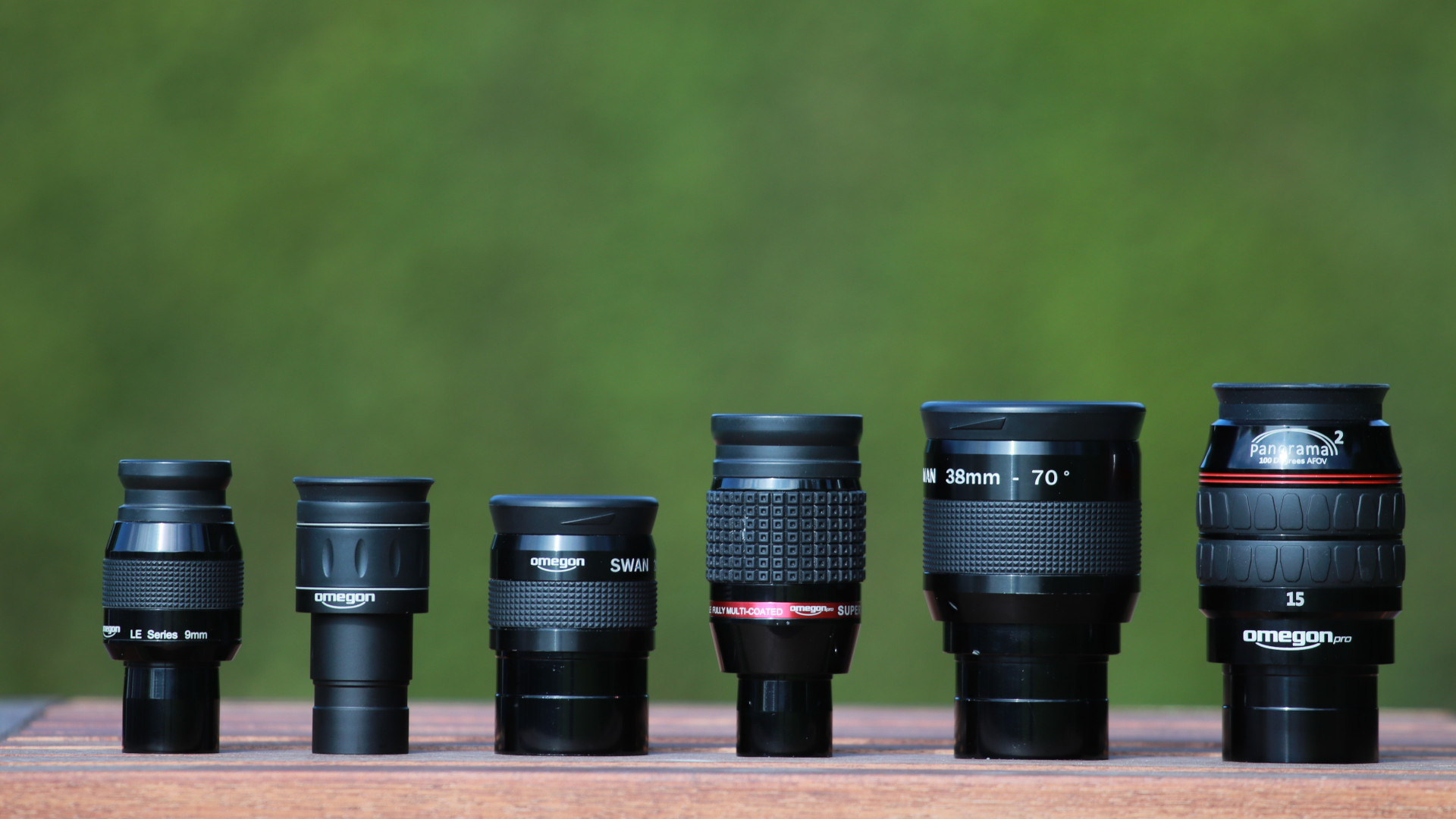
There is a huge number of eyepieces of many different types of construction on the amateur astronomy market. You’ll hear terms such as apparent field of view, focal length, exit pupil and still not really know which eyepiece is the right one for you. In order to remedy this, we have put together an overview of the different construction types with their advantages and disadvantages.
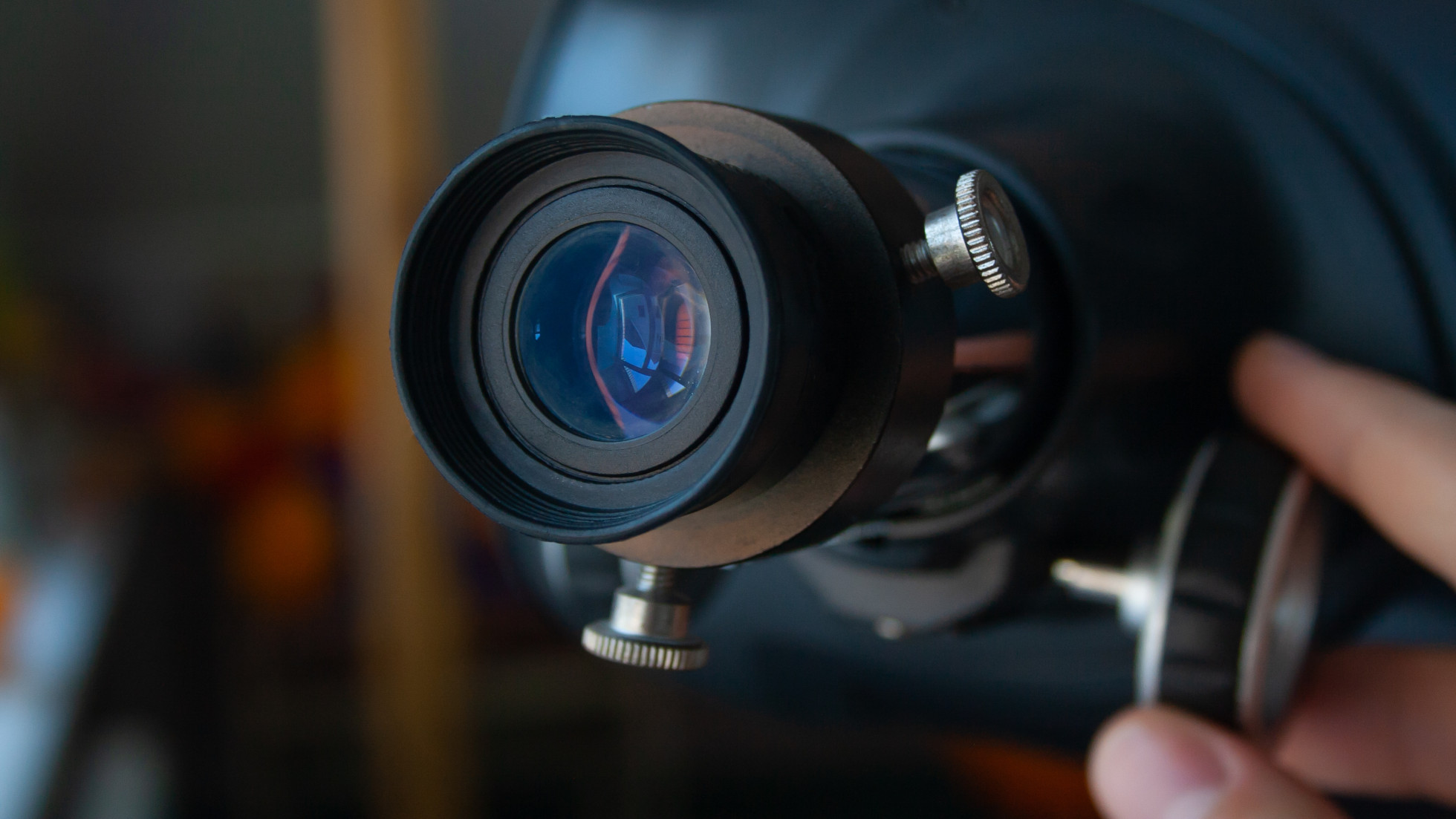
Eyepieces are a little like magnifying glasses, used to enlarge the intermediate image produced by the telescope. In principle, such a magnifying glass could consist of a single lens. However, since you’ll want to have different fields of view, an eyepiece must consist of a combination of lens elements spaced at a pre-determined distance from one another. And of course you want a comfortable eye relief and the correction of image defects. Finally, you’ll need a mount that holds the lenses. This is also referred to as the eyepiece barrel.
Kellner – the standard in many telescope sets
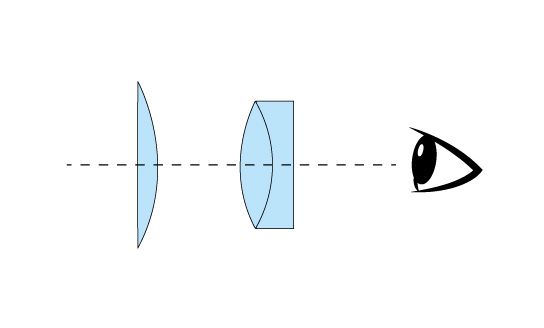
Kellner eyepieces consist of three lenses and have an apparent field of view of around 45 degrees. Since the lenses are cemented together, thereby creating an achromat, colour defects are barely visible.
Kellner eyepieces can be used for higher magnifications on telescopes with an aperture ratio of 1:10. The limit for Newtonian reflectors is an aperture ratio of 1:5, beyond this you should instead use a Plössl eyepiece.
Orthoscopic eyepieces – the experts for sharp planets
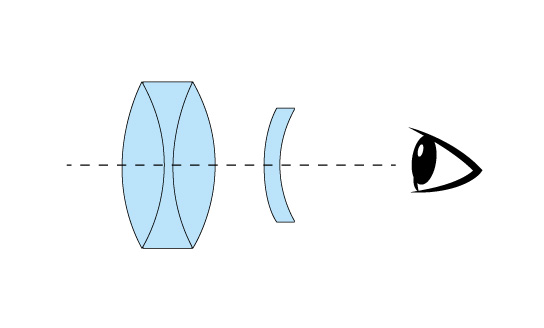
Orthoscopic eyepieces have four lenses, of which two are biconvex curved and one biconcave. They offer a high degree of sharpness in the centre as well as at the edge. That's why they are interesting for observing planets and double stars. The advantage: they offer a flat field of view.
The low loss of light is another advantage of these eyepieces. The apparent field of view is approximately 40° – 45°.
Plössl – the popular and inexpensive all-rounder
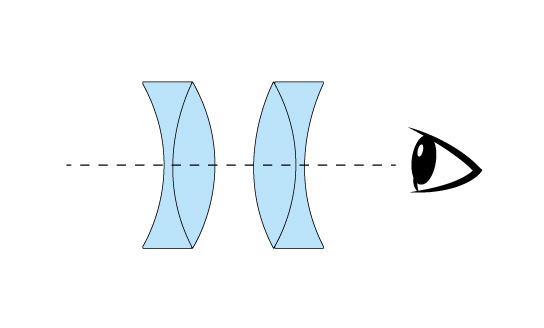
Plössl eyepieces are the standard astronomical eyepiece and are affordable for everyone! This type is often found in accessory sets.
Plössl eyepieces always consist of four lenses grouped in two pairs. These pairs of lenses are cemented together, and each pair form an independent achromat, which means they exhibit few colour defects.
With a short focal length, however, the eye relief is a problem. This means: here, the ocular lens is so small that you have to get very close to the eyepiece. In this range of focal lengths, other eyepieces may make more sense.
The apparent field of view is about 50°.
Huygens – the classic from the past
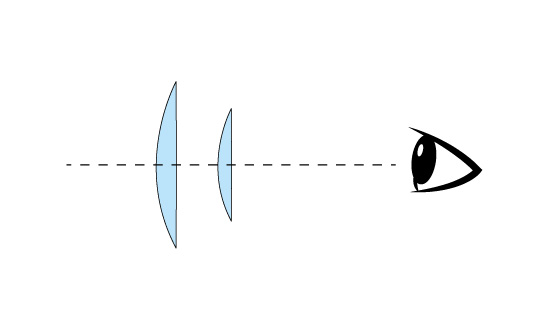
These eyepieces consist of two lenses, and offer a relatively small apparent field if view. The lenses are not cemented together, and are therefore suitable for solar projection through the telescope. These eyepieces are among the oldest types of design and are only rarely to be found among telescope accessories. The apparent field of view is approximately 40°.
Erfle – the original wide-angle eyepiece
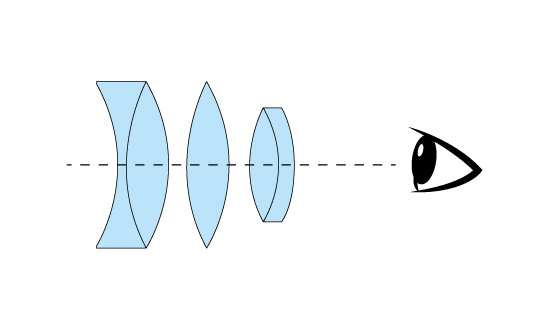
You will search in vain for an Erfle eyepiece in an accessories catalogue, because this version, as such, no longer exists. But you’ll find the the basic features of this design in many wide-angle eyepieces. Modern eyepieces are derivatives based on the original Erfle design. They are five-lens eyepieces with apparent fields of view of up to 68°.
Long eye relief eyepieces
These eyepieces have been especially popular for some years now. If you take a look at the contents of any amateur astronomer’s eyepiece collection, you will almost always find an example of this design. These eyepieces cannot actually be assigned to any particular type of design, it is more that they share a common feature that characterises them: even at short focal lengths, they always offer a long eye relief of around 16-20 mm and are therefore very comfortable to use. Their advantage: they are very well suited to spectacles wearers, but are also popular with people who don't wear glasses.
Nagler – for top class observations
Nagler eyepieces were developed in-house by the manufacturer TeleVue. The eyepieces consist of a number of cemented doublets. They usually have seven lens elements, but there are also variations with fewer than seven. With these eyepieces you get a gigantic impression of the night sky. You could almost believe that you were floating in space. This is largely due to their huge 80° apparent field of view.
In addition, these eyepieces also reduce image defects, such as coma and distortion. In practice, this means that you can observe sharp stars right to the edge of the field of view, even with fast telescopes.
How to see more with low magnification
Do you have a telescope with a 2" focuser? Or are you still thinking about buying a telescope? In which case, you should consider one with a 2" focuser, because it could reveal a totally new perspective of the night sky to you.
Until now, we have only looked at 1.25" eyepieces: those that fit any telescope. However, 2" focusers are also to be found in the somewhat larger telescopes with an aperture of 150 mm or more. But what are the advantages of a 2" eyepiece?
A limitless view?
At first sight, these eyepieces are much larger and also slightly heavier than their smaller 1.25" cousins. However, their most important feature is their much larger field stop, which does not limit light to the same extent as the smaller eyepieces, and so allows significantly larger fields of view. That's why you can even find eyepieces that offer more than 100° field of view. If you observe through such an eyepiece, the view seems limitless. It's almost as though there is no end to the black night sky. You will only eventually reach the edge of the field of view if you move your eye. Another advantage of these eyepieces is that they are very comfortable to use. The huge lens allows you particularly relaxed observing.
Which objects are 2" eyepieces suitable for?
Generally, longer focal lengths are of most interest with these eyepieces, for example in the range of 20-40 mm. This allows you to achieve low magnification and large fields of view with your telescope. This makes these eyepieces particularly interesting for deep sky observation.
So if you plan to observe faint galaxies or large nebulae, 2" eyepieces are a real pleasure. But there is also one more benefit: locating objects.
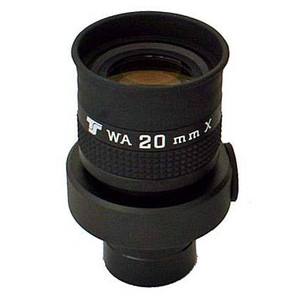
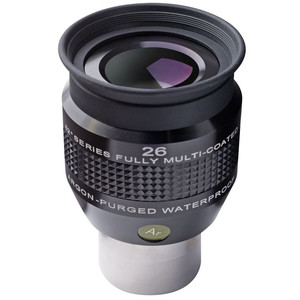
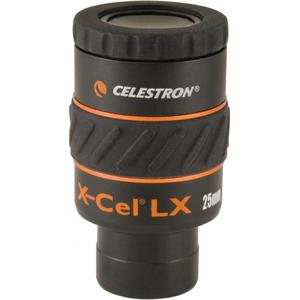
Recommended eyepieces
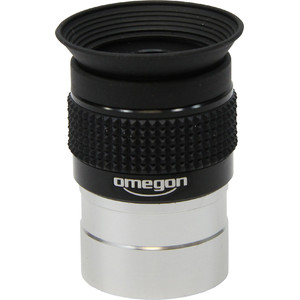
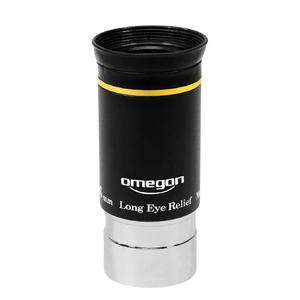
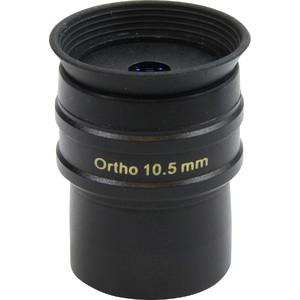
How to find objects with a wide-angle eyepiece
Imagine you want to find a galaxy with your telescope. But despite your finder scope, you're not sure if you’ve actually got the faint galaxy in the field of view because it is not visible with the naked eye. Luckily, you now have your 2" wide-angle eyepiece, which covers maybe two degrees (that's four full Moon diameters) of the sky. Thanks to this wide field of view, you can find the galaxy directly in the eyepiece and adjust so that the object is in the centre of the field of view.
Large fields of view – and why they can sometimes be misleading
The field of view that can be achieved with an eyepiece is an important factor. If you look at the eyepieces on the market today, you will find field of view specifications ranging from 45° to 110°.
This refers to the apparent field of view of the respective eyepiece, i.e. the angle in degrees that can be seen through the eyepiece. But these large fields of view can be misleading. Because the apparent field of view is nowhere near that which you actually see in the sky.
This is because a very important factor is the telescope. Depending on the magnification used, you will achieve varying true fields of view, which differ from the specifications. However, using the eyepiece’s apparent field of view, you can easily calculate the true field of view.
How to find the true field of view
The magnification of the telescope eyepiece:
M = focal length telescope / focal length eyepiece
- For example: you are using a telescope with a 1,000-mm focal length and a 10-mm eyepiece.
- 1,000 mm / 10 mm = 100 times magnification
Calculation of the true field of view:
True field of view = apparent field of view / magnification
- As an example, let’s take a Super Plössl eyepiece with a 52° apparent field of view:
- TFOV = 52° / 100x = 0.52° = 30’
The field of view in the sky would now be 0.5° wide or 30 arc minutes.
As a comparison: the Moon has a diameter of 30 arc minutes. Here you will find a table with various fields of view:
How do you calculate an eyepiece’s apparent field of view if it is not specified?
Measure the diameter of the field stop on the underside of the eyepiece. To do this, first unscrew and remove the barrel, then you can determine the ring’s width without any problems. The second value you need is the focal length which can be found on the eyepiece. You can then calculate the field of view using the following inverse tangent function:
Apparent field of view = half the field stop diameter / focal length eyepiece tan-1
You don’t use the total field stop, but just a half.
The result is then multiplied by 2.
Example
For a Plössl eyepiece with 12.5 mm focal length, I measure the field stop diameter to be 12 mm. I add these two details to the formula, but divide the diameter of the ring by 2 to get 6 mm.
- 6 mm / 12.5 mm tan-1 = 25.6 x 2 = 51°