

Smart telescopes: Why they herald a new era in astronomy
From beginner’s guides to advanced astrophotography – find out why smart telescopes are the future of astronomy!
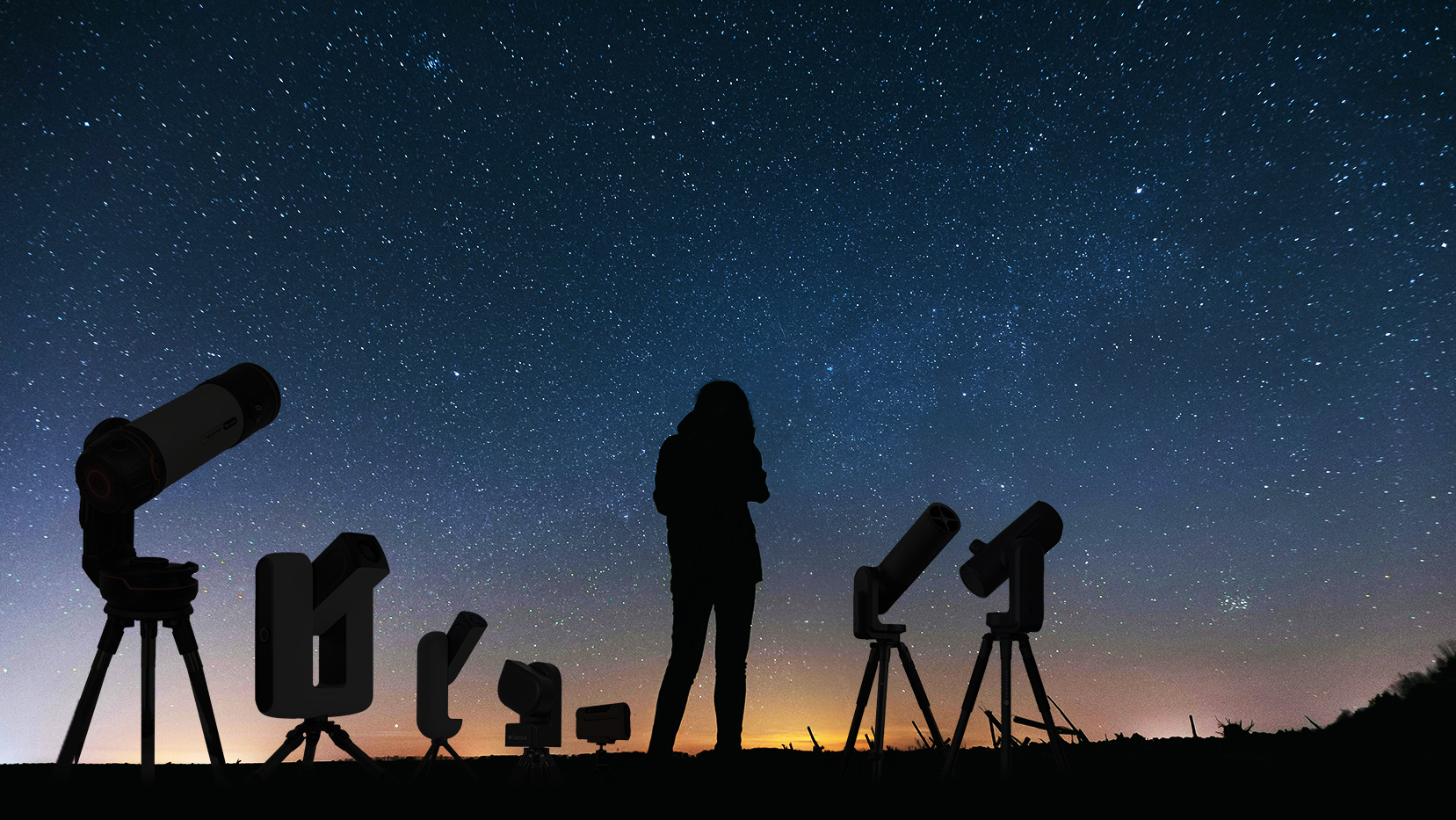
The future of astronomy has a new name: smart telescopes.
These technological marvels are transforming the way we view the night sky. Are you keen to get into astronomy – but want to keep it as simple as possible? Then you should consider a smart telescope.
This article is about:
- What are smart telescopes?
- Are these devices even suitable for beginners?
- Why this makes astrophotography easier
- How smart telescopes are (set to) change astronomy
- What models are available, and what are the differences?
Smart telescopes: our new best friend
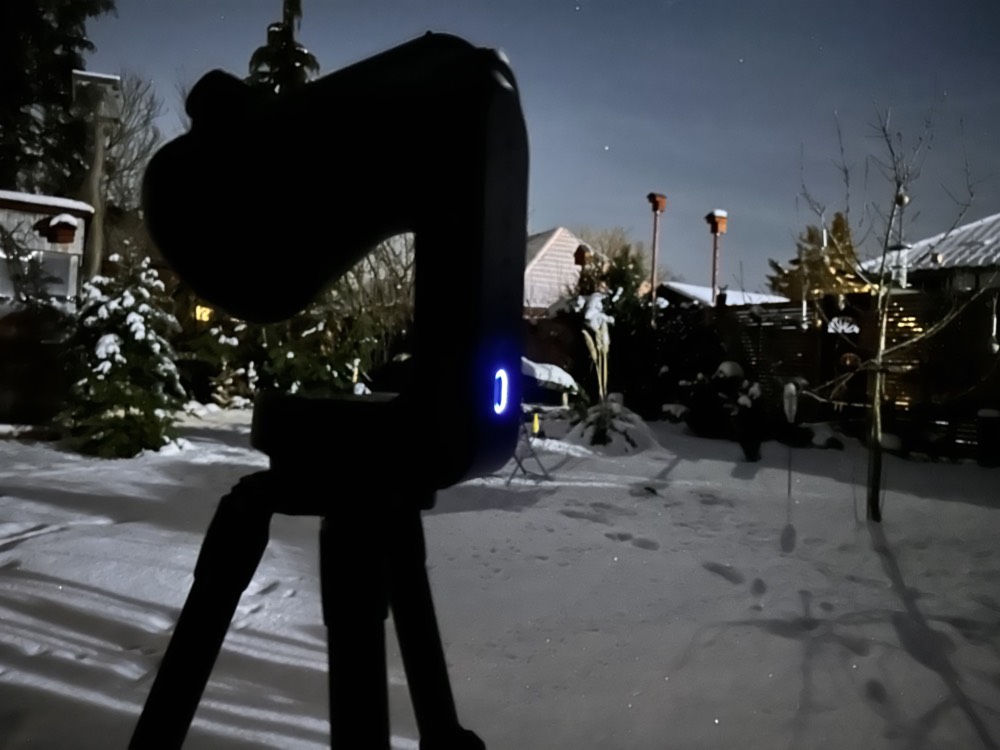 Simply set up a smart telescope in your garden or on your balcony – and you’re ready to explore the heavens.
This is unprecedented in amateur astronomy. Never before has a telescope caused such a stir. At least, not in this way. For in the ‘early days’, these new instruments were viewed with considerable scepticism by the old hands in the astronomy world.
After all, in the early days, the new instruments seemed like Judgement Day to some of the old hands in the world of astronomy. Yet for others, they were like a journey to the Promised Land. Shall we simply agree on a middle ground? As a new branch of amateur astronomy.
Take a look at the internet and the astronomy community today. It’s fair to say that these devices have now found their place in the world of amateur astronomers.
Smart telescopes combine cutting-edge technology with ease of use. Telescopes that do almost everything by themselves – making astrophotography as easy as pressing a button on a fully automatic coffee machine. Okay, let’s just say: almost.
As well as revolutionary technology, they also offer one thing: the universe for everyone. What does that mean? The aim is to make it much easier for absolutely everyone to experience the wonders of space. Does that sound idealistic? Yes, perhaps. But it’s a lovely idea.
What exactly are smart telescopes, and why are they so groundbreaking?
They incorporate a great deal of technical innovation. They are easy to use and make it simple to spot objects in the night sky.
These smart telescopes use technologies with mysterious-sounding names such as ‘plate solving’. These simply and incredibly accurately tell the instrument where it is actually positioned. The automatic tracking system ensures that the mount follows the stars without you having to constantly readjust it.
Image processing is also handled automatically. This means that even beginners can take stunning photos of galaxies, star clusters and nebulae – all without lengthy preparation or complicated settings.
In short, here’s how it works: Set it up – open the smartphone app – select the objects.
This makes these astronomical telescopes perfect for anyone interested in the night sky – whether you have prior knowledge or not. Are you one of them?
Plate solving, tracking and more
Just a few years ago, I found myself thinking: “Why is there hardly any innovation taking place?” USB ports had long been standard in many devices, and Bluetooth was also available – yet many manufacturers were still using the serial PC port. This was no doubt partly because the telescope market is as small compared to the general IT industry as a Himalayan vole is next to Mount Everest.
But there is another way.
Idealistic and small start-ups brought about the technological revolution. The manufacturers Vaonis and Unistellar were among the first to bring these telescopes to market.
Smart telescopes use a range of modern technologies to make stargazing easier and more exciting. The most important ones are:
1. Automatic alignment: Simply set up the device and let it orient itself towards the sky. Using pattern recognition and your smartphone’s GPS, the lens knows which stars it is looking at.
2. GoTo system: Would you like to observe a specific object? At the touch of a button, the instrument automatically moves to the desired celestial object. You no longer need to make any manual adjustments.
3. Autotracking: This system ensures that the lens tracks the stars and keeps them within the field of view, even if you are observing for hours on end.
4. An integrated camera: Instead of an eyepiece, an image sensor is positioned at the focal plane and transmits the image to a smartphone app.
5. Autofocus: Forget about adjusting the focus manually. The autofocus automatically brings the subject into sharp focus (on many models).
6. Auto image stacking: Multiple images of the same object are automatically combined via live stacking to create a clear and impressive astrophotograph with vivid colours. You can share this image with family and friends straight away via your smartphone.
This is what makes a smart telescope. So far, all such instruments have been fitted with an azimuth mount.
OK, hang on. Azimutal? Ever heard of it?
This refers to a mount that does not follow the natural rotation of the starry sky, but tracks objects by moving up, down, right and left – whilst, of course, keeping them precisely within the field of view.
But what about the images – won’t they end up being distorted? Ten years ago, people would have said, ‘Of course they will.’ Today, things are different.
To ensure the astrophotograph turns out well, the telescope is equipped with software that ensures the images are not distorted but are displayed in alignment with one another. This is known as digital image derotation.
An app designed for the instrument acts as the control centre for everything. You decide what to monitor and for how long.
Speaking of observing: is that actually taking photographs?
Taking photos or observing – why not both?
Trick question: What do you use a smart telescope for: taking photos or stargazing?
Don’t worry. Both are correct. After all, depending on your perspective, it can be a matter of philosophy. If you ask me, a telescope like this bridges the gap between the two worlds of amateur astronomy.
On this bridge, you can wander back and forth between two wonderful places as you please.
Are you more of a visual observer? Do you love looking at galaxies through your 12-inch Dobsonian telescope? Then why not use a smart telescope to observe galaxies and nebulae digitally with a compact, small device? The great thing is that you’ll be able to make out the spiral arms in no time at all. Even from your suburban balcony. So you don’t necessarily have to drive to dark sky areas with your car and heavy equipment.
Are you more of an astrophotographer? Usually, you set up your equipment and get ready for a long night of photography. That’s wonderful. But do you sometimes find yourself looking for an alternative? The sky clears and you could photograph a current object – in under half an hour, including setting up the telescope. Or how about taking your smart telescope on holiday with you? Then you won’t have to choose between your equipment and your family.
Do you love astrophotography? But all the hassle involved – aligning the equipment, connecting the camera, autoguiding… Is all that technical stuff too much for you? Then here’s the solution: use a small, smart observation station. It makes getting started in astrophotography a breeze.
Advanced Astrophotography
Is a smart telescope with a mobile app just a gadget or a bit of fun for beginners or tech enthusiasts? No!
Even as an advanced astrophotographer, you can benefit from this. How? It’s quite simple. You don’t have to rely solely on the systems’ automatic settings. Don’t you want automatic stacking, for example? But would you prefer uncompressed files instead?
This is possible on many devices – for example, in the settings of the ZWO Seestar telescope or on the Vaonis Vespera. You should then select the option to save your data in FITS format on a per-frame basis.
Using your PC and image-stacking software, you can edit and process your images to suit your preferences. You can also carry out further image processing later using programmes such as Photoshop. Astrophotography enthusiasts and keen image editors have long since discovered that a small apochromatic or reflector telescope is ideal to take on holiday. You can find examples of the results on Astrobin.
Smart telescopes are evolving and are increasingly becoming the ultimate astrophotography device, combining all the latest features in a compact instrument. Among other things, the Vespera Pro offers automatic dark frame subtraction.
What exposure time can I set?
Most smart telescopes operate with exposure times ranging from 4 seconds (e.g. Unistellar) to 10 seconds (e.g. ZWO, Vaonis). This ensures a sufficiently long exposure time without any noticeable field rotation. However, in the Seestars’ advanced features, for example, it is possible to increase the exposure time to 20 or 30 seconds.
Advantage: more object information reaches the sensor per image. Disadvantage: this can lead to visible distortion. However, there is a clever way to get round this. Simply set up your Seestar telescope in a parallactic configuration. The following video explains exactly how to do this.
How do you find objects in the sky and how do you observe them?
You’re probably wondering how exactly you’re supposed to find objects in the sky. With standard telescopes, you need to gain some experience. But with smart telescopes, this process becomes a breeze. Gone are the days of laboriously studying star charts and manually aligning the telescope. Smart telescopes align themselves automatically.
Simple steps such as:
1. launching a smartphone app and
2. entering the desired destination
are sufficient.
The integrated components handle alignment and guidance by analysing the position of the stars and positioning the objects precisely within the field.
Within ten to twenty seconds, you will notice how the object becomes clearer and stands out more and more against the sky.
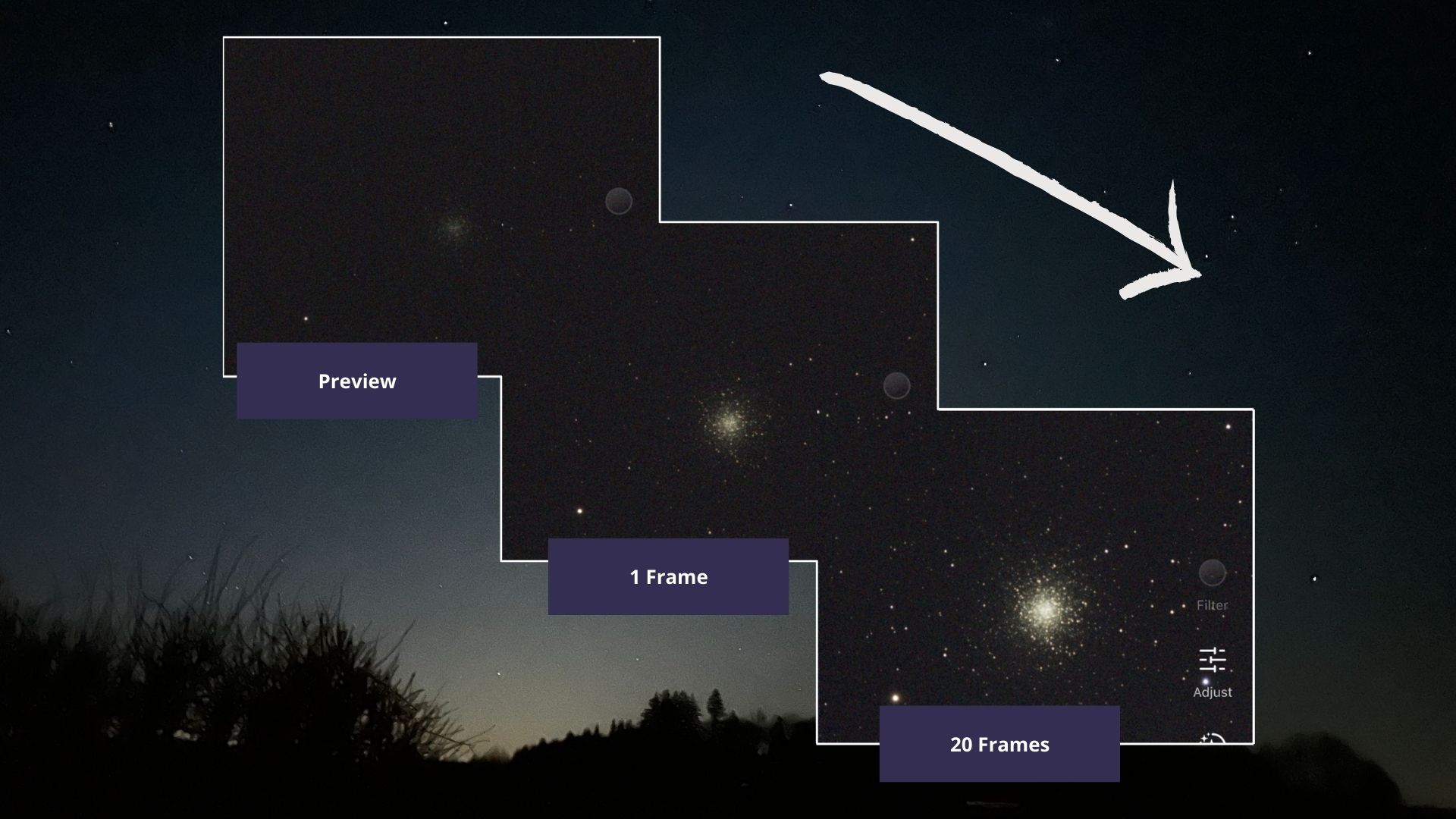 The stacking process: how the image becomes increasingly clear
 Could a smart telescope be something for me?
That’s the big question, isn’t it? Just imagine being able to capture detailed images of distant galaxies, sparkling star clusters and fascinating nebulae in no time at all.
Without all the technical hassle that comes with traditional telescopes. Doesn’t that sound brilliant? Whether you’re a die-hard amateur astronomer or simply someone who’s fascinated by the stars, a smart telescope could be just the thing for you. It’s compact, straightforward and brings the wonders of the sky right to you – whether that’s your balcony in the city or a peaceful holiday spot in the countryside.
And remember, the best thing about it is how simple it is: you don’t have to choose between stargazing and fiddling with complicated settings. If that sounds like you, then this product is just the thing for you!
Finding properties: it's that simple
Unlike a walk through picturesque countryside, astronomical objects aren’t something you simply stumble upon. You don’t come across galaxies in the same way you might come across flower beds on a stroll through a park.
The sky often keeps its treasures well hidden. It usually takes a bit of know-how to track them down. That’s where we come in with our new digital friend!
You can always find the moon
Let’s start with the simplest celestial body – the Moon. Whether you’re in the middle of the city or at a remote mountain cabin, the Moon is your faithful companion in the night sky.
Its phases change regularly, and it is large enough to be easily spotted. The Moon is often the first step for budding astronomers, as it reveals impressive details such as craters and mountain ranges even to the naked eye. This is also where smart telescopes can really come into their own. Smartphone apps usually have a dedicated function for zooming in on the Moon with a single tap.
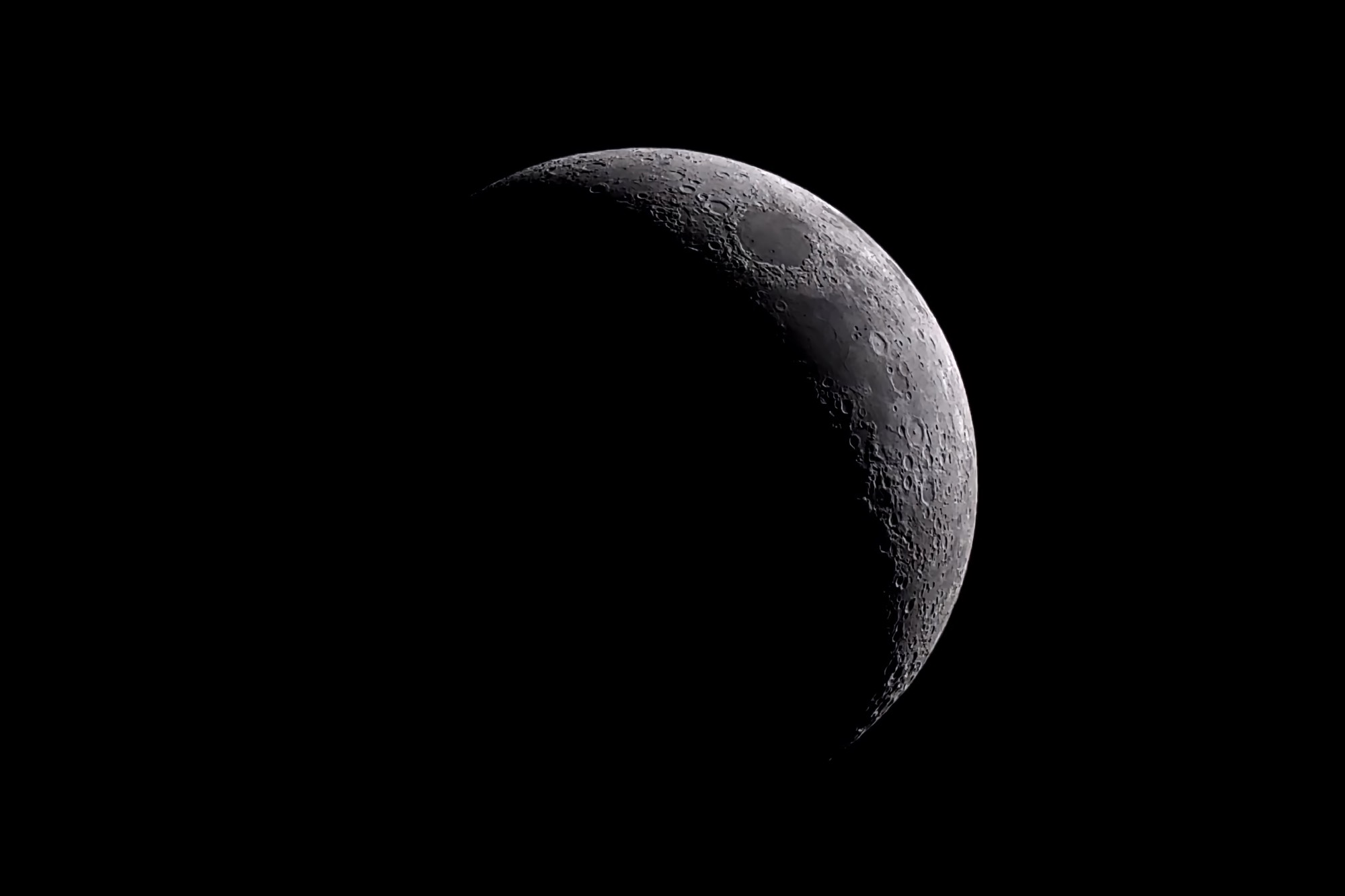 Waxing moon, photo: MS
Planets: a bit more difficult
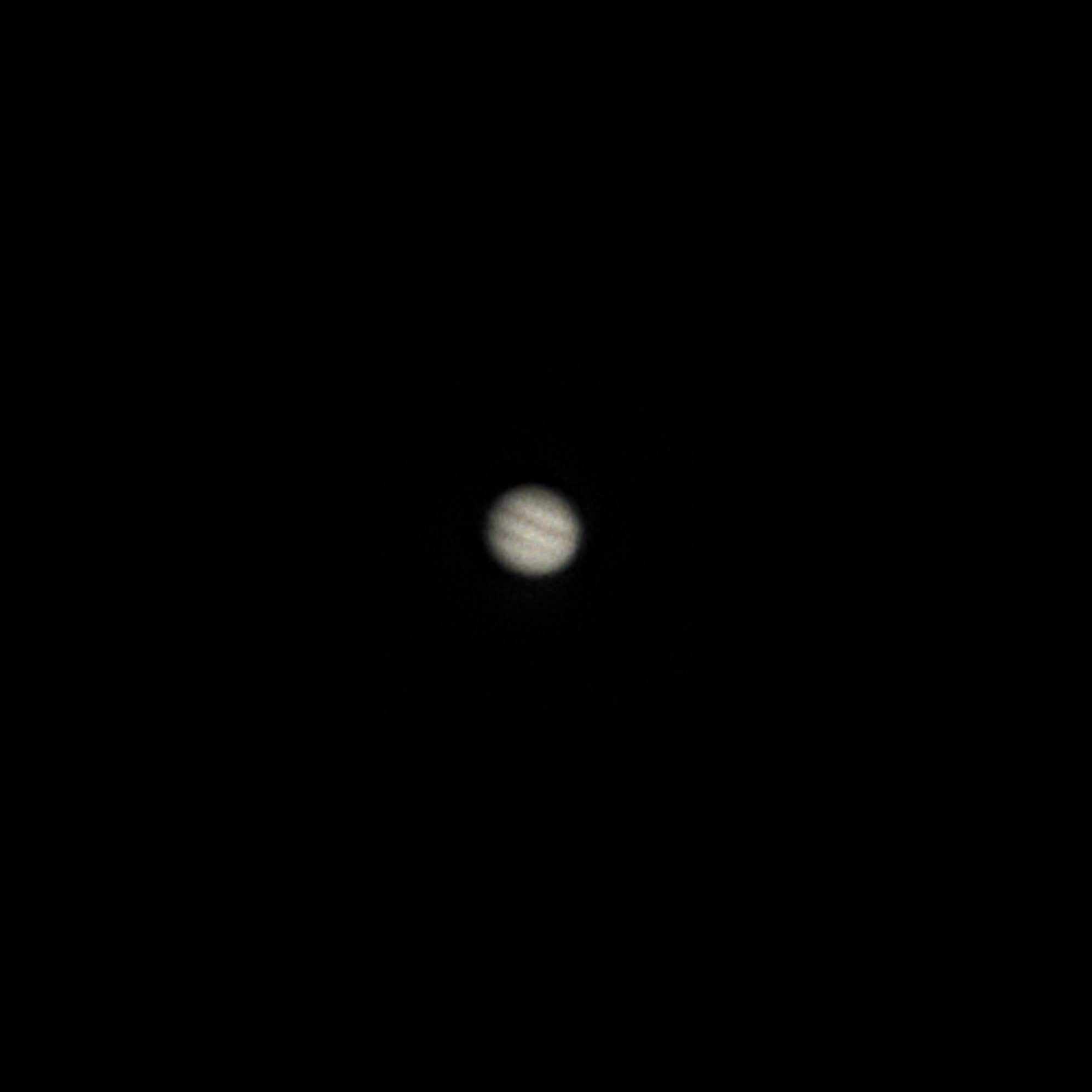
Things get more challenging when it comes to the planets. They move across the sky and appear differently depending on the season. Saturn with its magnificent rings, Jupiter and its moons, or Mars with its reddish glow. Viewed through a telescope designed for visual observation, these objects are a sight to behold.
You can also use the app to view the planets through the smart telescope. However, the current models do not yet do justice to their fascination.
Although Jupiter can be seen with its two bands and the Galilean moons, on the whole you’re only given a quick glimpse. In their defence, I must say that the short focal length of these smart telescopes simply cannot deliver anything more. However, there are bound to be a few developments in this area in the future.
Deep Sky: the targets are initially invisible
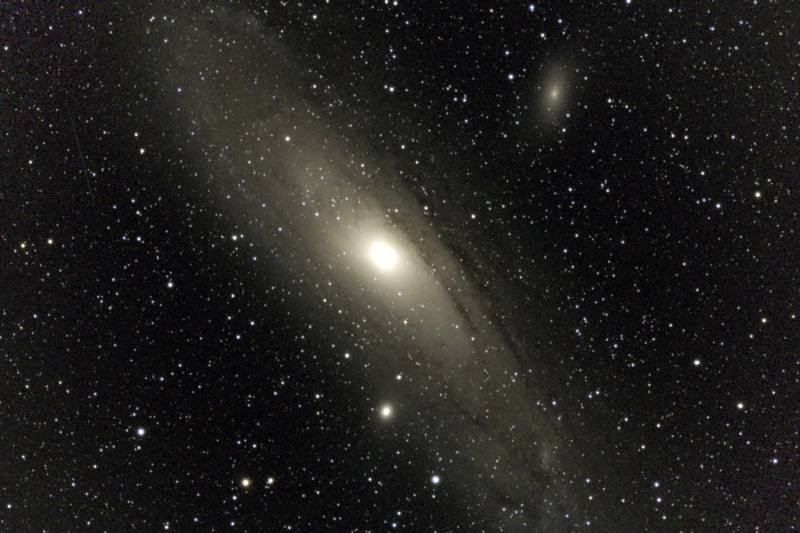
And now we come to the real gems of the night sky: deep-sky objects. Galaxies, nebulae and star clusters are often so far away that they cannot be seen with the naked eye. This is where things get really exciting! With a smart telescope, you can immerse yourself in a world that remains hidden to many. Thanks to the powerful sensors and automated functions of these telescopes, you can transform even the faintest points of light into stunning celestial objects. This is where the greatest strength of the new automatic telescopes lies.
A comparison with traditional astro cameras: how good are the results really?
The cameras used in smart telescopes are often based on well-known models of smaller astro-cameras, such as the Sony IMX462 or the Sony IMX585, with resolutions of 2MP or 8MP. The automatic mode offers a few customisable settings, and the cameras are permanently fitted and cannot be detached from the instrument.
In the hands of experienced photographers, traditional astro cameras still deliver the finest detail and the highest resolution. This is partly because you are completely free to choose your own optics. However, the investment required in equipment and technical knowledge is far greater.
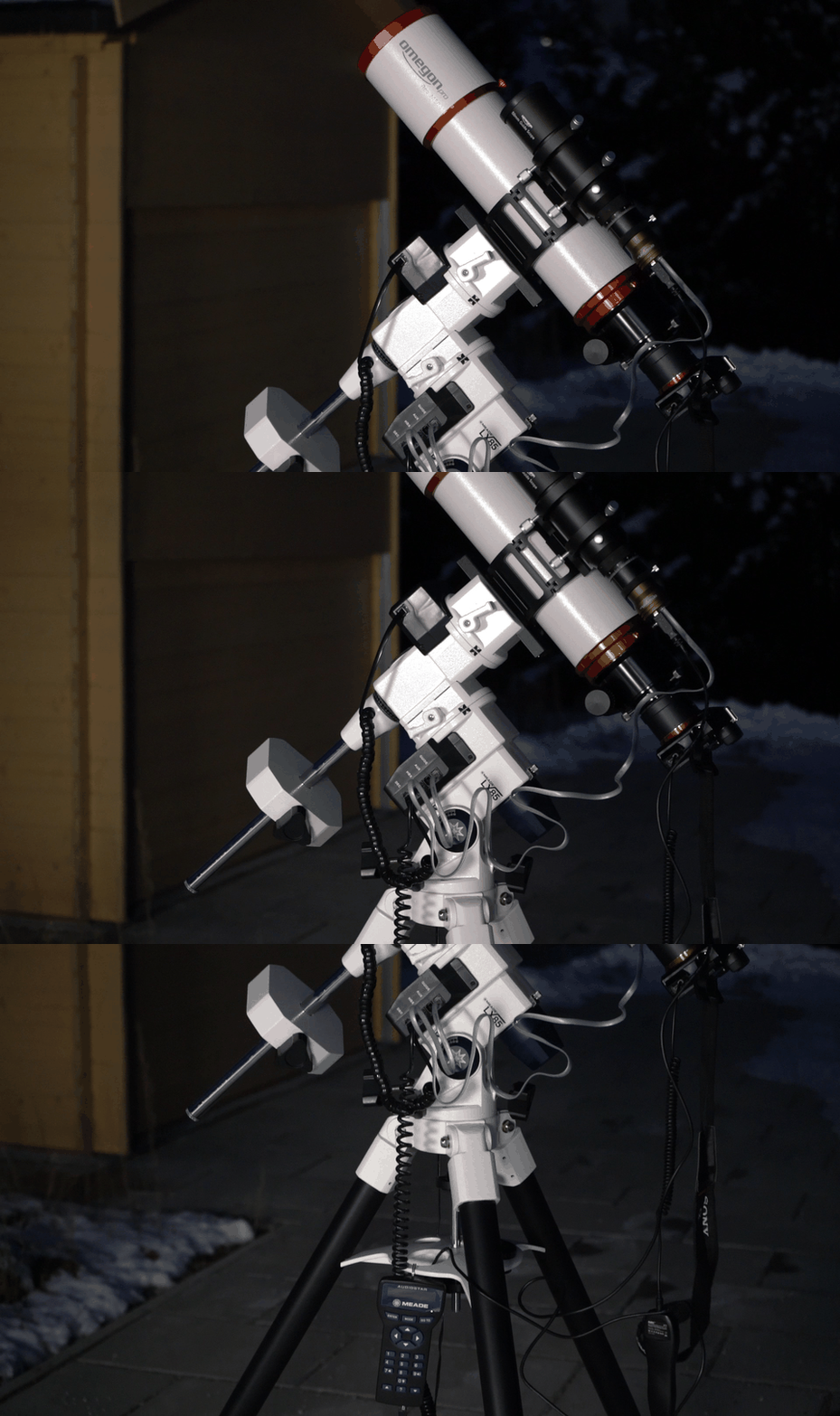 This is how to set up a deep-sky photography rig with a guidescope, a guiding camera and a main camera
Smart telescopes are easy to use and do not require extensive setup. This makes them ideal for beginners and experienced observers alike who simply do not want to invest so much time and energy in traditional imaging. With modern image-processing algorithms and built-in features, they deliver results that are more than adequate for most amateur astronomers.
Choosing the right smart telescope
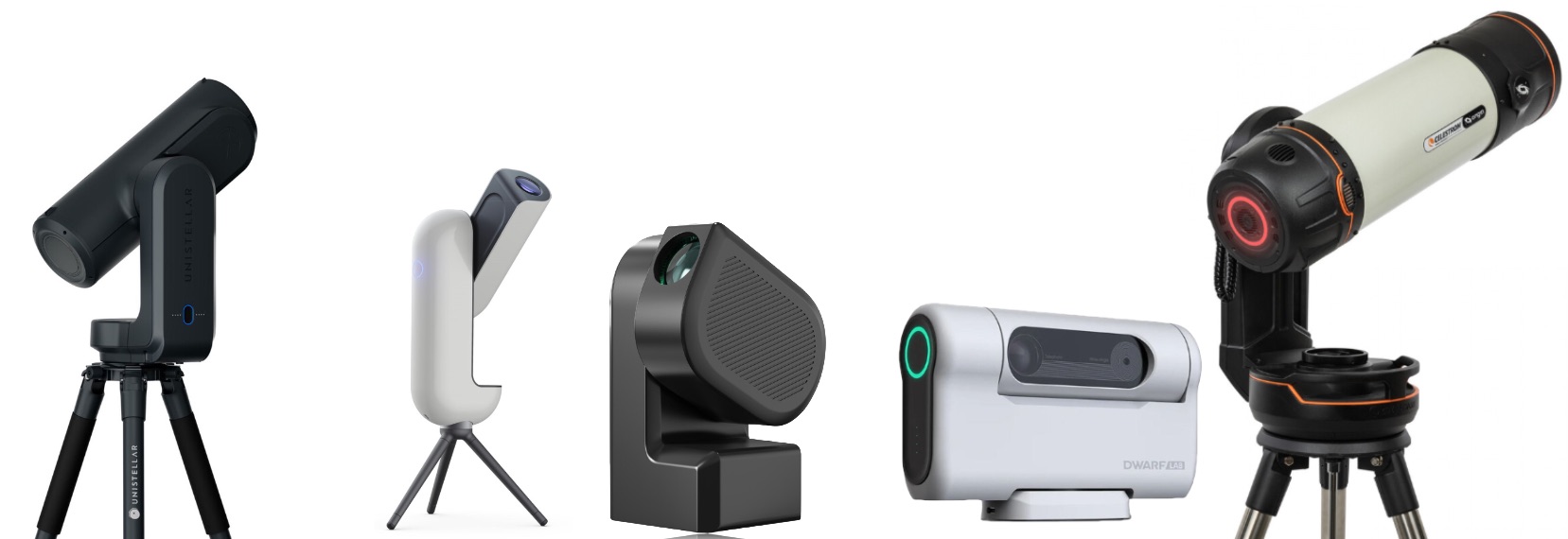
When choosing a smart telescope, value for money is also an important factor. DwarfLab, Unistellar, ZWO and Vaonis are well-known brands. And they offer good models at reasonable prices.
A brief overview: What do the manufacturers offer?
There’s a suitable telescope for everyone! Depending on your budget. The key is to find the right balance between cost and value. I’ve already had the chance to test most of these telescopes. I’ve summarised my recommendations for you here.
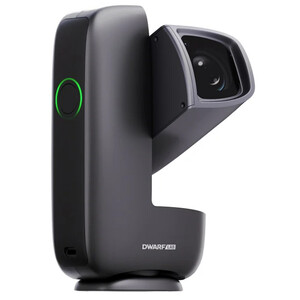
DwarfLab: The DWARF II Deluxe offers the most affordable way to enter the world of smart telescopes. This compact device uses two small lenses to provide clear or zoomed-in images of the sky. During the day, it can be used to take nature photographs. The hardware is of very high quality, but due to the small lens, the images have a fairly high level of noise.
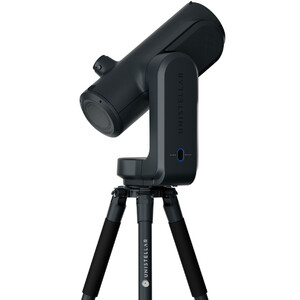
Unistellar: The manufacturer specialises in producing reflector telescopes for smart astronomy. With the eQuinox, the manufacturer launched a reflector telescope featuring a 114mm objective lens. Unistellar also offers observers something no other manufacturer has: an eyepiece. When you look through the eyepiece, you get the impression of visually capturing the galaxy or nebula. This telescope comes very close to realising the idea of combining technology and observation. Smaller models are now also available.
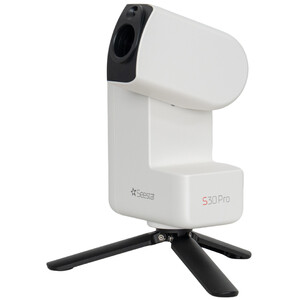
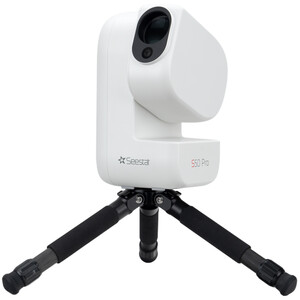
ZWO: The manufacturer made a name for itself by offering high-quality astro cameras. With the ZWO Seestar S50, it launched an apochromatic design with a 50mm objective lens diameter at an unbeatable price. The telescope is compact and is sure to delight countless fans.
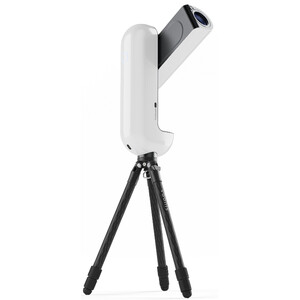
Vaonis: Smart telescopes aren’t just impressive – they look great too. If you own a Vaonis telescope, it could easily be a real eye-catcher in your living room. The French manufacturer specialises in apochromatic telescopes with a 50mm objective lens. New models in the Vespera series (such as the VesperaPRO) offer higher resolution and even better technology. The mosaic mode for large deep-sky objects is currently unique. The price is higher than ZWO’s, but this is a European and highly innovative company.
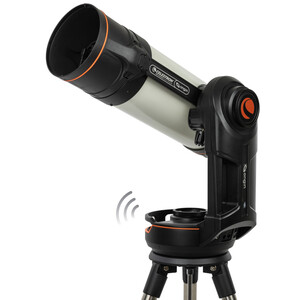
Celestron: Who hasn’t heard of this manufacturer? Celestron is a major player in amateur astronomy and is particularly well known for its Schmidt-Cassegrain telescopes. With the Origin, the first smart telescope with a 150mm objective lens diameter is hitting the market. Celestron is going all out, as the optics feature the extremely fast Rowe-Ackermann-Schmidt astrograph with an aperture ratio of f/2.2. So light is being shovelled towards the sensor in abundance.
Revolution or gimmick? How smart telescopes are transforming amateur astronomy
Of course, you might find yourself thinking that these telescopes are just a passing fad. But if we take a look at how technology has already made its way into the hobby of astronomy, then these telescopes were simply the next logical step.
Plate-solving in itself is not an entirely new concept; Wi-Fi modules have been around for a long time and GoTo telescopes are now standard. AI applications are being used more and more in astronomical image processing, even by ‘serious’ astrophotographers.
Do we need smart telescopes?
Imagine you are the one who, with a simple swipe of your finger on your smartphone, brings sparkling stars, distant galaxies and fascinating nebulae into view. The technology makes it possible, but it is your enthusiasm that brings these images to life. Without us, without our questions, our dreams and our quest for knowledge, these outstanding technologies would be nothing more than silent tools. Hence my answer: yes, definitely.
Smart telescopes are transforming the world of amateur astronomy. They combine powerful optics, smart electronics and user-friendly software. This makes the night sky accessible to everyone. Whether you’re new to amateur astronomy or a seasoned enthusiast with a wealth of knowledge, they open up a whole new chapter in exploring the universe.
FAQs: A few important questions
What is a smart telescope?
A fully automatic device for observation and astrophotography. This type of telescope combines optics, a mount and intelligent systems to make it easy to capture images of the universe using a smartphone or tablet. Unlike ‘traditional’ telescopes, most smart telescopes do not have an eyepiece, but instead feature an image sensor.
What sensors do the current models on the market use?
The current models use Sony sensors, many of which have already been used in popular astro cameras. In the section of this article entitled ‘What do the manufacturers offer?’, you will find a comparison table of some of the different models.
What else do I need apart from the telescope?
Apart from the telescope itself, all you need is a smartphone or tablet to get started. Most modern devices are compatible with apps that make controlling the telescope a breeze. Simply download the app, pair it with the telescope, and your journey of discovery can begin. It’s as easy as a walk in the park.
Can I use this when I'm out and about / on holiday / under the southern sky?
Absolutely! One of the great advantages of smart telescopes is their portability. They are light and compact enough to take with you on your travels with ease. Whether it’s a camping trip under a sparkling starry sky, a beach holiday or an expedition to remote areas – your smart telescope is always with you.
Even if I don’t have room for my large Dobsonian telescope or can’t take the heavy EQ-6 mount and tripod with me – there’s always space for a Vespera or a Seestar.
And if you’re ever lucky enough to experience the southern sky, you’ll be amazed at how quickly and easily you can discover the wonders of the southern hemisphere.
Travelling by plane?
Don’t worry, it’s also suitable for air travel. As mentioned, most models are so compact and lightweight that they can easily be stowed in your hand luggage. Just make sure to pad all the parts well to protect them from knocks. With the right preparation, travelling with your smart telescope is a breeze. What’s more, you don’t need to worry about complicated check-in procedures.
Do I need a power supply?
Yes, your smart telescope requires power, but that’s not a major issue. Most models feature built-in rechargeable batteries that provide several hours of operation. You can simply charge them before you start observing. Alternatively, you can use a portable power bank to extend the battery life. This means you’ll be well equipped even in remote locations and ready for extended observation sessions.
Do I need a dark sky?
Whilst dark skies are, of course, always an advantage and offer the best viewing conditions, smart telescopes also cope well with the challenges of urban light pollution. Thanks to state-of-the-art image processing, you can discover impressive celestial objects even near cities.
However, if the opportunity for a dark sky arises, be sure to make the most of it. Here too, the rule applies: nothing can replace a dark sky.
How can I view the images?
You can view the images you’ve captured directly on your smartphone or tablet. The app not only displays a live view of the telescope image, but also saves your photos. You can browse through them straight away in your photo gallery and select your favourites.
How can I share photos?
Of course, you’ll want to share your stunning sky photos with others! Your smart telescope’s app makes it easy to post your photos directly to social media platforms such as Instagram, Facebook or X. You can also share them via messaging apps like WhatsApp or by email. Why not let your friends and family in on your astronomical adventures and inspire others to look up at the stars themselves? Who knows, perhaps your photos will spark a passion for astronomy in someone.
Does the ZWO Seestar S50 or the Vespera have a UV/IR cut filter?
Yes, the Seestar has a built-in UV/IR cut filter, as well as a dual-band filter that can be activated at the touch of a button. The Vespera also features a UV/IR cut filter, and a dual filter is available as an accessory.
Can I observe the Sun using smart telescopes?
The manufacturers ZWO, Vaonis and Unistellar offer white-light solar filters for their telescopes, which allow us to observe and photograph sunspots. Please note: It is essential that you attach the solar filter to the lens before pointing the telescope at the Sun. The apps include special functions for solar observation.
So, what next? We hope you enjoy your new, modern telescope. Below you’ll find a selection of recommended instruments that we’ve also mentioned in this magazine article.
Smart telescopes to suit every budget
Author: Marcus Schenk
Marcus is a stargazer, content creator and book author. He has been helping people to find the right telescope since 2006, nowadays through his writing and his videos. His book "Mein Weg zu den Sternen für dummies Junior" advises young people, and those who are still young at heart, what they can discover in the sky.
As a coffee junkie, he would love to have his high-end espresso machine by his side under the starry sky.