

Buying Guide: New Omegon Telescopes for Astrophotography
On the fast track to great astrophotos—with our dream teams of high-quality optics and mounts!
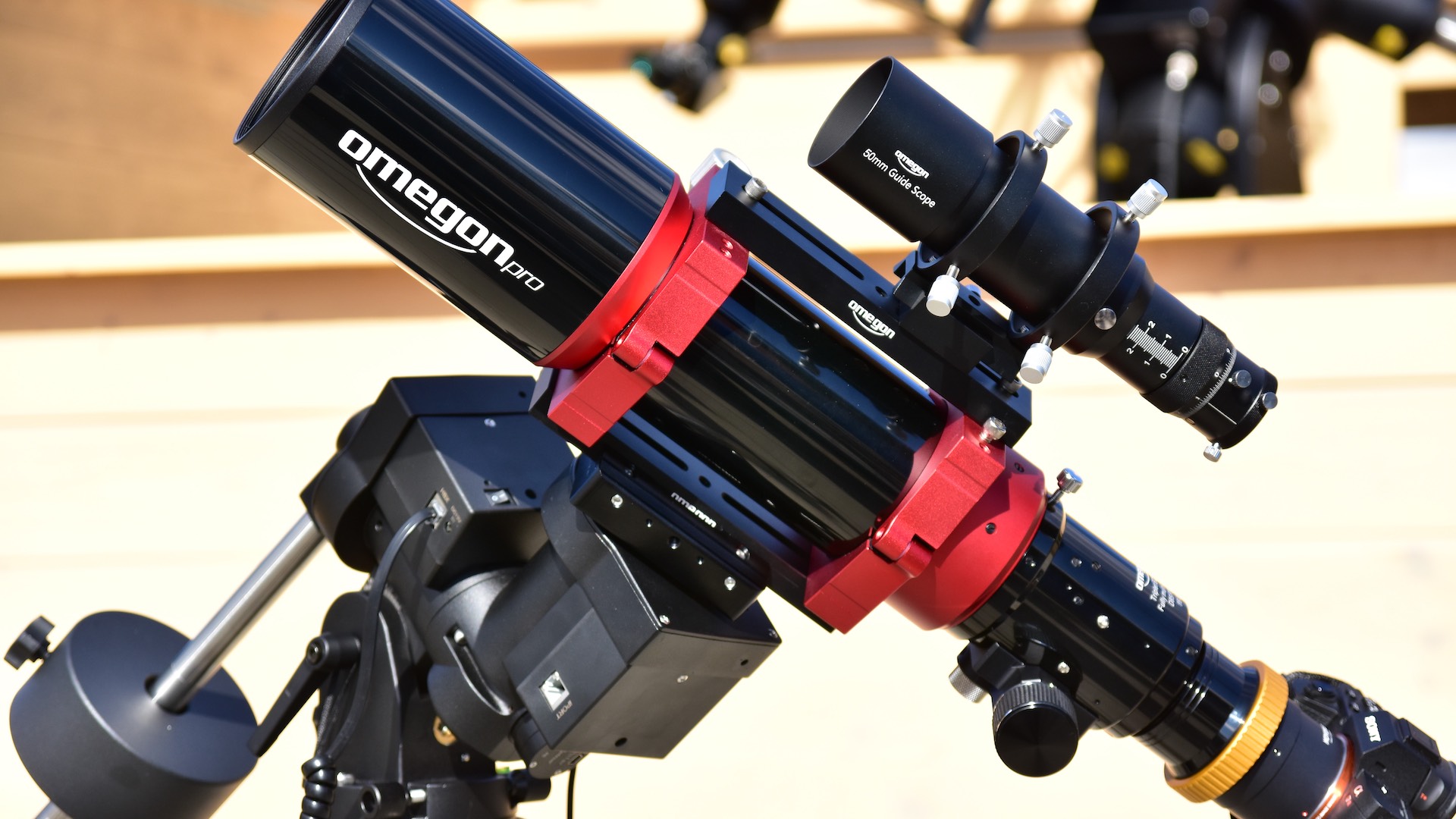 Omegon Pro 85/560 ED refractor with iOptron CEM26 LiteRoc mount and an additional guide scope mounted on it
At first glance, astrophotography seems very complex. You’ve probably seen telescopes mounted on heavy tripods with a tangle of cables around them, used to take beautiful astrophotographs. These days, there’s a huge selection of telescopes and mounts available, and it can be difficult—especially for beginners—to get a complete overview. With this buying guide, we want to make your choice easier so that you can find the right equipment, regardless of your experience level.
This buying guide focuses on the basic equipment: the mount and the optics. You can find the right astro camera using our infographic. Additional accessories are optional and will become necessary as you gain more experience.
Which mount is right for you?
For several years now, iOptron has been offering the CEM series—high-quality, stable mounts that are well-suited for astrophotography. These are equatorial mounts, but their design differs from that of classic EQ mounts. This is because “CEM” stands for “Center-balanced Equatorial Mount.” The center of gravity has been shifted so that it is as close to the center as possible, ensuring the mount is well-balanced. As a result, at first glance, its design doesn’t look much like a traditional equatorial mount. The advantage: You need significantly fewer counterweights, since you only have to compensate for the weight of the telescope to bring everything into balance.
Another advantage of this design is that polar alignment can be performed in any position. With a traditional EQ mount, this is only possible if both axes are moved into a specific position.
Virtually all mounts suffer from a periodic worm gear error. This error is caused by manufacturing tolerances in the pitch of the worm shaft. This results in a “back-and-forth oscillation,” which leads to inaccurate tracking. As a result, the same tracking error occurs at regular intervals. To address this, iOptron has incorporated a feature called PPEC into its mounts, which can detect this periodic error and correct it automatically.
What models are available?
For our photo bundles, we rely on the CEM 26 and CEM 40 models, which can support telescopes weighing up to 12 kg and 18 kg, respectively. Thanks to their excellent weight-to-load-capacity ratio, both mounts are very lightweight for what they can handle. The name “LiteRoc” refers to an improved tripod that is more sturdily built and features vibration dampers on all legs.
What are encoders?
"EC" stands for the encoders commonly installed in professional mounts. These ensure that the movement of the axes can be accurately measured. This guarantees better tracking and eliminates the need for autoguiding. All models with "EC" in their name are equipped with these encoders.
Additional Features
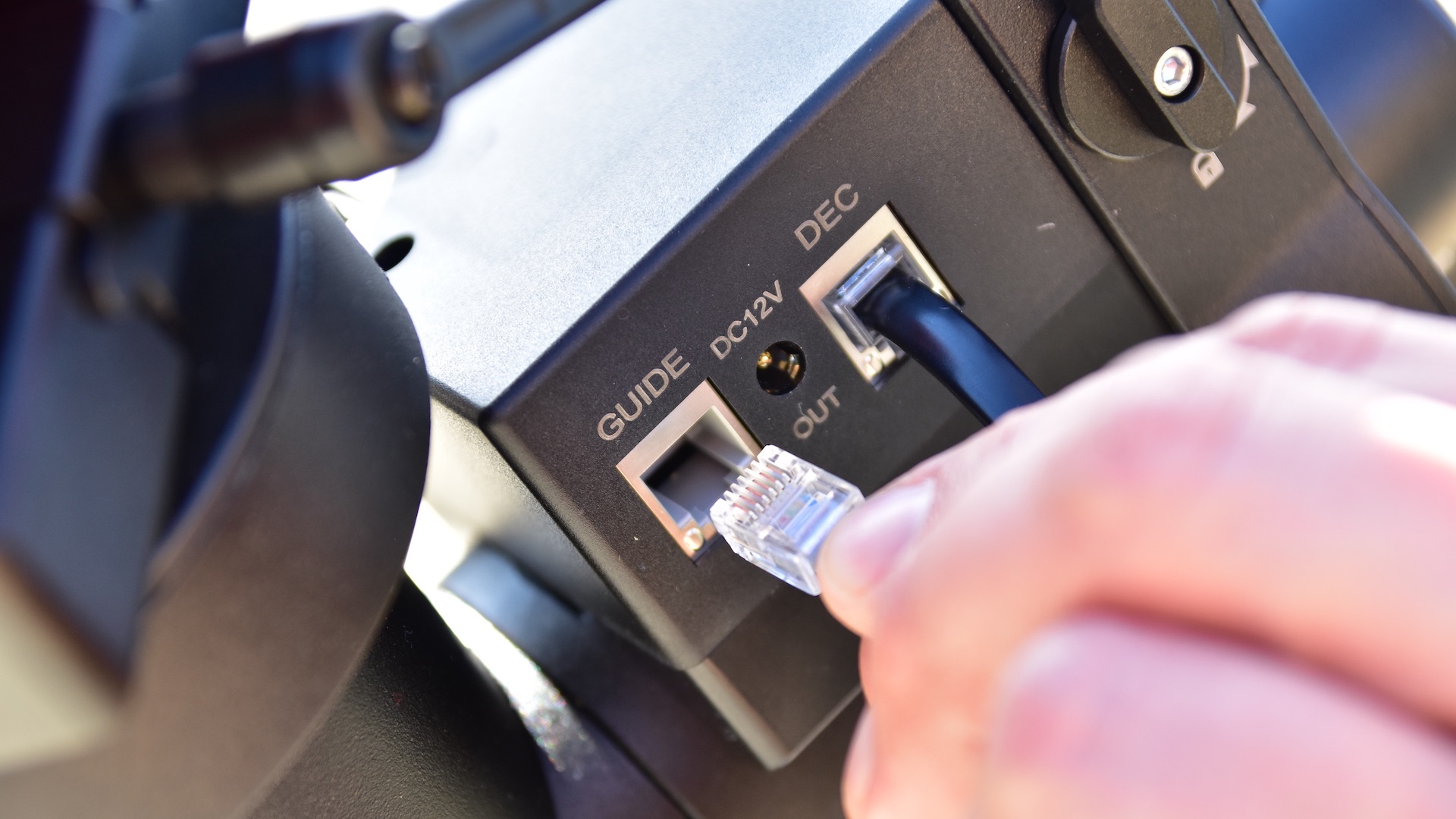
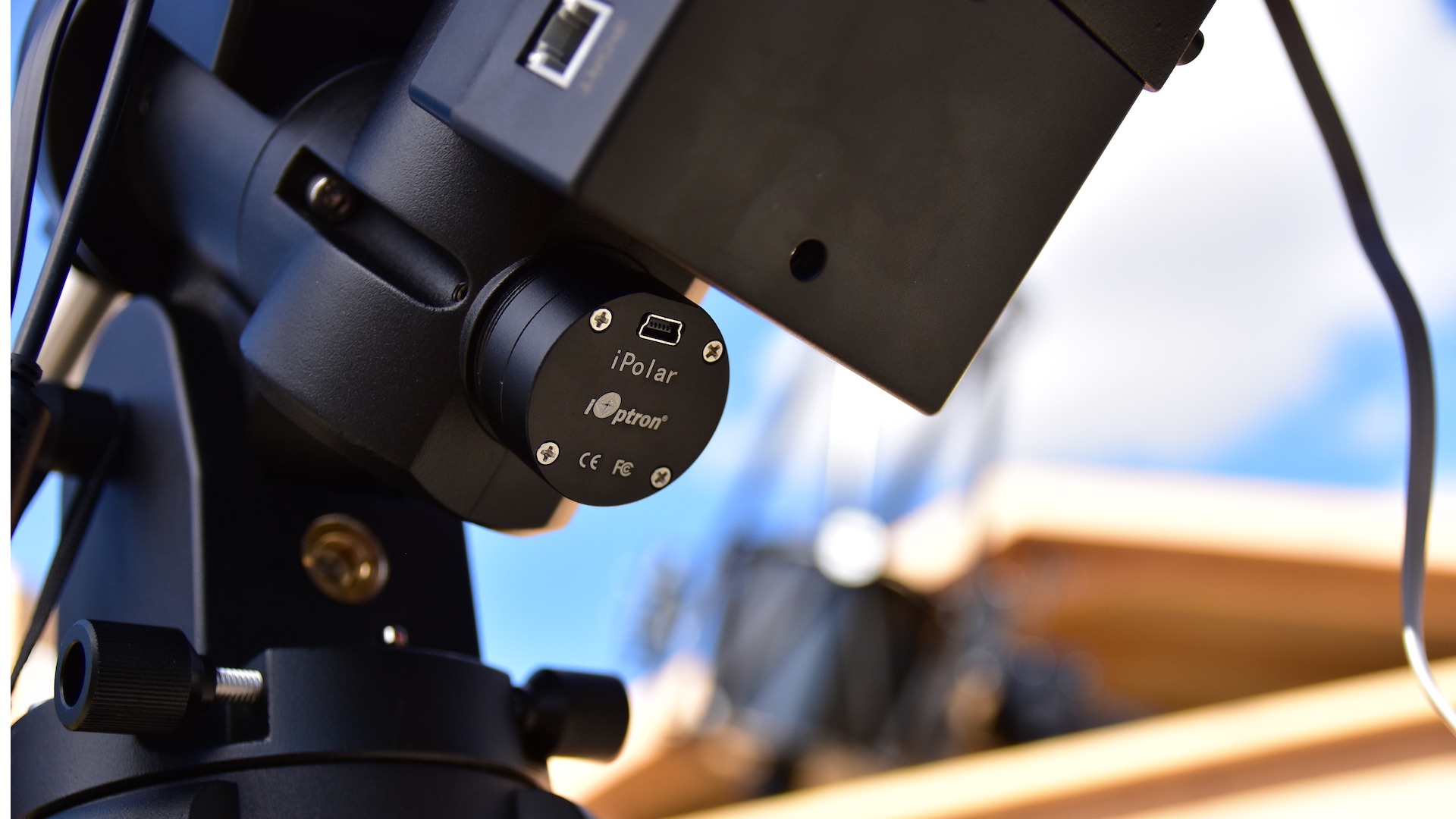
Unlike the CEM 26, the CEM 40 has a built-in GPS module to automatically determine its location. In addition, both mounts feature an electronic polar alignment tool called iPolar, which simplifies polar alignment. The GPS module can be easily retrofitted to the CEM 26. Furthermore, both models offer the option to install a Wi-Fi module, allowing the mount to be controlled via a smartphone, tablet, or PC using the ASCOM protocol.
Apochromatic Refractors
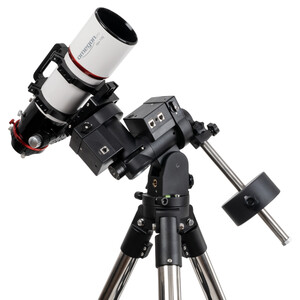
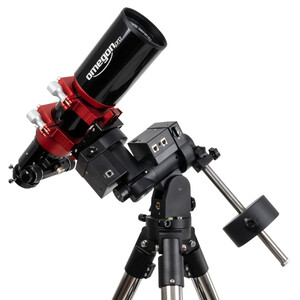
Refractors are popular among astrophotographers for good reason. They offer a wide field of view and produce aesthetically pleasing stars without spikes. The Omegon Pro APOs are available in all lens configurations, from duplets to quintuplets. All models feature ED correction lenses for true-to-color images and come with a retractable dew cap. These telescopes are characterized by excellent contrast and high light-gathering power. The focuser is designed for use with cameras and can be moved precisely—even under heavy loads—thanks to a combination of rack-and-pinion and Crayford mechanisms. These refractors have a short focal length and are therefore well-suited for wide-angle imaging. They are designed for full-frame cameras and, unlike reflector telescopes, offer no obstruction.
There’s one special feature of the smallest bundle we recommend. The SkyGuider Pro is an astrophotography mount designed for cameras weighing up to 5 kg and small telescopes. For heavier equipment, the mount includes a counterweight bar to which you can attach a camera weighing up to 3 kg instead of a weight. This allows you to take photos with two different optical systems at the same time. A hand controller is also included, and unlike the CEM models, the SkyGuider Pro can be used completely independently thanks to its built-in battery. It features a polar finder for precise alignment with the celestial pole, and you can reverse the rotation axis for observing the southern sky. The iPolar electric polar finder can also be retrofitted to this model.
Pro CC
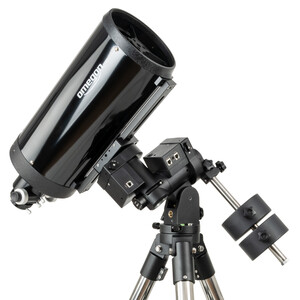
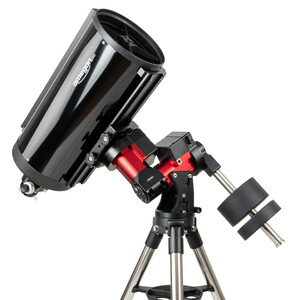
Cassegrain telescopes offer a long focal length—and thus high magnification—despite their compact size. This makes them particularly well-suited for observing small deep-sky objects such as planetary nebulae, as well as the Moon and planets.
The quartz mirror (94% reflectivity) experiences less deformation during cooling, which means the telescope is ready for use more quickly. One problem with Cassegrain telescopes is mirror shifting during focusing, which can cause the object to move out of the field of view. This is prevented by a classic focuser, which also has a long back focus, eliminating the need for extension tubes. Compared to the other designs mentioned, these telescopes are only partially suitable for full-frame cameras. However, there are significantly fewer image aberrations due to the mirror design, and the obstruction is lower than in Schmidt-Cassegrain telescopes. Eight anti-glare baffles ensure greater contrast and sharper details.