

The Comprehensive Omegon Apo Guide: An Overview of All Omegon Pro Apochromats
Sure, a Newtonian or an astrograph offers a larger aperture. Still, for many people, a compact apochromatic telescope is the perfect tool for astrophotography.
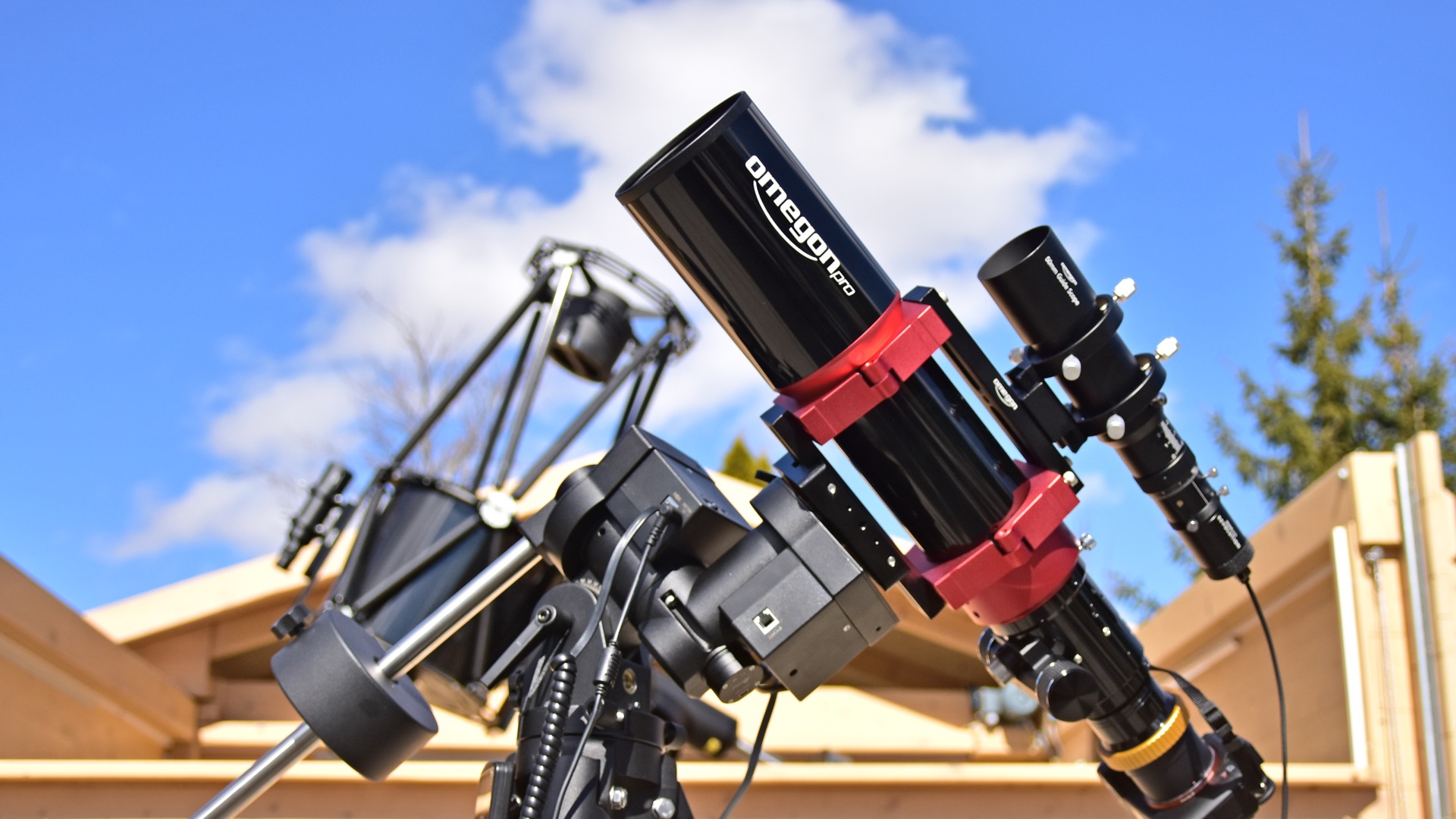
A standard refractor consists of two lenses but produces chromatic aberration, which reduces contrast. An apochromat, on the other hand, produces an image that is virtually free of color fringing and rich in contrast. A refracting telescope becomes an apochromat—or “apo”—through the use of Extra-Low Dispersion (ED) specialty glass and, in high-end models, a third lens element (triplet). The sophisticated chromatic correction achieved with ED glass allows for “fast” aperture ratios around f/6, with all the associated benefits: high light-gathering power, a wide field of view, and easy assembly.
The Pro Apo Series from Omegon: Optimized for astrophotography
Omegon's Pro Apo series offers telescopes with apertures ranging from 61 to 140 mm and focal lengths ranging from 360 to 910 mm. Five product groups cover all needs, from advanced amateurs to professionals. Our buying guide summarizes the key distinguishing features and explains which instruments are particularly well-suited for photography.
What they all have in common is their meticulous construction and craftsmanship, which you can immediately feel when you pick up the instrument. The focusers are designed for use with cameras and can be moved and locked into place with precision, even under load. Some models come with specially calculated correctors, some of which are already installed.
First things first: All Omegon Pro Apos have an image diagonal of 44 mm with the corrector and are fully compatible with full-frame sensors.
What Advanced Amateur Astronomers Need—and What They Don't
"Pro" stands for "Professional," which is why these apochromatic telescopes come without a mount, tripod, viewfinder, or eyepieces. The needs of dedicated apochromatic observers and astrophotographers are simply too varied. We’re happy to help you choose the right mount and accessories. Our buying guide New Omegon Telescopes for Astrophotography presents tailored combinations of Omegon Pro Apos with excellent mounts from iOptron.
All Apos come with tube rings or a compatible mount. With a few exceptions, a prism rail is also included; for smaller apertures, it is Vixen-compatible, and for larger ones, it fits Losmandy.
Please note that some Apos are shipped without a viewfinder shoe; in these cases, you'll need to provide the appropriate shoe for your viewfinder yourself. Many come with a sturdy carrying case. The product description provides clarity on all questions.
Correction Filters: A Key Element in Astrophotography
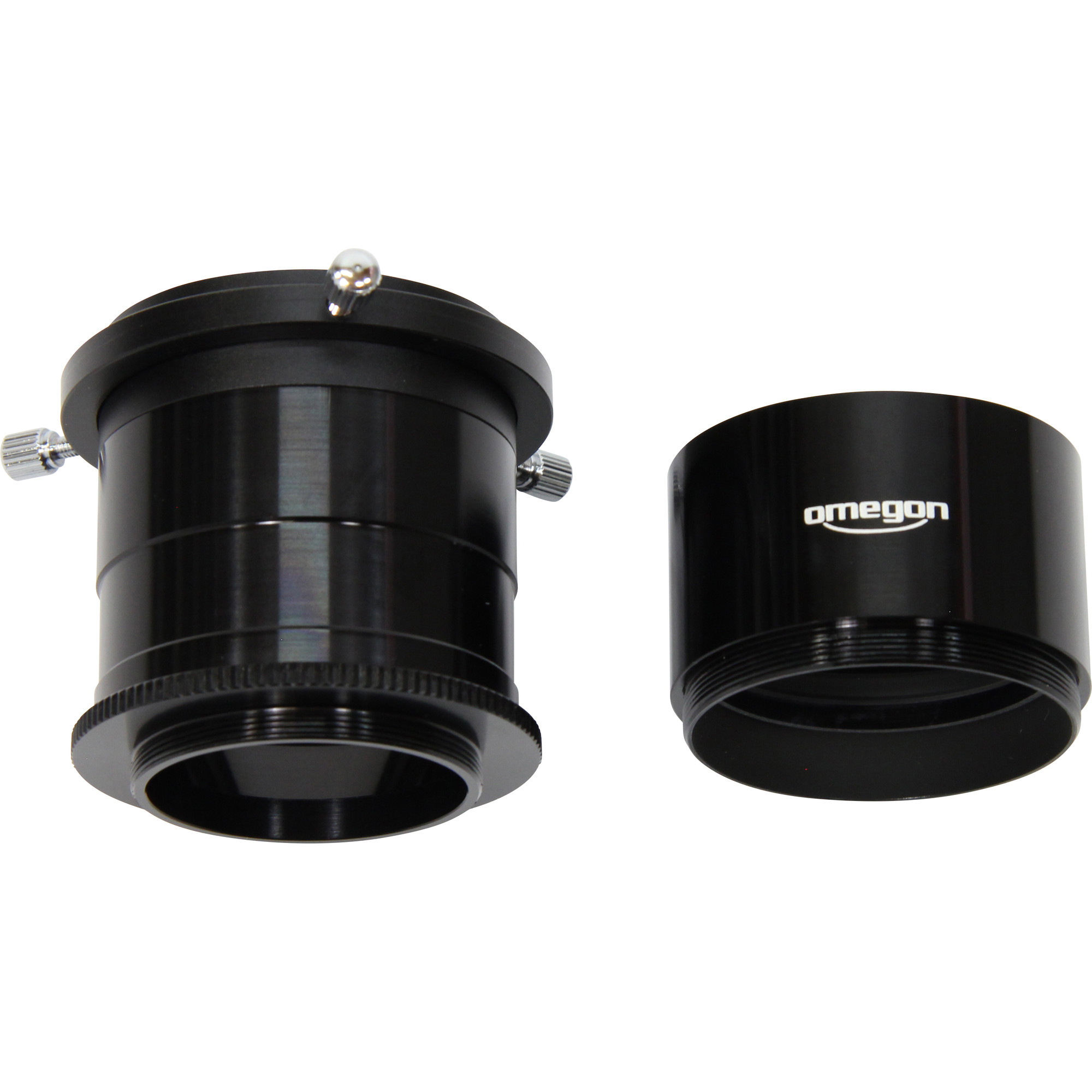 The Omegon 2" Field Flattener, Item No. 43761
Correctors are always required for astrophotography with larger sensors. If they are not built-in, they are screwed onto the focuser. Correctors reduce the focal length and ensure a flat field of view—important prerequisites for bright and sharp photos. That is why they are also referred to as reducers or flatteners. Correctors specifically designed for the telescope are ideal; if these are not available, you can fall back on tried-and-true reducers such as the Omegon Field Flattener, item no. 43761.
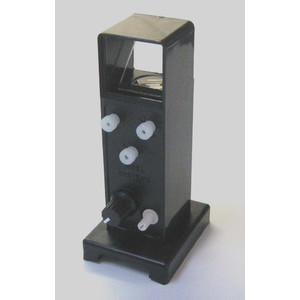
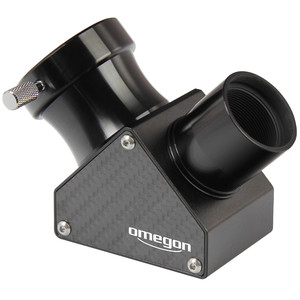
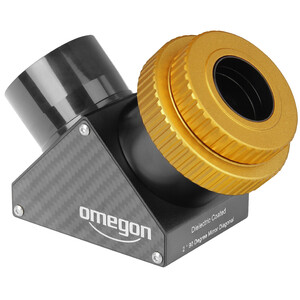
Visually, by the way, this setup doesn’t make sense—that’s why a zenith mirror is a must: the design for astrophotography requires that the focal plane be well behind the focuser; an eyepiece inserted directly would be too close to the objective lens. The zenith mirror extends the light path and brings everything back into alignment. Of course, it also makes for a more relaxed viewing experience.
For small apertures, we recommend a 1 1/4-inch zenith mirror; for a 2-inch mirror or an Amici prism, the back focus may not be long enough.
Under each category, we list tried-and-true mounts. Keep in mind that for astrophotography using long exposures, you should choose a mount with a significantly higher load capacity than what is specified in the technical data sheet. Our recommendations take this experience into account.
ED doublets: Clear, sharp, and true to color
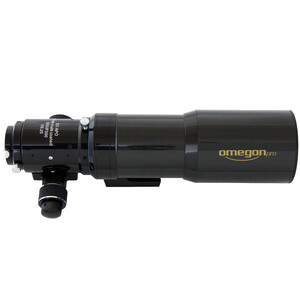
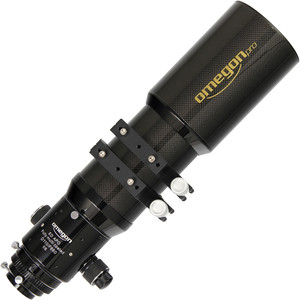
The 66/400 mm and 72/432 mm ED doublets are the perfect introduction to observing and photography with high-quality apochromats. Compact and rugged, these little ones perform well anywhere. The 66/400 is quite a bit smaller than the 72/432 “Photography Scope” and is practically a pocket-sized apochromat; this versatile Photoscope can excel as a full-fledged telephoto lens or—with an Amici prism—as a spotting scope.
The 80/500 mm and 110/660 mm carbon models take it up a notch, offering not only a significantly larger aperture but also a high-quality carbon tube. The material is lightweight, strong, and—thanks to its minimal thermal expansion—perfect for astrophotography: the focus remains stable all night long.
What they all have in common is the dual-element lens made of special ED glass with excellent transmission properties. The sharp, high-contrast image is immediately impressive.
The 66/400 Apo has a focal length of about 12 mm without a reducer, while the other models have a focal length of about 20 mm. This is more than sufficient for visual observation. For astrophotography, we recommend the Omegon Field Flattener (item no. 43761); with it, all models achieve a field of view of 44 mm, which is sufficient for full-frame cameras. The distance between the flattener and the sensor must be set correctly; you’ll find instructions at the end of this buying guide.
With the 66/400 or the Photoscope mounted on the iOptron SkyGuider Pro photo mount, you’ll have an astrophotography kit that’s easy to pack for any trip—one that lets you capture the Andromeda Galaxy filling the entire frame. For larger models, we recommend the iOptron CEM26 or the Sky-Watcher EQ-5 series.
With the exception of the Apo 110/660 (item no. 55229), all tubes come with a tripod thread and a Vixen-compatible rail. All are supplied with a sturdy carrying case.
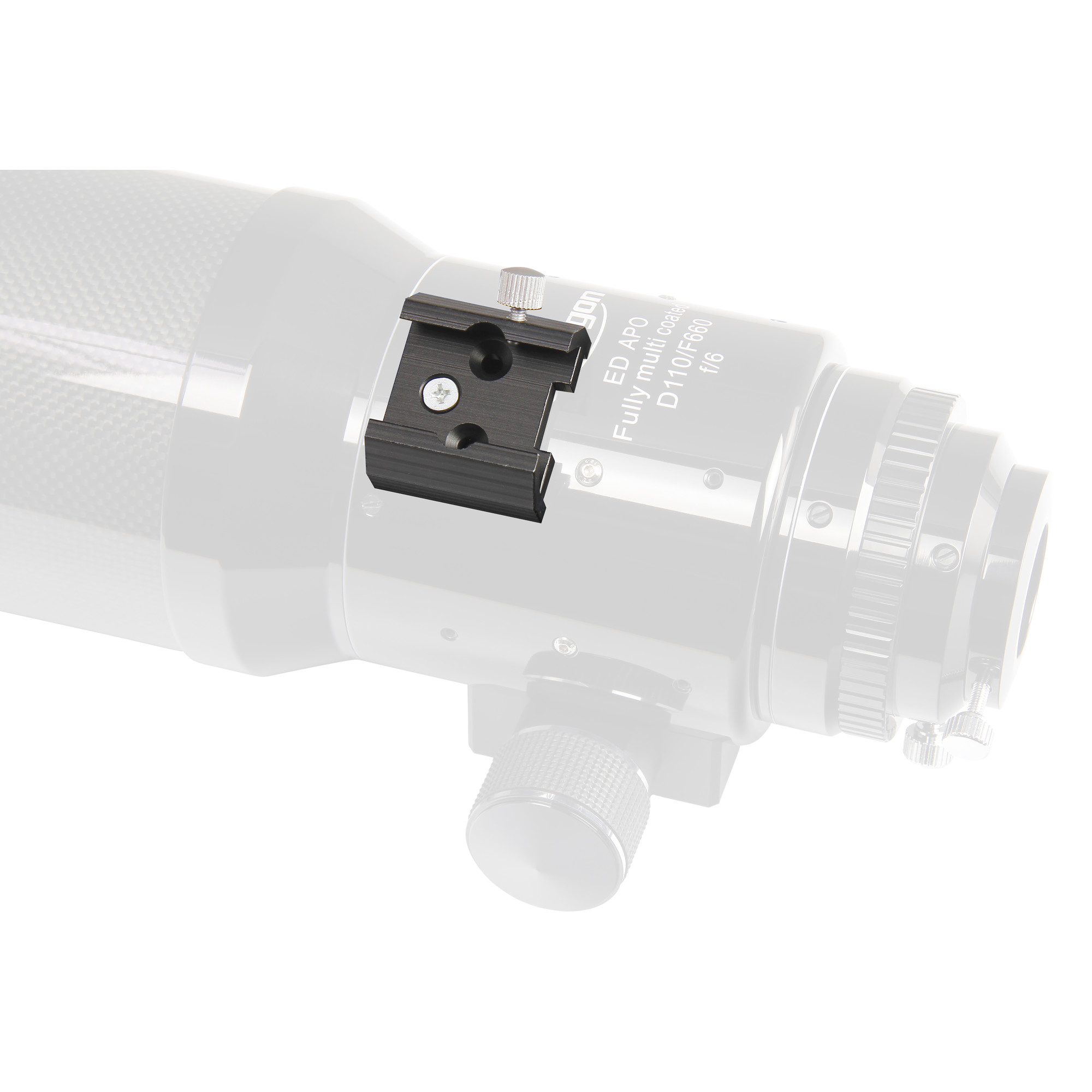 The Omegon Viewfinder Shoe, Item No. 45779
To mount a viewfinder, you will need the Omegon viewfinder shoe (item no. 45779), which is securely attached to the tube with a single screw (see image). The Photoscope does not have a mount for a viewfinder shoe. For astronomical observation, we recommend the Rigel projection finder, item no. 50230.
ED Triplets: Excellent Image Quality for Demanding Astrophotography
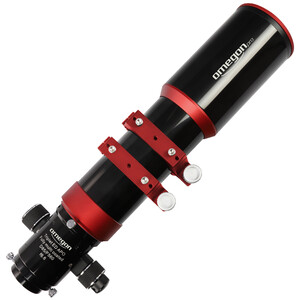
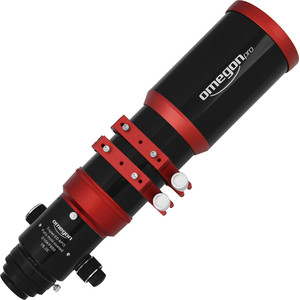
The Triplet-Apos 85/560 and 104/650 are characterized by true-to-color imaging and excellent transmission, thanks to their three-element air-gap objective lenses made with OHARA glass from Japan.
Visually, this means pin-sharp stars all the way to the edge of the field of view and brilliant detail even at high magnifications. Photographically, the combination with the Omegon Field Flattener delivers sharp, high-contrast images.
The ED-Triplets' tube consists of a CNC-machined metal structure, and a lens system suppresses reflections. The entire tube is lined with black fabric, which further enhances contrast.
Without a reducer, the 85/560 Apo illuminates a diagonal of 24 mm, and the 104/650 illuminates a diagonal of 27 mm—which is sufficient for small sensors. With the field flattener, a diagonal of more than 44 mm is achieved in both cases, providing sufficient illumination for full-frame sensors. The distance between the flattener and the sensor must be set correctly; instructions can be found at the end of this buying guide.
The iOptron CEM26 or Sky-Watcher EQ-5 series are ideal mounts for this setup. With this setup, you can enter the world of professional astrophotography without compromise.
The Apos come with a sturdy carrying case, but without a rail. Vixen and Losmandy prism rails can be mounted using the holes on the top and bottom of the clamps.
For both models, you will need the Omegon viewfinder shoe (item no. 45779), which is securely attached to the tube with a single screw (see image above).
ED triplets with a special reducer/flattener: With a fit guarantee
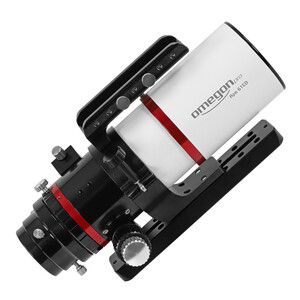
What makes these triplets so special? A custom reducer was calculated for each individual model. This ensures you get the best possible correction for demanding astrophotography. With “their” reducer, all apochromats in this group are perfectly suited for photography with sensors ranging from small to full-frame.
Please note that the special reducer is not included in the package. You must order the reducer separately for photography.
The triplet lens, featuring two ED elements, offers very good correction and delivers true-to-life color reproduction with excellent contrast. The custom reducer not only ensures perfect images, but also makes the astrophotographer’s job easier: if the back focus—typically 55 mm—is maintained, all elements are spaced correctly from one another, eliminating the need for complicated adjustments.
The ED-Triplets' tube consists of a CNC-machined metal structure, and a lens system suppresses reflections. The entire tube is lined with black fabric, which further enhances contrast.
When it comes to mounts, we also recommend the iOptron CEM 26 and the Sky-Watcher EQ-5 series. For the 140/910 Apo, these mounts are borderline; in this case, we recommend the iOptron CEM 40 or the Sky-Watcher EQ-6.
The compact Triplets come with a Vixen rail, while the large 140/910 mm apochromatic telescope comes with a Losmandy rail. The two large models, with 94 and 140 mm apertures, also come with a sturdy carrying case. A viewfinder shoe is included with all models.
Here you'll find the right reducers, specifically designed for each model:
Apo 76/418, item no. 65142 -> Reducer, item no. 65154
Quintuplet-Apos: Triplets with a built-in reducer/flattener
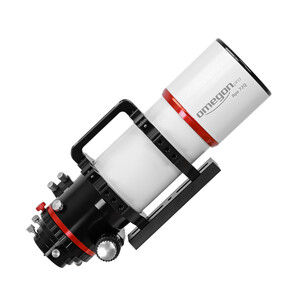
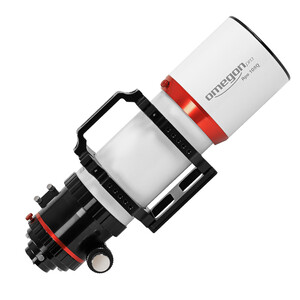
These triplets with built-in reducers are designed exclusively for astrophotography with full-frame sensors. They perform perfectly in this application. A unique feature is the combination of top-notch results and ease of use: Since the reducers are specially calculated and permanently integrated, the distance between the camera and the reducer is precisely specified. Once the camera is in focus, the correction is correct as well. It doesn’t get any easier than this.
The dual-element corrector ensures a flat and well-illuminated field even with full-frame cameras with an image circle of up to 44 mm. This allows the triplet lens, with its two ED elements, to fully showcase its strengths and excel with true-to-life color reproduction and excellent contrast. For these apochromatic lenses, there is an additional reducer developed specifically for each model, which works optimally with the reducer/flattener already integrated into the tube.
As with the models listed above, we recommend the iOptron CEM 26 and the Sky-Watcher EQ-5 series for mounts.
The compact 72/400 Triplet comes with a Vixen rail, while the larger 108/600 comes with a Losmandy rail. The larger model also comes with a sturdy carrying case. A viewfinder shoe is included with all models.
Here you will find the appropriate additional reducers, designed to match the reducers already installed:
Apo 72/400, item no. 65156 -> Reducer, item no. 70021
Apo 108/600, item no. 70017 -> Reducer, item no. 70022
Pure glass from Japan: Triplets with an FCD-100 Hoya ED element
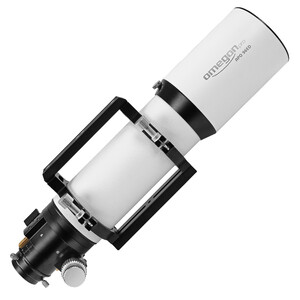
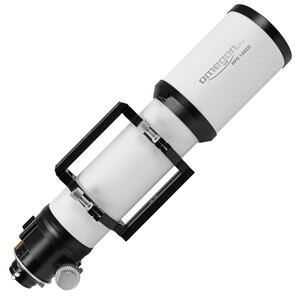
The FCD-100 Series triplets are a hidden gem for visual observers and astrophotographers who are captivated by the aesthetic appeal of images produced by a top-of-the-line apochromatic telescope. These apochromats are distinguished by their use of the ED specialty glass of the same name from the renowned Japanese manufacturer Hoya. The high-quality ED air-gap objective lens thus guarantees an image with exceptional color purity and high contrast. A system of baffles inside the tube reduces reflections and ensures optimal contrast for both visual observation and astrophotography.
Of course, with such a high-quality apochromatic telescope, astrophotography is also well catered for. For the 106/700 apochromatic telescope (item no. 69871), there is a specially designed reducer (item no. 75303). Without the reducer, this model has a 14 mm image circle, which is more than sufficient for visual observation.
The other models provide a field of view of more than 20 mm even without a reducer. For astrophotography, a standard reducer such as the Omegon Field Flattener is used. This provides a diagonal of more than 44 mm and sufficient illumination for full-frame cameras. The distance between the flattener and the sensor must be set correctly; you’ll find instructions at the end of this buying guide.
The FCD-100 series comes with a Vixen mounting rail; the large 140/910 mm model comes with a Losmandy rail. This model also comes with a carrying case. All apochromatic lenses in the FCD-100 series already include a viewfinder shoe.
When it comes to mounts, we also recommend the iOptron CEM 26 and the Sky-Watcher EQ-5 series. For the 140/910 Apo, these mounts are borderline; in this case, we recommend the iOptron CEM 40 or the Sky-Watcher EQ-6.
Here you'll find the right reducers, specifically designed for each model:
Apo 106/700, item no. 69871 -> Reducer, item no.: 75303
Between the Sky and the Camera: Our Tips for Your Omegon Apo
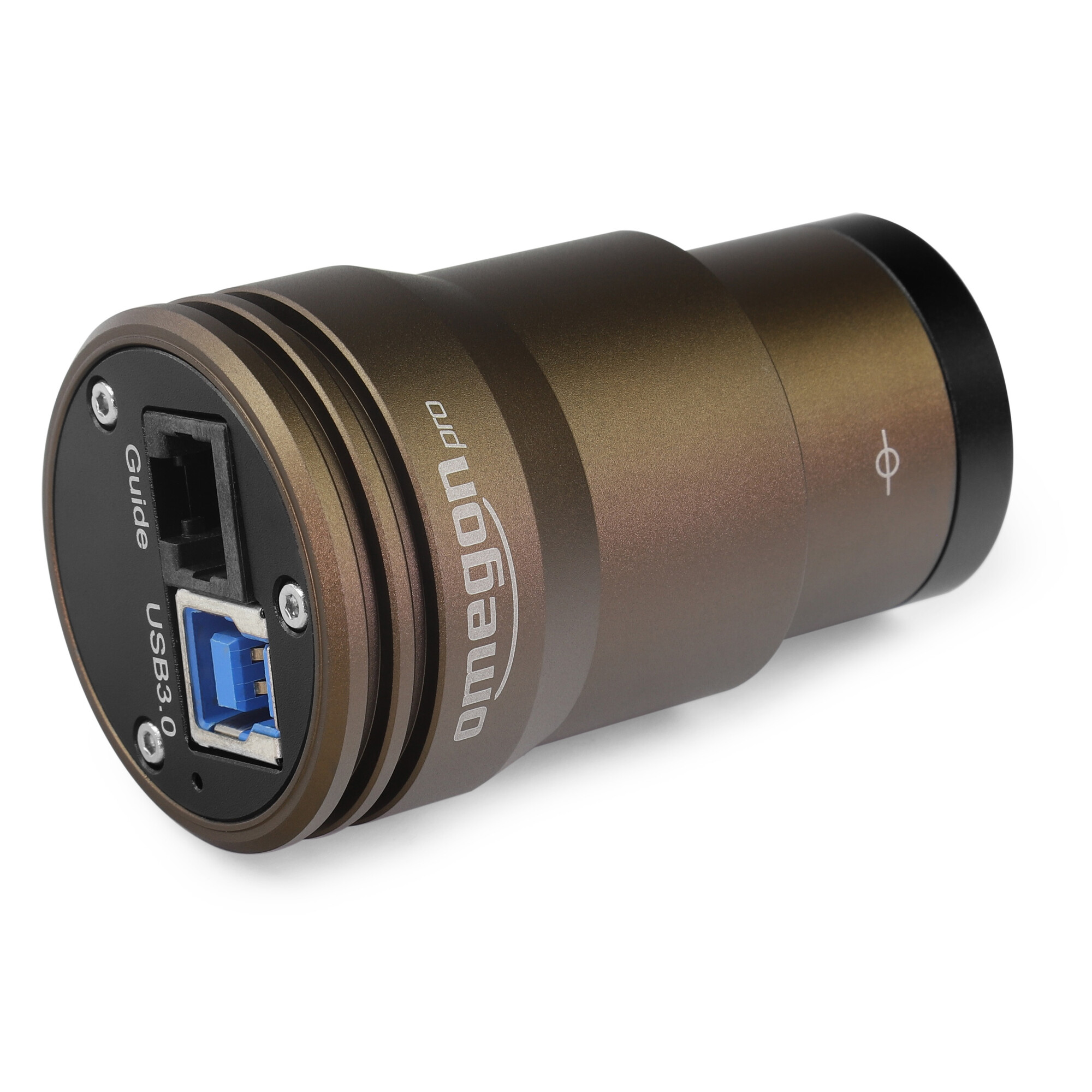 The Omegon veLOX 178 Color Camera, Item No. 61040
The Omegon Guide, veLOX, and veTEC series astro cameras are the perfect complement to these high-quality apochromats.
For planetary photography, the Omegon veLOX 178 C color camera is the best match for the fast aperture of apochromatic telescopes. Incidentally, this high-speed astro camera—which features the largest sensor and finest pixels in the veLOX series—also makes a perfect autoguider.
For photos of deep-sky objects using a reducer/flattener, we recommend the Omegon veTEC 533 and Omegon veTEC 571 cameras.
We'd be happy to help you choose the right camera. Our infographic How to Find the Right Omegon Astro Camera will help you understand the different options.
The ideal apochromatic lens for observation and photography
Can we single out a few models from the wide range of Omegon Pro Apos?
The very small 66- and 72-mm doublets are very popular and are perfect for getting started with observation and photography using apochromatic lenses.
For dedicated photographers, the Triplets—paired with specially calculated correctors—are sure to be a hit. Whether permanently mounted or screwed onto the focuser, these combinations guarantee the best possible results while remaining easy to use.
Experienced professionals will be happy with the larger apertures and their trusted corrector; perfectly adjusting the distances between the camera and the reducer is second nature to them.
And fans of the FCD-100 Hoya ED glass will be thoroughly satisfied with the series of the same name, whether for visual or photographic purposes.
Our tip: Buy only as much aperture as you really need. Small apertures are a lot of fun to look through and already reveal a great deal photographically. The mount is also lighter and more compact, and you’ll probably end up observing more often.
Very large apertures require more effort to mount and track, but in the hands of an expert, they also produce spectacular results.
You might also be interested in these products:
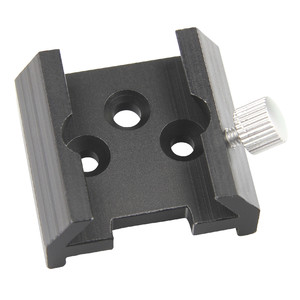
Expert Tip: The Omegon Field Flattener 43761
The flattener is compatible with all modern ED refractors.
The rule is: The shorter the focal length, the greater the distance must be to compensate for the stronger field curvature. The longer the focal length, the shorter the distance must be, because the field curvature becomes weaker.
The telescope's focal length is important for determining the correct distance:
- Focal length < 450 mm: 128 mm
- Focal length 450–490 mm: 123 mm
- Focal length 500–550 mm: 118 mm
- Focal length 560–590 mm: 116 mm
- Focal length 600–690 mm: 113 mm
- Focal length 700–800 mm: 111 mm
- Focal length of 800 mm or more: 108 mm
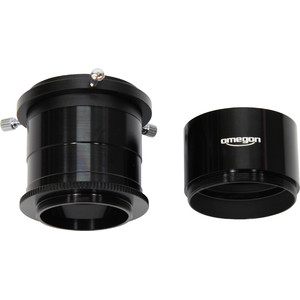
The set includes a tube combination for a distance of 53 mm. To determine the correct extension tubes for your telescope, you'll need the flange focal distance of your camera and the thickness of your T2 ring.
Example:
Your telescope, with a focal length of 480 mm, requires a sensor-to-flattener distance of 123 mm. You are using an EOS camera with a flange focal distance of 44 mm and a T2 ring that is 9 mm thick. In this case, the sensor would be 53 mm + 9 mm + 44 mm = 106 mm away with the existing sleeve. You are still 17 mm short.
You can find matching sleeves here to make up the remaining 17 mm difference.
If the sleeves don't fit exactly to the millimeter, that's not a problem, because a residual deviation of ±4 mm is still acceptable.
The back focus of more than 10 cm allows for the use of an off-axis guider. The Omegon off-axis guider is well-calibrated and affordable.
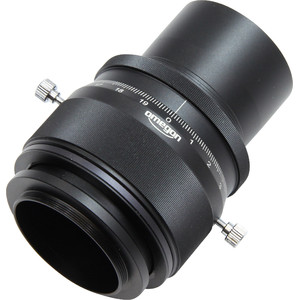
If you use the flattener with different refractors, the Omegon Helical 2'' Worm Gear Focuser is the perfect addition. It allows you to adjust the distance flexibly and precisely to the millimeter. The overall length of the Omegon Helical 2'' Worm Gear Focuser is perfectly matched. No additional sleeves are needed! However, please note the M48 thread on the back.
(Bernd Gährken)
Author: Elias Erdnüß
Elias studied physical engineering and has turned his hobby into his profession. He is our expert in astrocameras.
The Bavarian capital may not have the darkest skies in Germany, but this cannot deter an enthusiastic amateur astronomer. During his studies, Elias didn’t lose sight of the stars, and specialized in photography. Today, he is in charge of deep sky astrophotography products including cameras, electronic accessories and the remote control of all equipment. His favourite objects in the sky are galaxies.
Languages: German, English