

Swarovski AX Visio – The first smart binoculars!
In late November 2023, Swarovski Optik invited us to Absam in Tyrol to experience a new “era of wildlife observation” and test it out for you.
After this promising announcement, we were naturally eager to discover what was supposed to revolutionize nature observation, so we set off for the heartland of Austrian optics manufacturing.
After a brief welcome and an opportunity to get to know our fellow dealers from Germany, Austria, and Switzerland, we drove to the nearby Ambras Castle Park, where the new product was unveiled.
And with this, we would like to share our initial experiences with you.
AX VISIO: Revolutionary Digital Technology Meets Cutting-Edge Optics
.jpg)
AX VISIO – arguably the world’s first smart binoculars. They not only impress with fantastic optics powered by Swarovision technology, but above all simplify nature observation thanks to their digital innovations. This makes it easier for both ambitious beginners and professionals to observe, identify, and share nature. We won’t go into too much detail about the optical properties right now, as the optics of these binoculars are based on the proven optical design of the EL Swarovision binoculars, which remain extremely popular among many ornithologists, hunters, and nature lovers.
Intuitive operation and high-performance camera
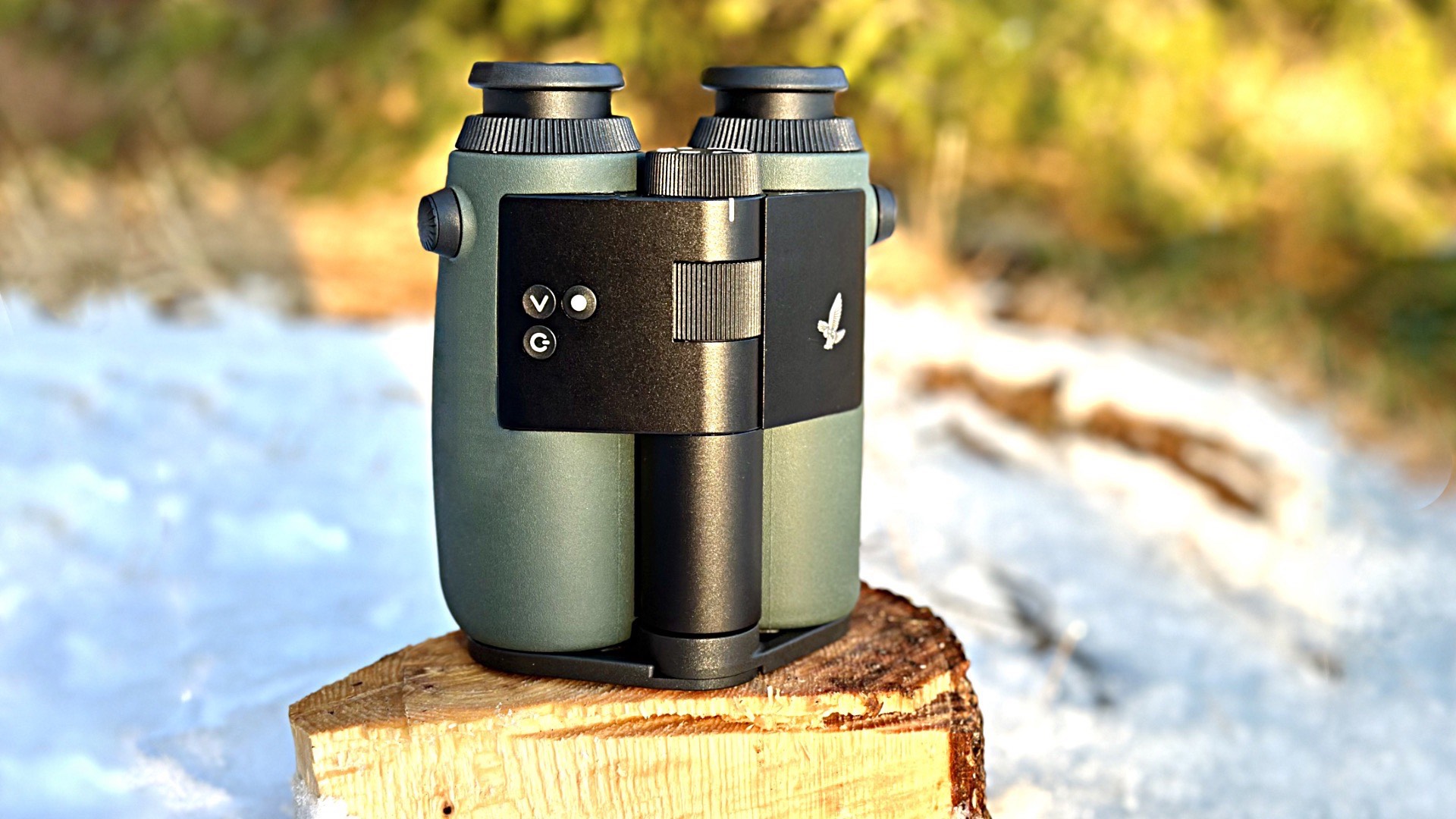
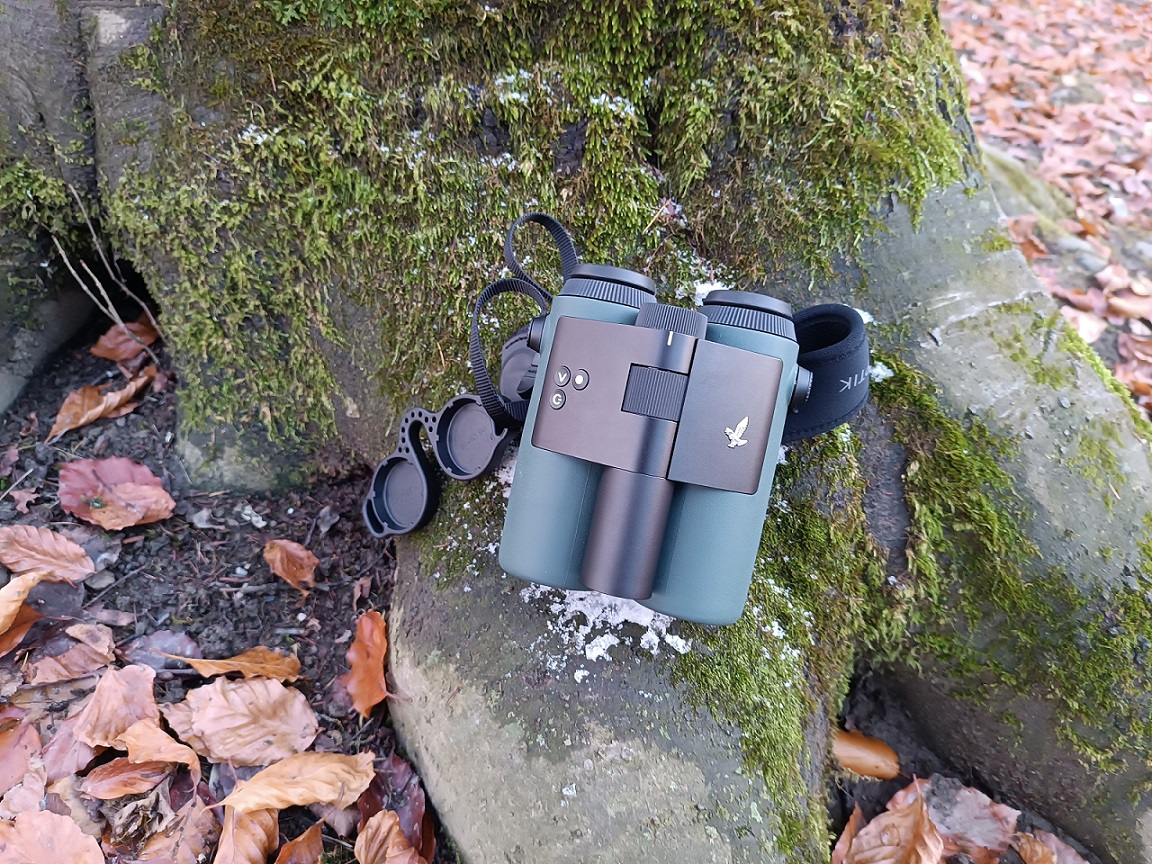
The most striking external feature is the camera tube, which is located between the two optical tubes. For this 13-megapixel camera to work properly, it is important to adjust the binoculars perfectly to your own prescription. This is made possible by the diopter adjustment on both sides, which ranges from -7 to +5 diopters. As a result, most people should be able to use these binoculars even without glasses.

Anyone who thinks that the next steps inevitably involved using a cell phone is mistaken. After a very brief introduction to how the binoculars work and how to use the buttons, we were set loose to get a firsthand look at the advanced technology. So off we went to the castle pond in Ambras Park, and our first attempts at photographing the mallards, mandarin ducks, coots, and black swans there were an immediate success. Here’s how it works: Center the animal you want to identify within the crosshairs, tap the focus button briefly, and as soon as the index marks indicate that the camera is in focus, press the shutter button—and in a fraction of a second, the result appears in your field of view.
To give you an idea of how accurate and reliable the identification result is, there’s a 4-segment indicator that rates the quality of the identification. But even if it doesn’t work right away, you can compare the photo you took with the Merlin ID app afterward. This is also helpful for invasive species that don’t normally occur in this geographic location.
Experience Wildlife Digitally: The AX Visio's Smart Recognition Features
If you happen to be too excited, a warning hand icon indicates that the photo is likely to be blurry. The built-in identification app can currently recognize over 9,000 animal species. That includes approximately 8,000 bird species worldwide and about 300 mammals found in Europe and North America, as well as numerous butterflies and dragonflies. To ensure identification can still be done quickly, the GPS unit, compass, and environmental conditions narrow down the selection. However, as mentioned at the beginning, you can’t use Merlin ID to identify non-native or special visitors in retrospect—such as the peacock that was wandering around the castle park. After our first attempts by the water, we went to one of the many bird feeders and were able to observe and identify nuthatches, blackbirds, coal tits, great tits, and blue tits there.

Another feature is the ability to mark a waypoint. You then pass the binoculars to your companion, who is guided to that location using arrow markers. Gone are the days of laboriously trying to lead your companion to an interesting object without knowing whether they’ve found the same one.
We also tested the Live View mode, which—especially during guided tours—allows users to share what they see through the binoculars with up to five connected mobile devices. After about two hours of marveling and testing, we headed back to share our initial impressions over a warming cup of tea. We then wrapped up the evening together with the Swarovski staff and two of the managing directors, during which, of course, we were happy to receive both positive and critical feedback.
The Birth of an Innovation: Milestones in the Development of the AX VISIO Binoculars
.jpg)
On Day 2, various workshops presented the development process—which spanned more than five years—as well as the challenges encountered and the solutions found. For example, depending on the set interpupillary distance, the display in the eyepiece is rotated 10° to the left or right so that it can be read upright. Another challenge was aligning the three optical tubes with one another and correcting the misalignment between the optical axis and the camera axis at close range. We had the opportunity to meet many employees responsible for mechanical and optical design, as well as for the software, which is constantly updated and is intended to be kept current with multiple software updates per year. As with the CL CURIO, the world-renowned designer Marc Newson is responsible for the design of the AX VISIO.
A Closer Look at the Complex Manufacturing Process of the AX VISIO
.jpg)
Afterward, we had the opportunity to see for ourselves the high quality standards that Swarovski upholds in the production of the AX VISIO, and we were able to tour the assembly line, the optical lens processing area, and the mechanical manufacturing facility. This allowed us to witness firsthand just how much work and the utmost precision go into this rather expensive product.
A few hard facts about these binoculars were also particularly interesting. Over 390 individual parts are built into this device. Twenty different programming languages are used, and nearly one million lines of code have been written.
Through an open interface, Swarovski aims to enable external programmers to develop their own solutions and apps for the AX Visio. Examples that come to mind include star recognition or an app for identifying mountain peaks. Swarovski could then feature particularly interesting apps in its in-house app store.
But we’ve probably made your mouth water enough by now. Starting right now, if it’s not too far out of your way, you can pick up the AX VISIO—this revolution in nature observation—at our showroom in Landsberg and test it out thoroughly. Or you can order this technological masterpiece right away.
Author: Stefan Rieger

Stefan is a qualified wholesale and international trade specialist. He has been involved in the photographic industry since 2000, before wholly concentrating on sports optics and tripods in 2007. Stefan has been taking care of these product segments for us as Category Manager since January 2014.
Since getting his hunting permit in 2011, he loves to spend his free time outdoors; hunting, fishing or armed simply with his photographic equipment.
After a break, Stefan rejoined us in 2023 and is responsible for our sports optics, camera tripods and night vision instrument product groups, together with anything else you might need for nature watching and hunting.