

In every telescope, the focuser is attached close to the focal point of the light-gathering optic. Eyepieces can be connected to the focuser. For astrophotography, a camera is attached to the focuser, and the focuser serves to focus the camera.
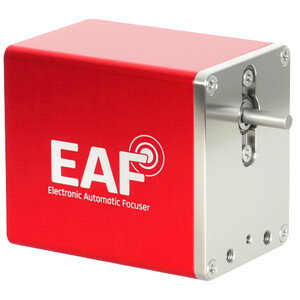
ZWO
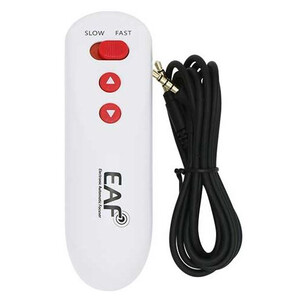
Electronic Automatic Focuser EAF N
RRP:
$ 342.00
Our price:
$ 314.00
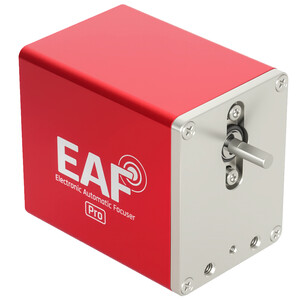
ZWO
Electronic Automatic Focuser EAF Pro
RRP:
$ 510.00
Our price:
$ 456.00
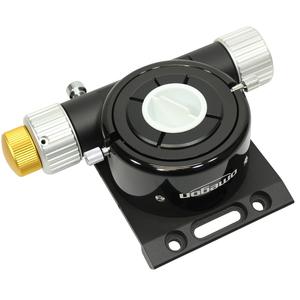
Omegon
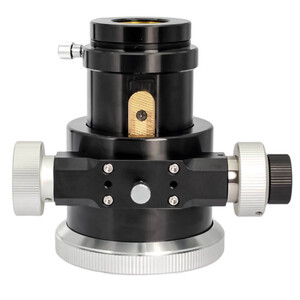
Focuser Newton Hybrid Crayford Dual Speed 2"
$ 329.00
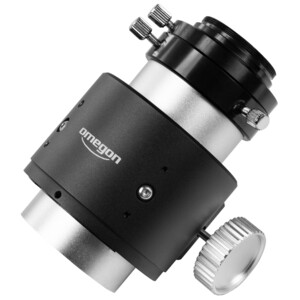
Omegon
2'' Crayford focuser for Newtonian telescopes
$ 79.00
ZWO
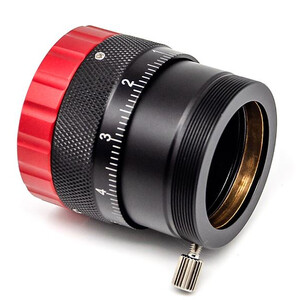
Helical Focuser 1.25"
RRP:
$ 136.00
Our price:
$ 113.00
Omegon
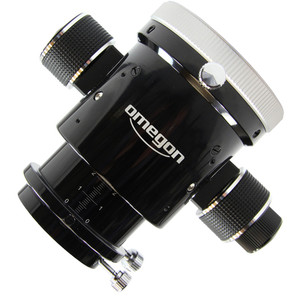
2'' SC Hybrid Crayford focuser, dual speed
$ 449.00
Omegon
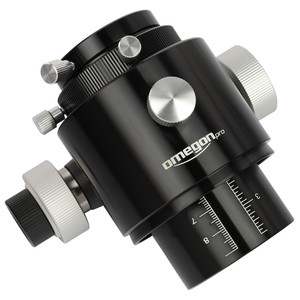
Pro 2'' Newtonian Crayford focuser, dual speed
$ 199.00
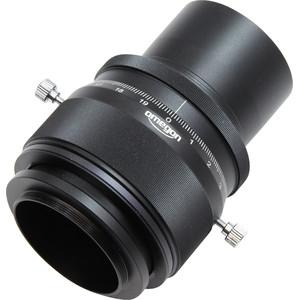
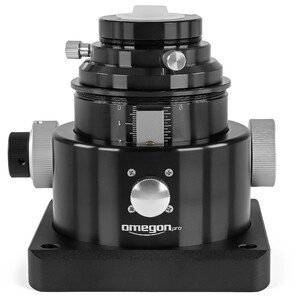
Omegon
Focuser Pro 3'' Newton Linear R & P, Dual Speed
$ 279.00
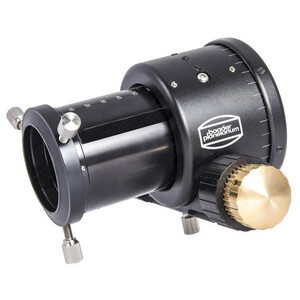

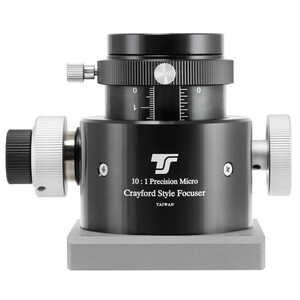
TS Optics
Focuser Crayford 2"
RRP:
$ 250.00
Our price:
$ 171.00
Omegon
2'' Newtonian Crayford focuser, dual speed 1:10
$ 169.00
PegasusAstro
FocusCube v3 Universal focusing motor
$ 330.00
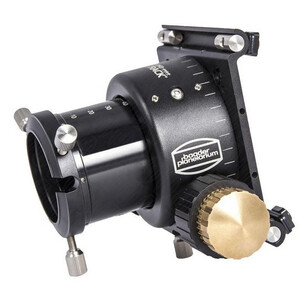
Baader
Focuser Diamond Steeltrack BDS-NT 2"
$ 394.00
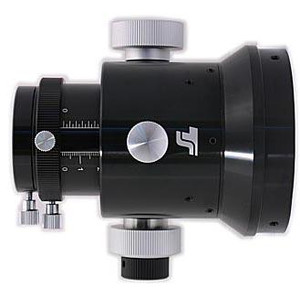
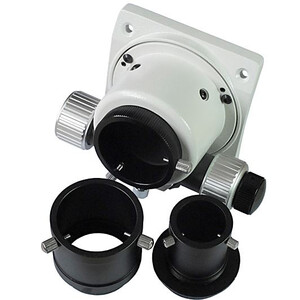
Skywatcher
2" Crayford Focuser for Explorer Newtonian Reflectors
$ 223.00
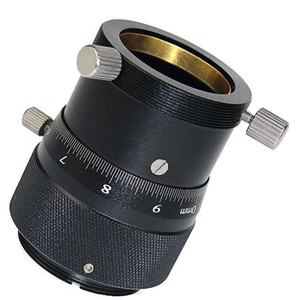
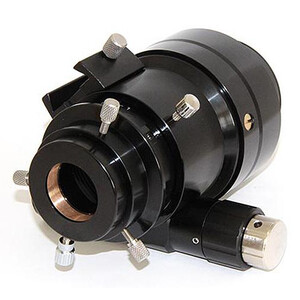
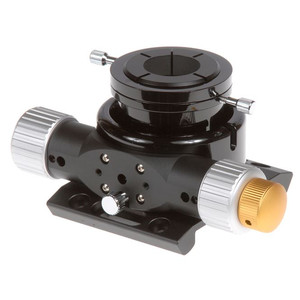
Skywatcher
Dual-Speed 2" Low Profile Crayford Focuser for Newtonian Reflectors
$ 320.00
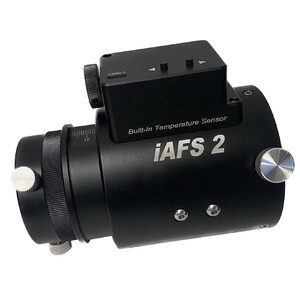
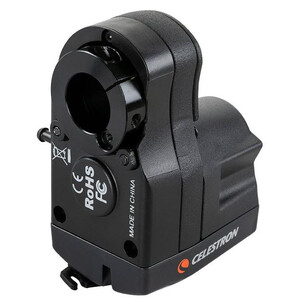
Celestron
Focus Motor for SC- and EdgeHD-Telescopes
$ 342.00
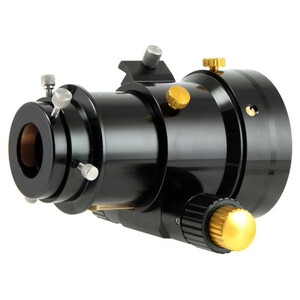
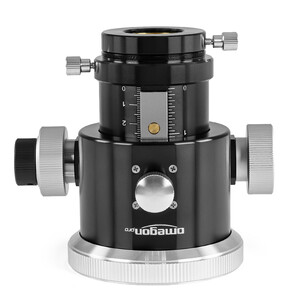
Omegon
Focuser Pro 2'' RC Linear R & P, Dual Speed
$ 239.00
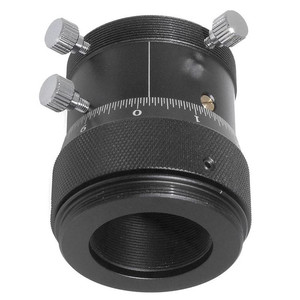
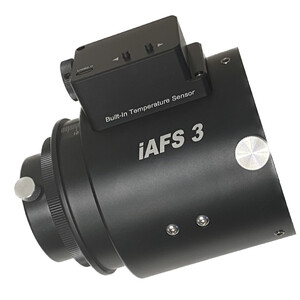
iOptron
Automatic Focuser iAFS3 2"
RRP:
$ 610.00
Our price:
$ 570.00
TS Optics
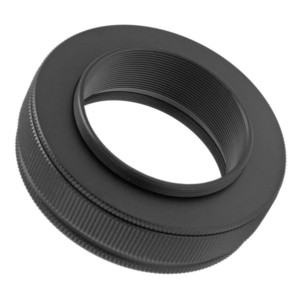
short T2 Helical Focuser & Adapter
RRP:
$ 113.00
Our price:
$ 79.00
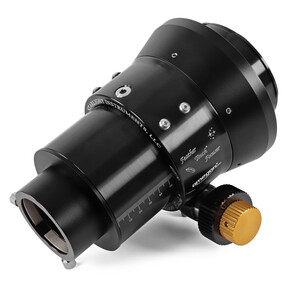
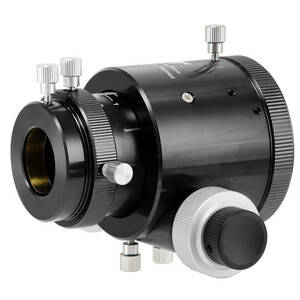
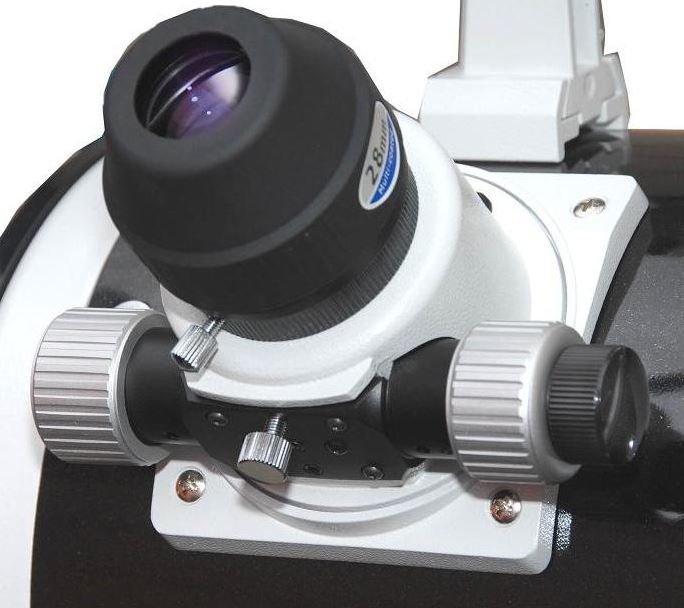 Skywatcher Crayford focuser on a Newtonian telescope
Eyepieces and cameras are usually equipped with connector sockets. Two diameters have been established for the connector socket, which are specified in inches: 1.25" = 31.8mm and 2" = 50.8mm.
The focuser consists of two interlocking and sliding tubes, so that the eyepiece can be moved into focus using a small wheel. Not only eyepieces can be attached to focusers, but cameras as well.
Precise focusing is especially important for astrophotography. Therefore, high-quality focusers with reduction adjustment should be used for this application. For astrophotography, many focusers also have a connector thread, so that the camera is screwed into place instead of being be plugged in.
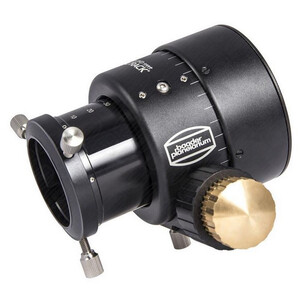
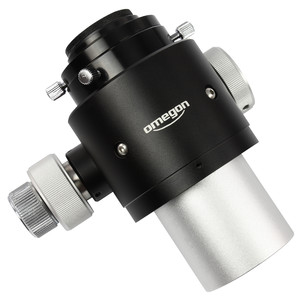
Simple focusers are adjusted using a rack and pinion mechanism. In the higher quality versions, this rack and pinion is angled and made of brass. Instead of a rack and pinion, the adjustment can also be made by exerting pressure on a special surface. Such focusers are usually referred to as Crayford focusers.
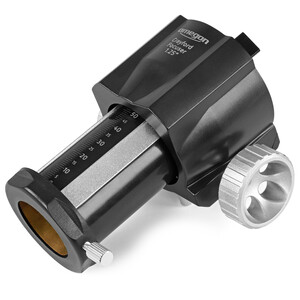
Helical focusers work in a completely different way. Here, the adjustment is made by rotating the inner barrel using a longitudinal screw (helix). One advantage is that a rotary knob is not necessary, which can get in the way, for example, of a guidescope.
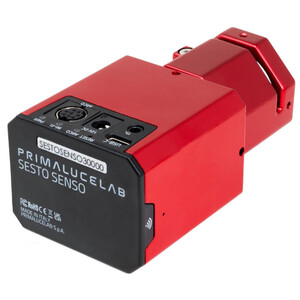
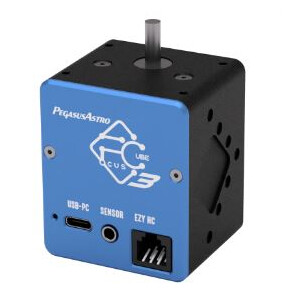
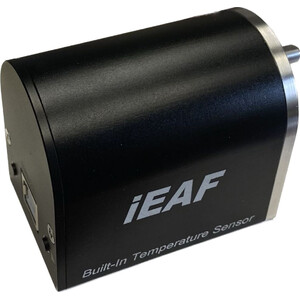
As a rule, focusers can also be motorised. This improves focusing accuracy and also allows the remote operation of the telescope.