

Interview: Smart Telescopes on the Rise
Real Telescopes or Just a Trend and a Gimmick? An Interview on the Exciting Topic of Smart Telescopes
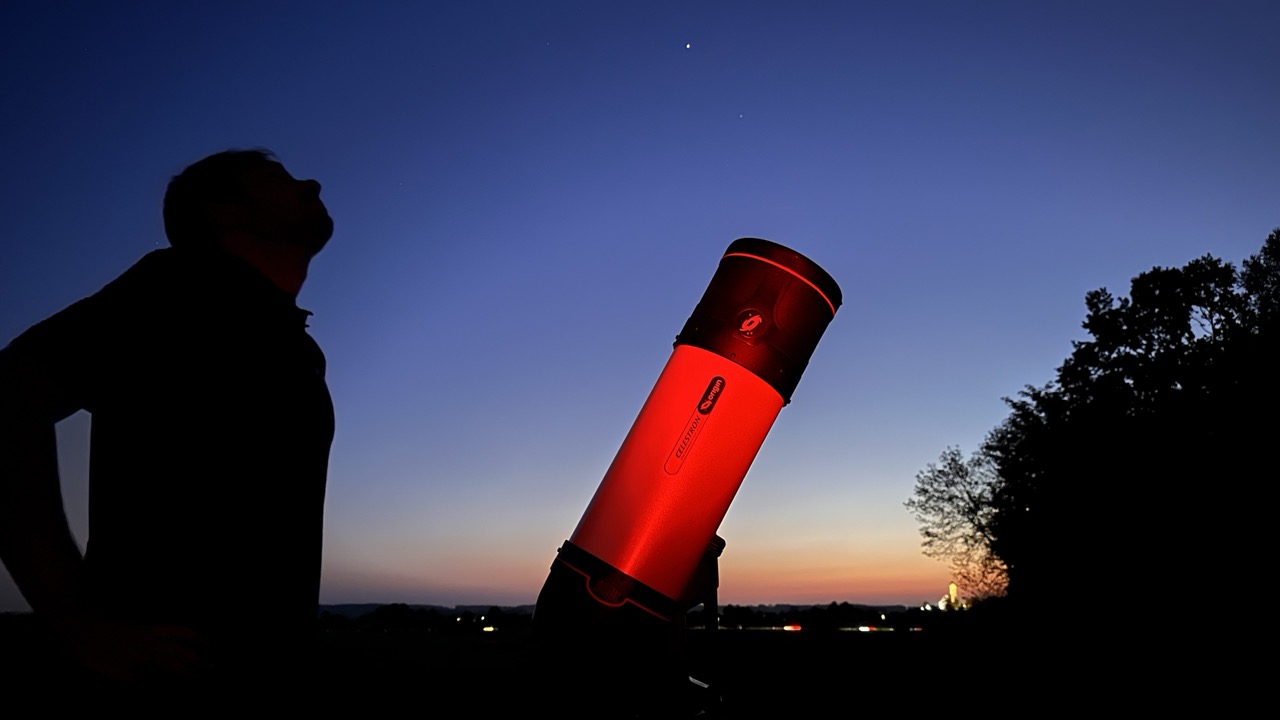
Smart telescopes are changing astronomy—especially for beginners.
What used to require patience, expertise, and star charts can often be done today with an app and a smartphone. But how seriously should we take this? And for whom is it really worth getting into?
At ATT 2025, astrophotographer Angelika Kolb-Telieps spoke with Marcus Schenk from Astroshop.de about the possibilities, limitations, and why smart telescopes are more than just a gimmick.
Target Audience: Smart Telescopes for Beginners
CellaPix: I'd like to welcome Mr. Schenk from Astroshop. Good morning.
Marcus Schenk: Good morning. I'm very glad you came to me with your questions.
CellaPix: The first questions concern the target audience and motivation. Who exactly are your smart telescopes designed for?
Marcus Schenk: Primarily beginners. When we added the telescopes to our product line, it was clear to us: That's our main target audience.
But we've noticed that more and more advanced amateur astronomers are joining us. This is partly because we're adding more and more features.
Astroshop offers a very wide range of telescopes. When smart telescopes first came out, we thought, “Yeah, that sounds exciting.” … But we always evaluate key products before adding them to our lineup. After all, we want to make sure they truly benefit our customers.
New Users Discover Astronomy
CellaPix: Is that mostly your regular clientele, or has it also helped you attract new customers?
Marcus Schenk: Definitely new ones, too. Many beginners find them easier to use. And even people who’ve only been interested in nature or nature photography so far say, “Yes, the subject is fascinating, and I’d like to explore it. But traditional telescopes in general sound so huge and complicated.”
The Fast Track to Success
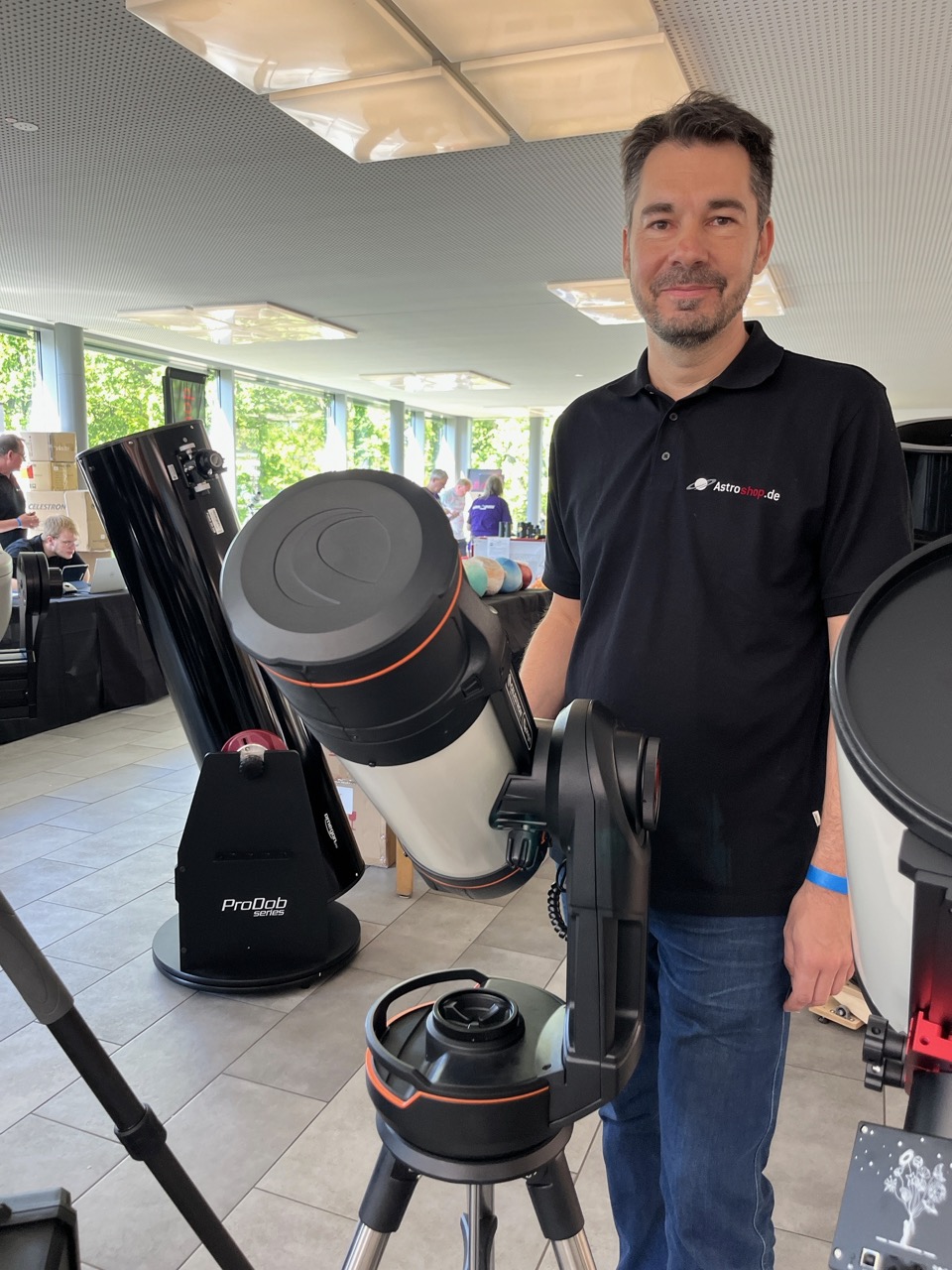 Photo: A. Kolb-Telieps
CellaPix: That brings us to the users. Let's talk about the user experience and usability. How low is the barrier to entry, really?
Marcus Schenk: We always get the same feedback: very low.
CellaPix: What do your users experience the first time they use it?
Marcus Schenk: It's very intuitive. And that's what our users experience, too: they get a system that works right away. It works with an app, and you can find your first objects very quickly. I see this time and time again, and it's true for all smart telescopes.
But you also have to make a distinction: The Celestron Origin, for example, looks like a classic telescope. You really need some prior knowledge: So here’s the tripod, here’s the mount, and there’s the tube—I set it up this way and that way. Or how do I handle sensitive optics? That’s something for people who are familiar with the subject.
But it definitely applies to the smaller Smart Telescopes. You'll feel a sense of accomplishment right away. By the way, this also applies to people with no technical background.
At the last trade show, I had a conversation with an amateur astronomer. She said she'd like to use a device like that alongside her Dobsonian telescope—just let it run while she does visual observations with her telescope. I thought that was really nice.
Everything should continue to work reliably in the future as well
CellaPix: Development is progressing rapidly. How do you ensure that the devices will still be easy to use and enjoyable in 2–3 years?
Marcus Schenk: We’re not just retailers; with the Omegon brand, we’re also manufacturers. That’s why we operate a fully equipped workshop specializing in optics, electronics, and mechanics. This allows us to meet many of our customers’ needs. We also maintain close contact with manufacturers to ensure long-term service.
Advantages and Limitations
CellaPix: Let's get back to the advantages and limitations compared to traditional setups. You've already mentioned the intuitive operation. Are there any other advantages?
Marcus Schenk: These smart telescopes are very portable because they're small and lightweight. Everything is built in, so there's no tangled mess of cables.
For many people, this is a reason to get a Smart Telescope as a second unit. …
I just had another conversation with an astrophotographer. He said he's never taken as many photos in recent years as he has lately, precisely because he owns this smart telescope.
Simplicity at the expense of maximum individuality
CellaPix: Are there any downsides?
Marcus Schenk: There isn't really much room for customization. You have to rely on what the manufacturer includes, how they design the app, and what exposure times they offer within the system. In other words, the range of features.
And then there's the other world: where people put together their own systems, choosing for themselves which cameras to use, which filters, and so on…
I think it's good when both worlds develop side by side, and I like to compare astronomy to a big tree. The smart telescopes are a new branch—and this branch is growing.
 Taken with the ZWO S30 Smart Telescope
"Smart telescopes are a new branch on the great tree of astronomy." Marcus Schenk
Just a gimmick or real astronomy?
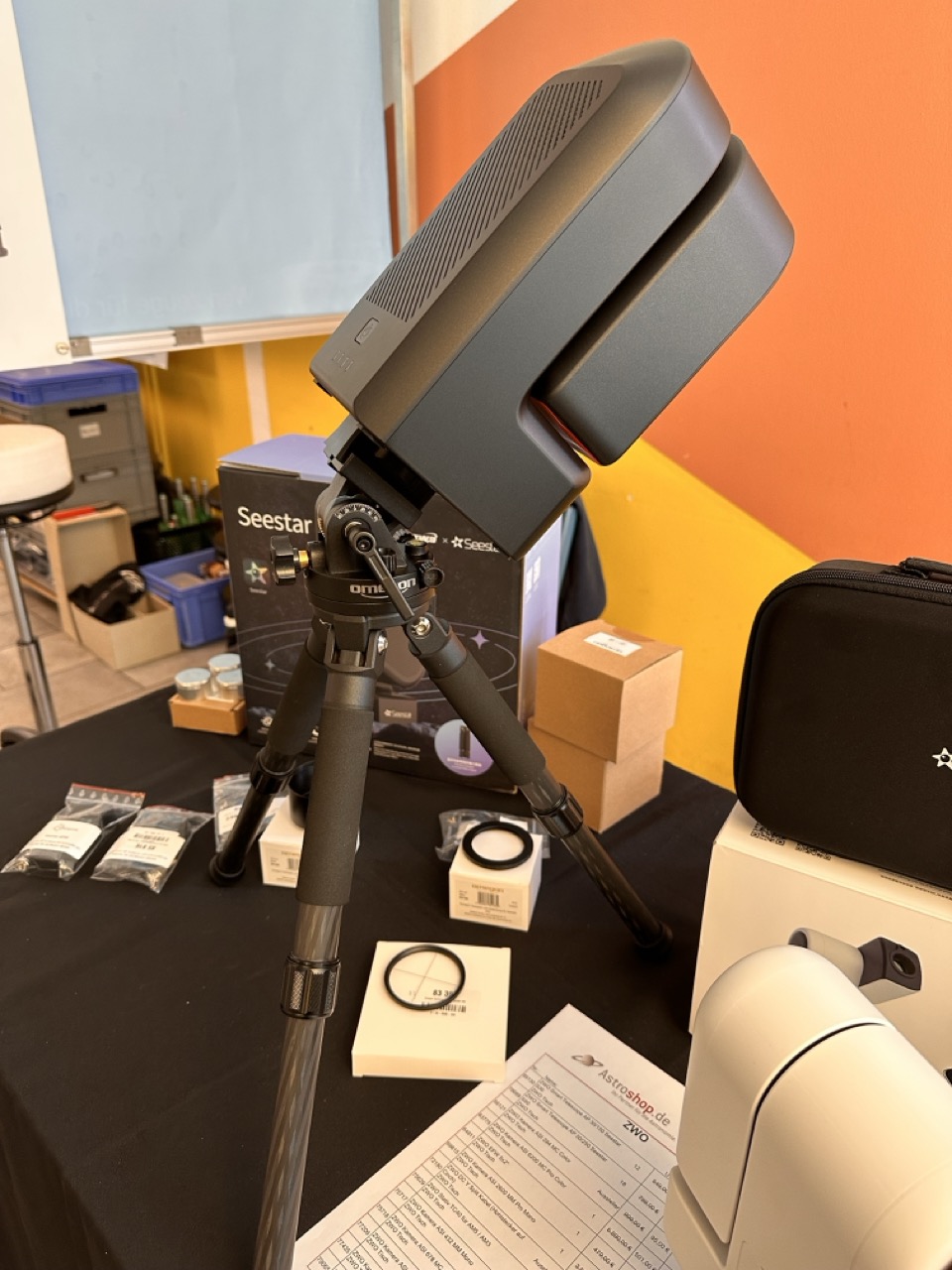 The ZWO Seestar S50 set up in a parallactic configuration
CellaPix: There's a debate about whether this is serious astronomy or just a gimmick. What's your take on this? What can users still learn about astronomy from it?
Marcus Schenk: Personally, I'm an observer who does this out of an emotional fascination. I don't really like the word "seriously" in that context.
But of course: You can and should definitely take it seriously—and you’ll also get to know the sky. A user has to engage with it and decide, “Which objects do I want to observe today?” That’s how they learn!
It's on a whole different level than with traditional telescopes. With a Dobsonian telescope, I first have to set it up, then consult a star chart to figure out how to locate the object. Once it's in the sky, I feel even closer to it and get to experience and learn about it in a different way.
And what about the future?
CellaPix: Let's move on to the final point: Outlook and Future Development. As a retailer, how do you see the future of smart telescopes?
Marcus Schenk: I think there's more to come. Our customers are showing tremendous interest.
Manufacturers have integrated additional useful features into the apps—it’s an evolving system. This is just the beginning. Because when you look at everyday life and how quickly everything is changing right now, with all the new technologies… There’s still a lot to come in astronomy as well.
CellaPix: Thank you very much for the interview, Mr. Schenk.
Marcus Schenk: Thank you very much; it was my pleasure.
The interview was conducted by Angelika Kolb-Telieps, an astrophotographer and founder of CellaPix. At ATT 2025, she spoke with Marcus Schenk about the role of smart telescopes.