
Your partner for astronomy

Posts Tagged 'omegon telescope'

Blog Archives

New telescopes from Omegon: On the right track with Advanced X and ProDob Dobson

October 6 2017, Stefan Taube

The new Omegon telescopes are impressive instruments for any visual stargazer. With the Advanced X and ProDob Dobsonian telescopes, gazing at planets, nebulae and galaxies becomes a lot of fun. Just as with other equipment? No. Because these telescopes are in many ways a lot better than other Dobson telescopes.

Both new series are equipped with a particularly good mirror with up to 94% reflection for bright images. And with a fan which allows you to start observing even earlier.

The Dobson telescopes from Omegon consist of only two parts. Even if you have a stressful day and little time, these telescopes will provide you with many pleasant stargazing hours. Because set up only takes a few minutes, you can start stargazing almost instantaneously. And all this for a lower price than comparable models on an equatorial mount.

Omegon now offers two new Dobson series – in excellent workmanship.

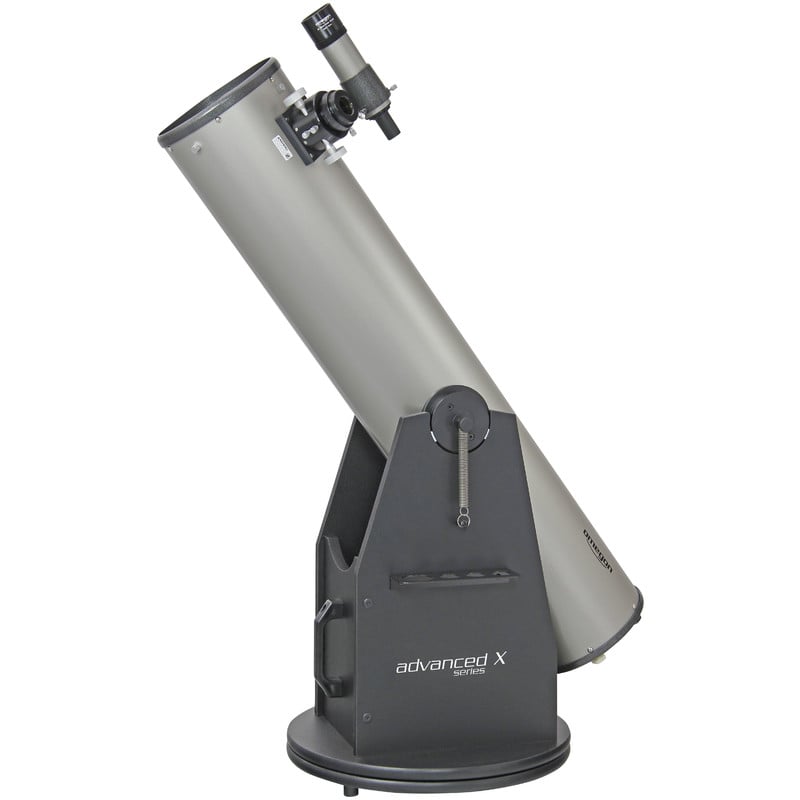
Omegon Dobson telescope Advanced X

A fast telescope for easy observation of planets, star clusters, nebulae and galaxies. Excellent workmanship, consisting of only two parts and very easy to operate. Suitable for any Astro beginner, because no axes need to be aligned. A simple principle: Set up and watch.

  • Teflon pads in height and azimuth axis
  • Primary mirror with 94% mirror coating
  • Primary mirror fan
  • 2” Crayford focuser
  • 8×50 finderOmegon Dobson Teleskop Advanced X

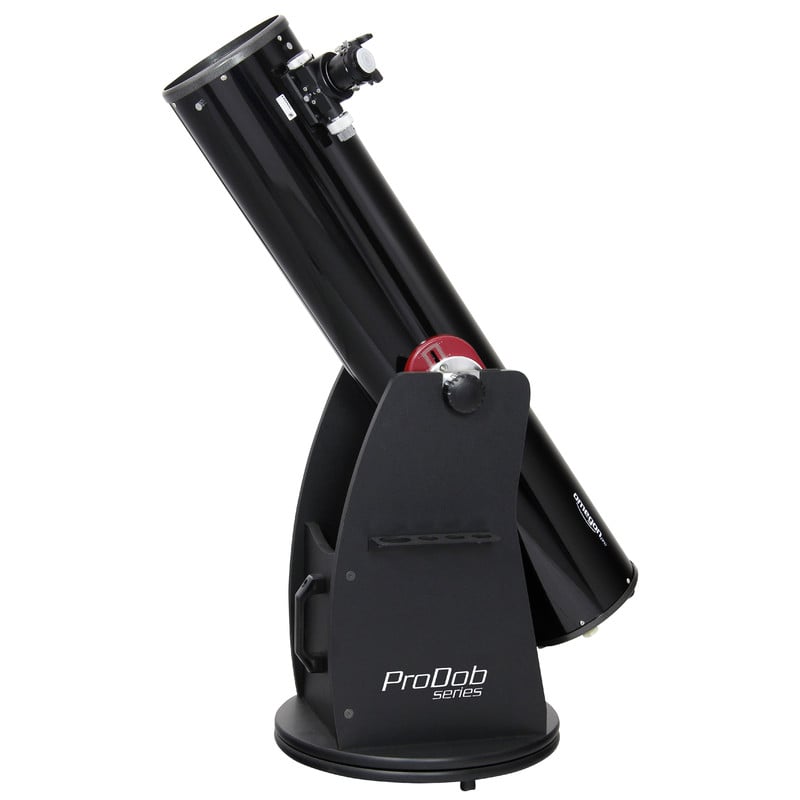
Omegon Dobson telescope ProDob

To make sure that you always stay on track when observing!

Omegon Pro Dobson telescopes for successful stargazing nights.

The new friction system makes the exact alignment and tracking of sky objects an even simpler task. The axes run in needle bearings in azimuth and ball bearings in the height axis, instead of Teflon pads.

This allows even lighter navigation of the telescope and extremely soft following of your movements. Keep celestial objects in your field of view, even with high magnification. An unbeatable advantage! For this purpose the range of high-quality accessories includes: e.g. the Omegon SWA 32mm eyepiece. It is of a much better quality than many other eyepieces, which are normally part of the scope of delivery of other telescopes. Our customers’ reviews: “Super!”, “Simply high-class.” or “[…] just perfect and good”.


  • Friction system: ultra-soft and precise movement
  • Needle bearings: soft and exact movement in azimuth – even with just one finger
  • Primary mirror with 94% mirror coating
  • Primary mirror fan: quicker cooling, ready faster for stargazing
  • Red dot finder Deluxe, premium eyepiece 2” SWA 32mmOmegon Dobson Teleskop ProDob

No matter whether you’re a beginner or an advanced stargazer: With an Omegon Dobson under the dark sky, you will experience everything the universe has to offer. If you are looking for a telescope for visual observations you should buy a Omegon Advanced X or ProDob telescope.
Omegon APO 104/650 ED: these astrophotos show the beauty of space

January 30 2017, Marcus Schenk

We frequently receive beautiful photos of celestial objects from our customers. They are eager to show us, what they were able to achieve with their equipment. Very often we are over the moon, when we recognise the love of detail and the energy these astrophotographers have invested in these pictures.
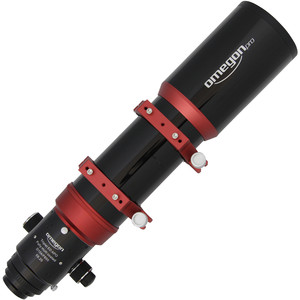
Today we would like to present some very delightful astrophotos. The astrophotographer and filmmaker Sebastian Voltmer shows us beautiful impressions of space. These were taken, amongst others, with a Sony a7s and an ST-2000XM camera. The telescope used was a premium telescope: the Omegon apochromat 104/650 ED with field flattener.

Der 104/650 ED-Apo von Omegon
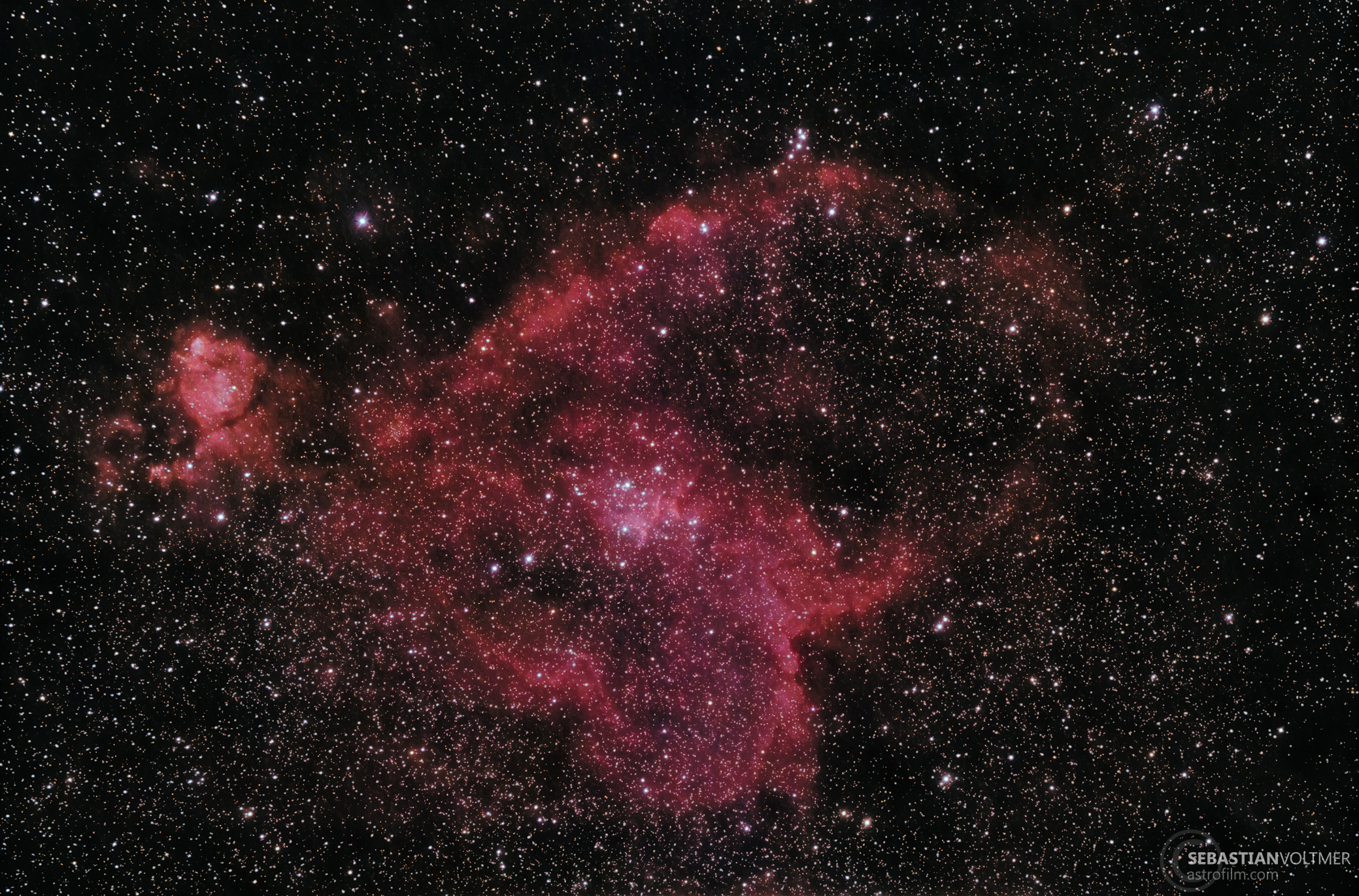
The Heart Nebula IC1805

The name of this nebula refers to its special shape: a red heart in the night sky. You find this nebula between the constellations Cassiopeia, Perseus and Giraffe. The heart is located approx. 4° east of the star ε Cas. An open star cluster, which illuminates the nebula, is embedded in the middle of the emission nebula.

ic1805_omegonapo

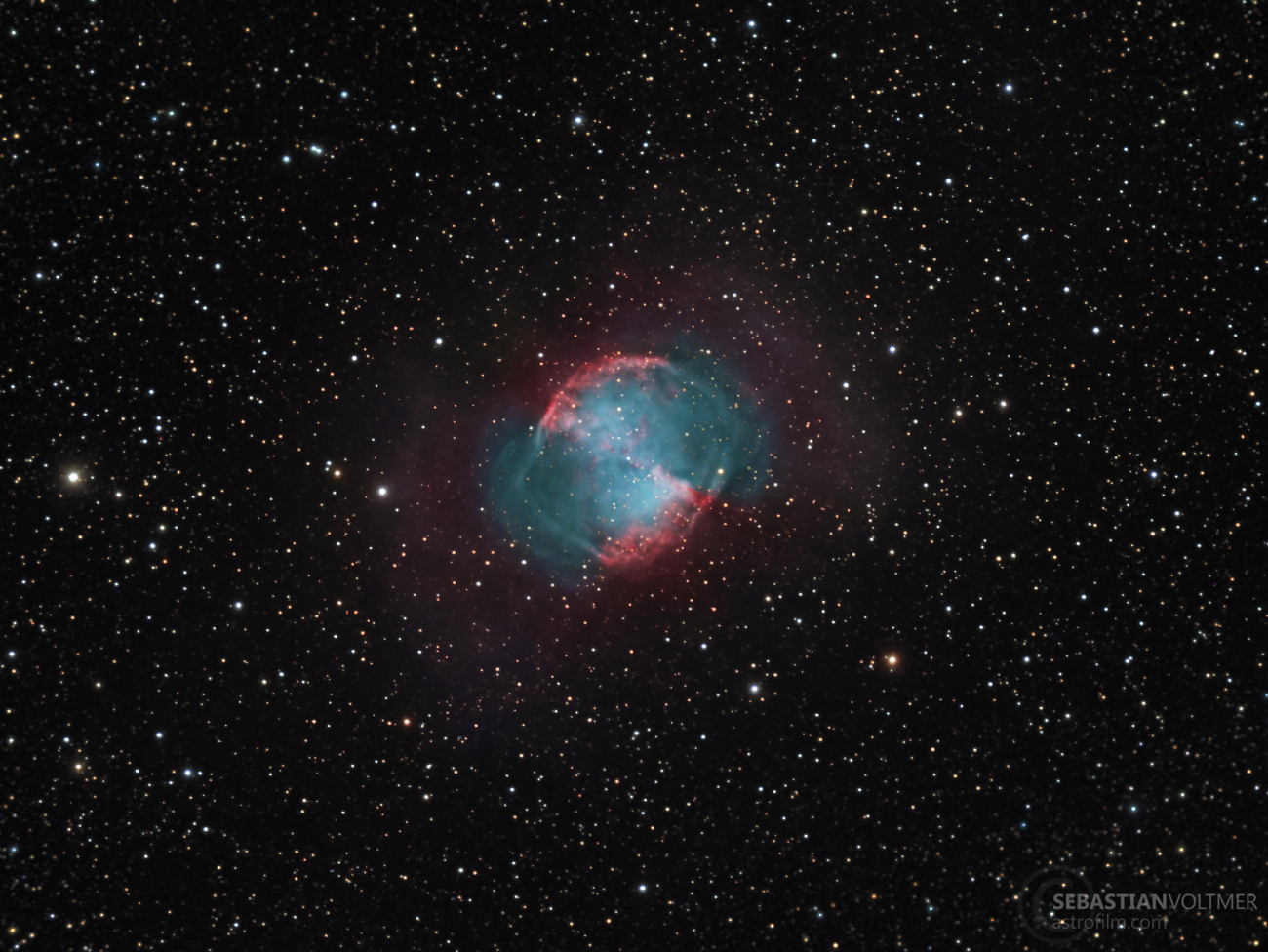
The Dumbbell Nebula M27

The Dumbbell Nebula M27 in the Vulpecula constellation is the second brightest planetary nebula and thus a beacon in the starry sky. The originator of this nebula at a distance of approx. 1400 light years is a white dwarf, a star that has reached the end of its life.

M27

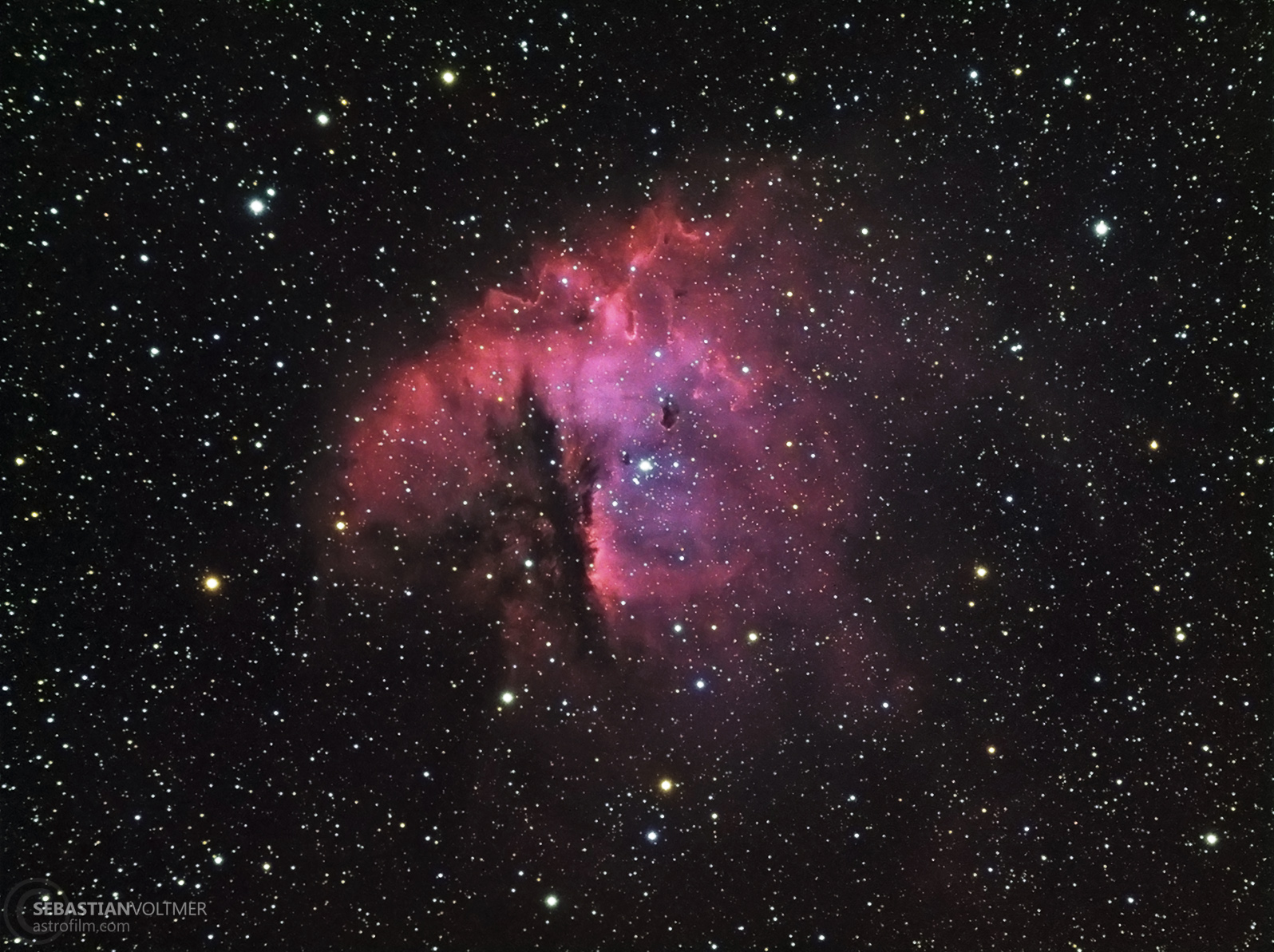
Pacman Nebula NGC 281

The names of some nebulae clearly demonstrate that astronomers have a vivid imagination. NGC 281 is also known under the name Pacman Nebula. If you still can remember the time of the Commodore 64 etc., you will surely also remember the computer game. And this nebula with its dark clouds starkly resembles Pac-Man. The nebula is 9500 light years away from us and contains the twin star Barnhard 1. With a strong telescope, we can discover its four companions.

ngc281_omegonapo

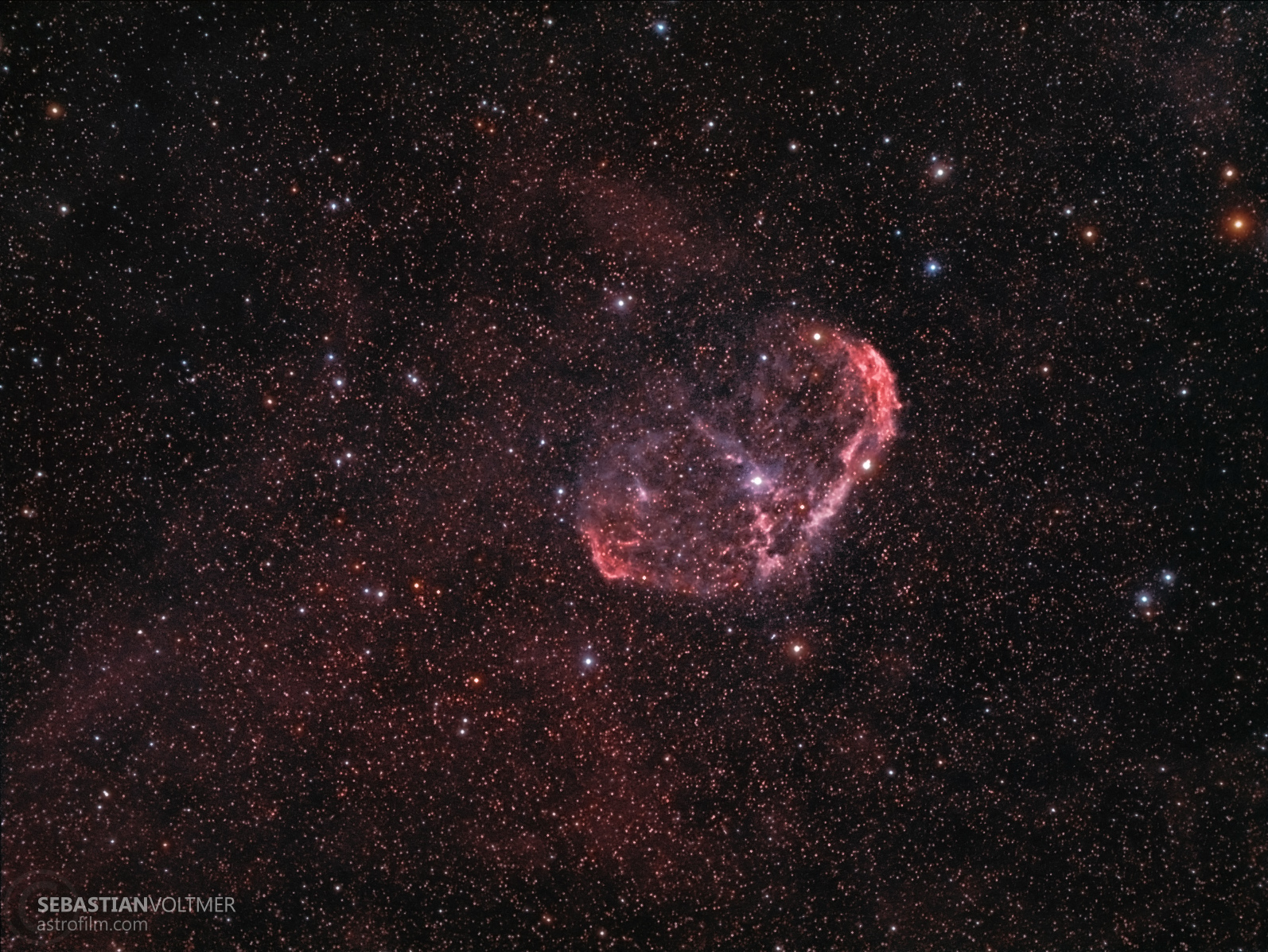
Crescent Nebula NGC 6888

Crescent: a half-moon in the form of a nebula. NGC 6888 is also known under the name Sickle Nebula. It is located right in the middle of the Swan constellation, at a distance of approx. 2.5° from the central Swan star, Sadr. Despite its prominent position in summer, the Crescent Nebula is not easy to see because of its small size of 18×13’ and its brightness of 10 mag. Scientists assume that the nebula has been ejected by a Wolf-Rayet star in the later stages of its life. For successful observation you need a crystal clear sky and an OIII-Filter.

ngc6888_omegonapo
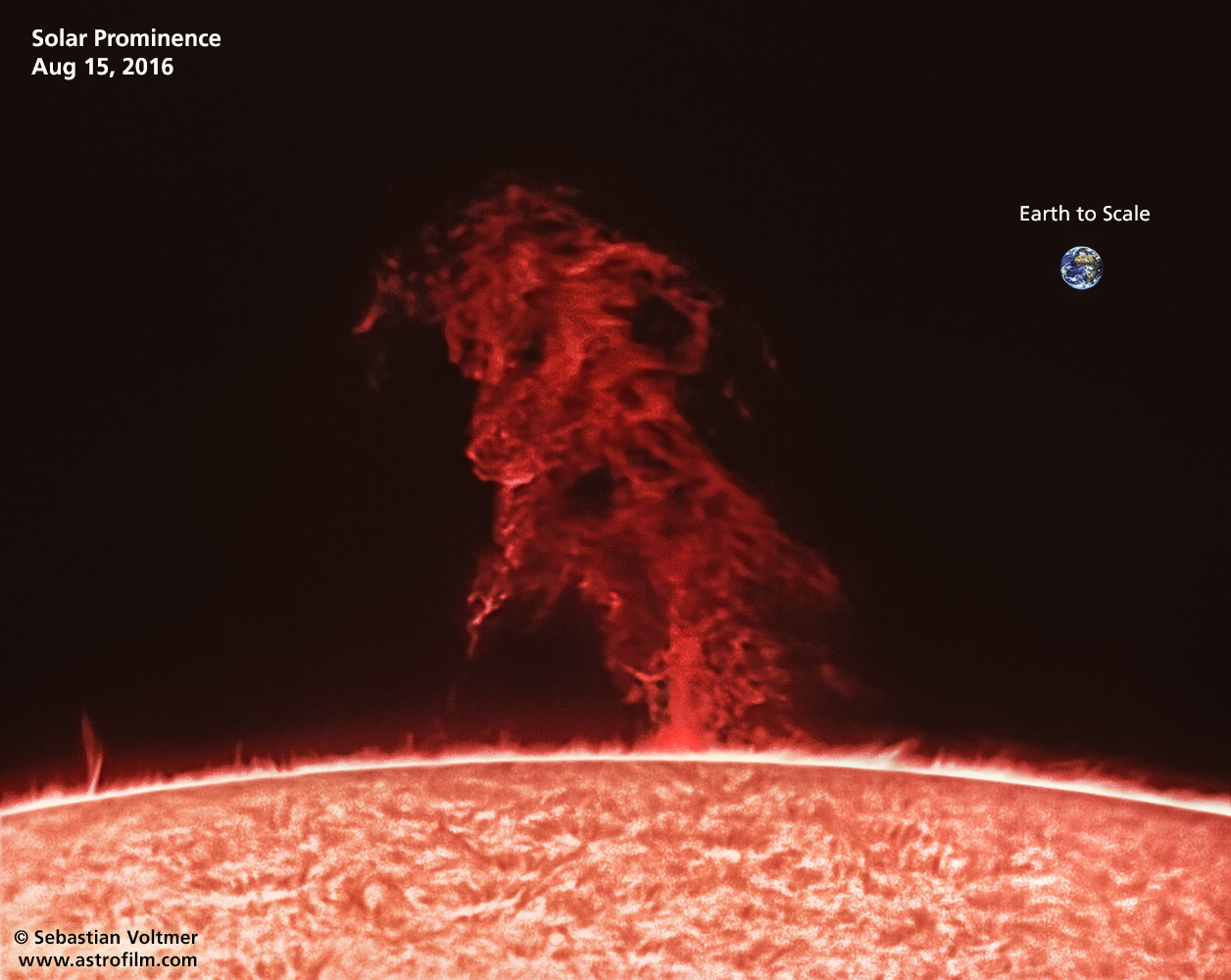
Solar flare

The picture gives you an impression of the size of a solar flare in comparison to Earth. This solar flare that appeared on the 15th of August 2016 had a length of approximately 13 Earths lined up.

prominence_2016-08-15_earth

Omegon apochromatic telescope 102 mm and 127 mm Triplet: The “People’s Apo” has been improved

October 10 2016, Marcus Schenk

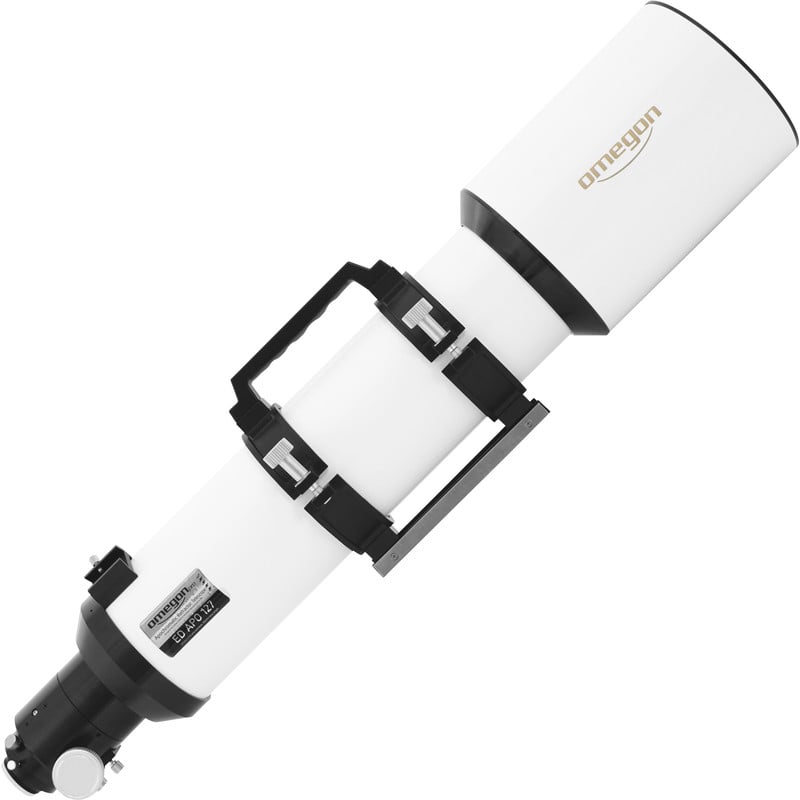
Whoever looks through an apo for the first time is usually thrilled. Twin stars, star clusters or planets: for these objects, an apo – without any doubt – takes the pole position. The two best-sellers from Omegon are the 102 mm and the 127mm Triplet apos – part of our product range since 2010! Now they have been revised and considerably improved. And best of all: The price has not been changed.

Just learn what has been changed to make this equipment more impressive than ever for amateur astronomers:

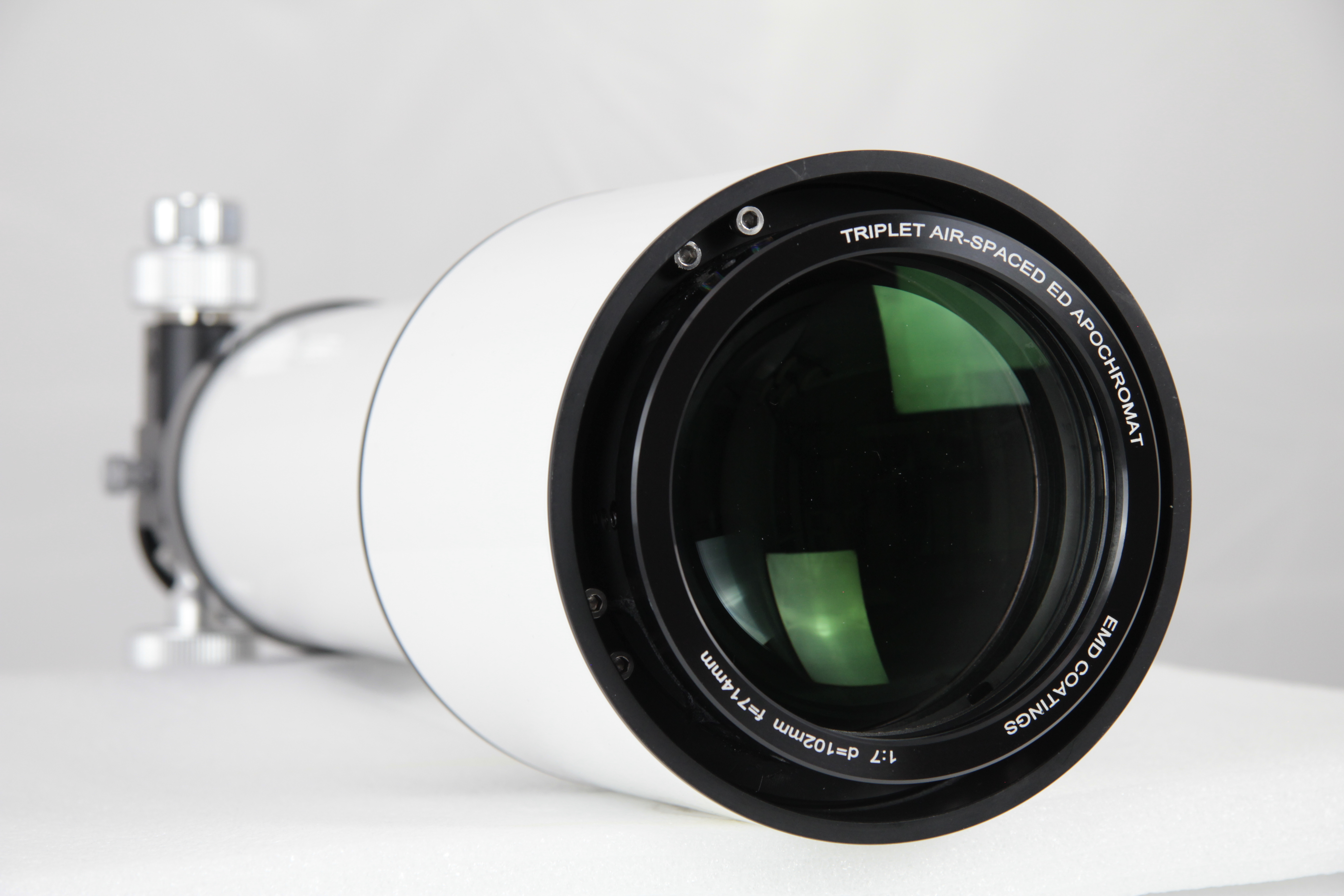
1. Adjustable lens cell

In the past telescopes were obviously adjusted, but any re-adjustment was very difficult. At least, you really needed to know what you were doing. This has now changed! We have developed a completely new and temperature compensating lens cell, which makes adjusting as simple as riding a bike – okay, maybe almost as simple. Four adjustment and fixing screws help you to adjust the eyepiece. This is easily done with an open end spanner, using the North Star as a reference.

triplet-blog

2. Finder base

The finder base with double-T profile was swapped for a standard Vixen-style base. You can now mount almost any finderscope or LED finder. This gives you more freedom of choice, because in the past only a few models fitted correctly.

3. Suitable for binocular attachments

Not everybody uses them, even though they really elicit a WOW-effect during observation. Binoculars allow you to watch with two eyes and give you plastic impressions. They are particularly fantastic for watching the Moon and planets. For problem-free use of a binocular the tube has been slightly shortened to provide more focusing space for the connection. Now you can use a binocular with diagonal mirror.

4. Reinforced prism rail

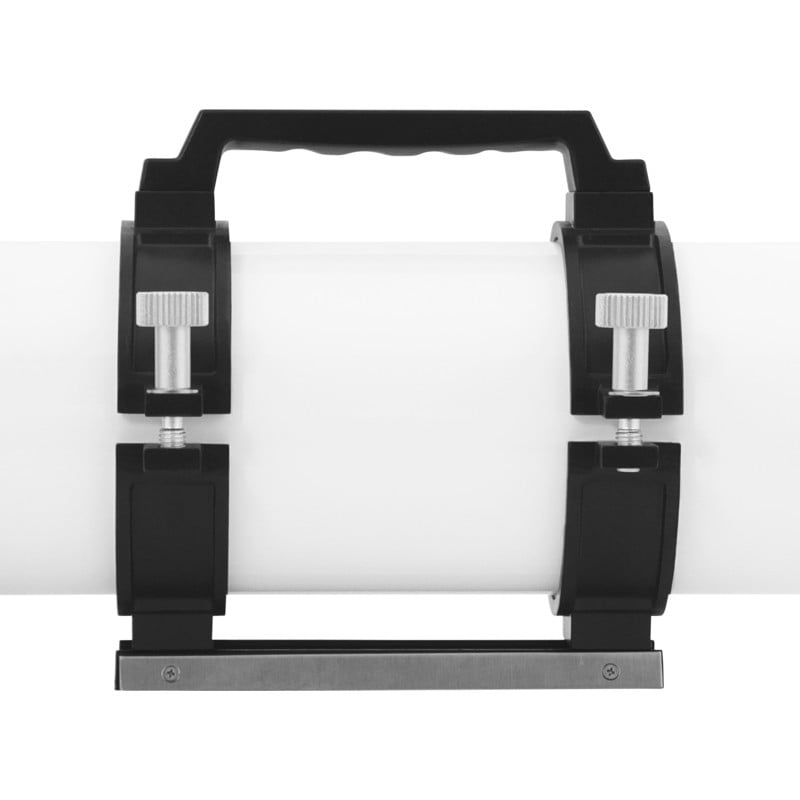
During the constant assembly and disassembly of a telescope, the prism rail suffers a lot. The screws of the mount repeatedly dig into the soft aluminium and leave scratches and sometimes even deep notches. We have now reinforced the prism rail of your apo with a stainless steel plate, so that it can still be used for many years to come. Scratches and deep notches are a thing of the past.

5. Retractable dew-shield

The dew-shield is now extendable and retractable and no longer attached.

By the way: Each apo now comes with a measurement protocol as a standard. Furthermore, we check the adjustment of each telescope and include a test image of the adjustment. But did you know, that, on request, we will also check your telescope on our optical bench? From the star test in autocollimation up to the interferometric test.


Telescope configurator with new telescopes: 6 steps to your dream telescope

August 15 2016, Marcus Schenk

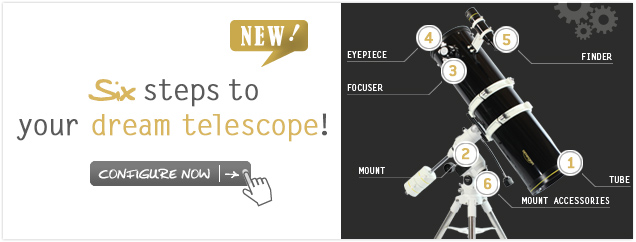
Optics, mounts and accessories: For two years you have been able to use the Astroshop.de telescope configurator to custom compile your own telescope, and now we have considerably extended the configurator’s functions. You can now choose from 12 different telescopes and adapt the telescope to even better serve your needs.

as-omegon-konfigurator-en

In the past, you have had to content yourself with the telescopes on offer. Why not switch things up and make buying a telescope a more personalised experience? This is what we at Astroshop.de thought, too, when we designed the configurator. We started with two Newton telescopes.

Now, the Advanced Telescope Series offers a full range of new reflectors and refractors:

Would you like to give it a try and take a look at the telescopes? This way to the telescopes!

How to start telescope selection

It’s fun to play with the configurator. What might my telescope look like? Which mounts and accessories are important to me? Do I prefer a simple or a more sophisticated eyepiece?

Simply click on this link and start configuring your dream telescope by first choosing the optics. The overview shows all available optics including basic prices. Step by step, you now make your way to mounts, focusers, eight different finderscopes, eyepieces and other accessories.

When it comes to accessories, you may even skip individual steps; for example, if you already have good eyepieces. This means that you are almost entirely free in your selection.
And the best part is: You can activate or deactivate your selection with a tick on the right. You can see in real-time how the prices change in the top right corner. This way, you not only choose each individual telescope component, but you also have full control over pricing.

Protection against unsuitable combinations

One of the most important prerequisites: the tubus needs to match the mount. How quickly do you accidentally place too large an optics on too small a mount. Using a 6” refractor, for example, on a small EQ-300 mount would be an unstable and shaky affair, as if you were using a telescope on a sailing ship in heavy seas. To avoid this, not every tubus can be combined with every mount. In this case you won’t see a tick but a cross next to the item.

No matter whether you’re a beginner or an advanced stargazer: For hobby astronomers, the telescope configurator is an alternative to the finished telescope sets. It simply gives you more control when purchasing your telescope.

Why not give it a try: configure your telescope now.

Compare 0/4