
Your partner for astronomy

Author Archives


Isabella Predehl

Isabella Predehl

Posts composed by Isabella Predehl

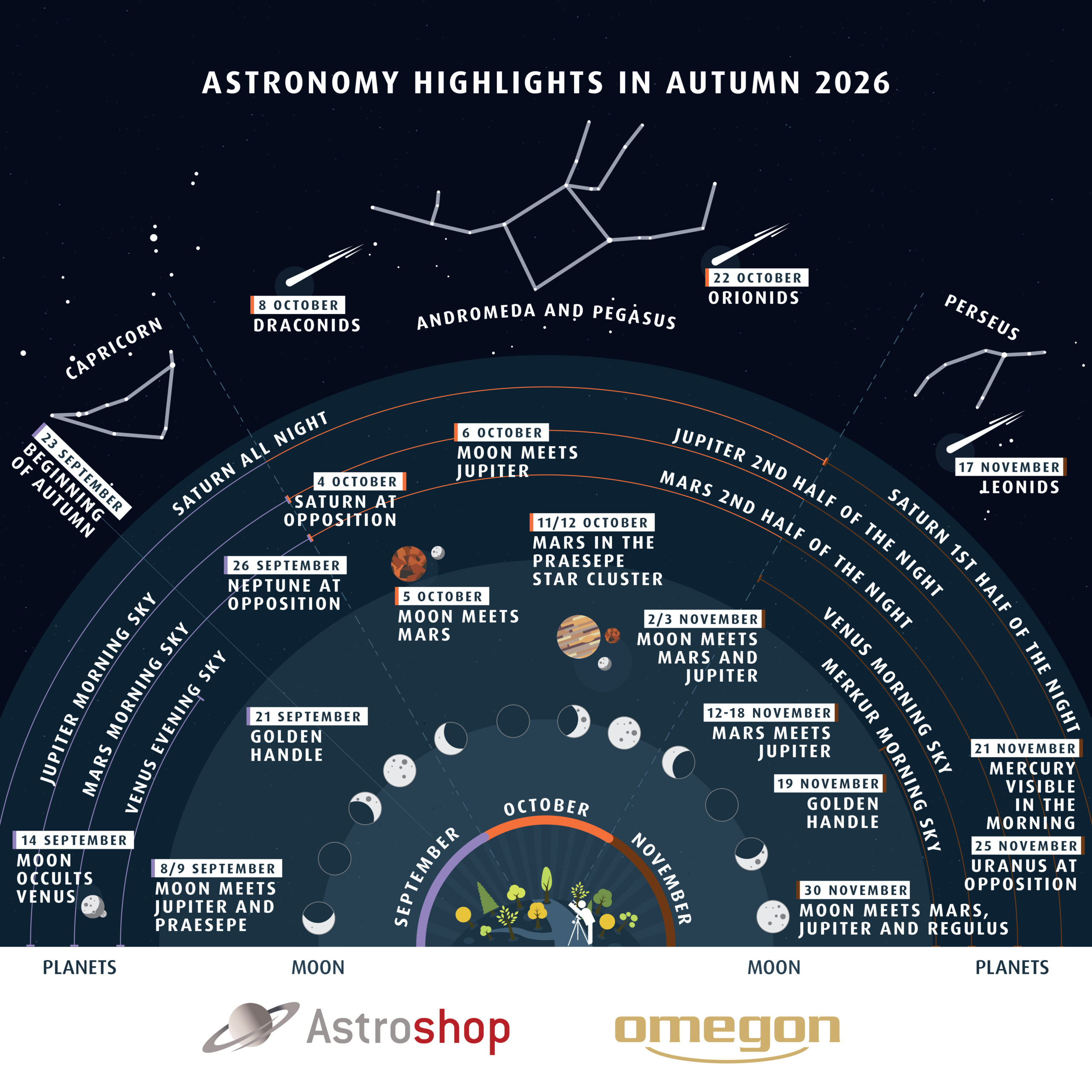
Infographic: Astronomical highlights in autumn 2026

September 1 2026, Isabella Predehl

The nights are getting longer, and the Moon, planets and star clusters meet in the sky. The new infographic shows you the most beautiful celestial events of autumn 2026.

Saturn, Neptune and Uranus are particularly easy to observe. Mars passes through the Praesepe star cluster and later meets Jupiter. This time, there is also a rare occultation of Venus in the daytime sky.

This infographic gives you a quick overview. You can find out more about the individual events in the accompanying text.

Enjoy observing!

You are welcome to use this graphic on your own website. Please include a link to www.astroshop.eu.
Astrohighlights Graphic

September


08./09.09.2026 Moon meets Jupiter and Praesepe

In the early morning hours of 8 September, the slender crescent Moon passes through the open star cluster Praesepe, also known as the Beehive Cluster or M44. The star cluster is especially beautiful when viewed through binoculars. The following morning, the crescent is positioned below Jupiter. This creates two particularly beautiful configurations low above the eastern horizon. An unobstructed view to the east is important.

14.09.2026 Moon occults Venus

This is one of the most exciting events of the autumn: in the daytime sky, the slender crescent Moon passes in front of Venus. Depending on the observing location, the planet disappears behind the Moon between approximately 11:29 and 11:35 and reappears at around 12:40.

Because the celestial event takes place during the day and the Moon is only low above the horizon, you will need a telescope and an unobstructed view. Important: the Sun is also in the sky (of course, it is daytime). Never search for the Moon and Venus without a precise plan. It is best to observe using an automatically aligned mount and make sure that it cannot accidentally point towards the Sun.

After sunset, the pair appears once again in the evening sky. The slender crescent Moon and bright Venus are then low in the west. Here too, you will need an unobstructed horizon.

21.09.2026 Golden Handle

Today, the Golden Handle appears on the Moon. The Sun is already illuminating the peaks of the Montes Jura, while the plain of Sinus Iridum is still in shadow. This creates a bright, curved handle at the edge of the Moon.

The play of light begins in the early evening and remains visible for several hours. The Golden Handle is particularly well displayed at around 20:00. Binoculars are sufficient, but through a telescope the seemingly floating arc of mountains looks even more impressive.

23.09.2026 Beginning of autumn

On this day, the Sun crosses the celestial equator heading south. This marks the beginning of astronomical autumn for us in the Northern Hemisphere: day and night are now approximately equal in length. Over the coming weeks, it will get dark progressively earlier. For us stargazers, this marks the beginning of a particularly pleasant observing season, and we can even look at the stars during the week without having to struggle with tired eyes the following day.

26.09.2026 Neptune at opposition

Today, Neptune is opposite the Sun and visible throughout the night. The distant planet is located in the constellation Pisces and reaches a brightness of approximately magnitude 7.8. It therefore remains invisible to the naked eye.

Even with a smaller telescope, you can spot Neptune as a star-like point of light. With an aperture of around 100mm or more and steady air, it can be identified as a tiny bluish disc. A precise finder chart or GoTo control makes it easier to locate.

October


04.10.2026 Saturn at opposition

Now is an especially good time to observe Saturn. It is opposite the Sun, rises in the evening and remains visible throughout the night. After midnight, it reaches its highest position above the horizon.

Through a telescope, Saturn appears with a planetary disc measuring around 19.7 arcseconds. Its rings are also slightly more open than in the previous year, at 9 degrees. Even a small telescope clearly separates the ring from the planet. With a larger aperture, fine details and several of its moons become visible.

05.10.2026 Moon meets Mars

For almost the entire second half of the night, the Moon is only slightly more than one degree away from Mars. Both are located near the Praesepe star cluster. Through binoculars, you can observe the reddish planet, the crescent Moon and several stars of the cluster together.

06.10.2026 Moon meets Jupiter

The very next morning, the Moon meets Jupiter. The two are positioned very close together. During the day—something we are unable to observe—their separation temporarily shrinks to around 15 arcminutes.

You can spot the Moon and Jupiter above the eastern horizon. The slender crescent and the bright planet create a beautiful subject for a landscape photograph.

08.10.2026 Draconids

The Draconids originate from the constellation Draco. The point from which they appear to radiate is already high in the sky in the evening. You can therefore begin observing as soon as darkness falls.

It is difficult to predict how many meteors will appear from this shower. In some years it remains inconspicuous, while in others unexpectedly elevated rates occur. Conditions are particularly good in 2026: the Moon is only about one percent illuminated and hardly interferes with observations.

11./12.10.2026 Mars in the Praesepe star cluster

For night owls or early risers, this is a worthy celestial event: during the second half of the night, Mars moves directly through the open Praesepe star cluster in the constellation Cancer. The red planet stands out clearly from the cluster’s many fainter stars.

The encounter is best observed through binoculars. It is also very interesting for astrophotography: because Mars is located in the midst of the star cluster, this rare sight is well worth photographing.

22.10.2026 Orionids

The Orionids reach their maximum during the night of 21 to 22 October. The meteors originate from dust particles left by Halley’s Comet and strike the Earth’s atmosphere at particularly high speed. Under good conditions, around 20 shooting stars per hour are possible.

During the first half of the night, the bright Moon still causes interference. It sets at around 3:00. After that, the sky becomes darker and conditions improve. The best observing period is therefore between approximately 3:00 and the beginning of morning twilight.

November


02./03.11.2026 Moon meets Mars and Jupiter

During the night of 2 November, in the second half of the night, the Moon, Mars and Jupiter form a trio. Jupiter stands out because of its great brightness, while Mars can be identified by its reddish light.

By the following morning, the Moon has already passed both planets. This significantly changes their arrangement. It is therefore worth looking at the sky on both days.

12.–18.11.2026 Mars meets Jupiter

For several days, Mars and Jupiter move progressively closer together in the morning sky before passing one another. Between 15 and 17 November, their separation is only around 1.2 degrees. Both planets therefore fit together within the field of view of many telescopes and binoculars.

Their brightness and colour make the pair particularly striking: Jupiter shines considerably brighter, while Mars adds an orange-red accent beside it. The encounter can be followed over several nights.

17.11.2026 Leonids

The Leonids reach their maximum during the night of 17 to 18 November. Their radiant lies in the constellation Leo. At around 10–20 meteors per hour, the shower is generally rather quiet, although occasional outbursts occur. The shooting stars are very fast and sometimes leave bright trails.

The Moon sets during the first half of the night. Conditions are therefore good during the second half of the night. At that time, Leo is also higher above the horizon.

19.11.2026 Golden Handle

The Golden Handle appears on the Moon for the second time this autumn. The peaks of the Montes Jura are already glowing in sunlight, while Sinus Iridum remains in darkness. Binoculars are sufficient for observing it. Through a telescope, the rugged mountain landscape can be seen especially clearly.

21.11.2026 Mercury visible in the morning

Mercury reaches its greatest western elongation from the Sun. This provides the best morning visibility of the year. The planet rises around one hour and 45 minutes before the Sun and appears low above the eastern horizon.

Begin searching approximately 1.5 hours before sunrise. Binoculars will help you locate Mercury in the twilight. As soon as the Sun rises, you should stop observing.

25.11.2026 Uranus at opposition

Today, Uranus is opposite the Sun and visible throughout the night. The planet is located in the constellation Taurus and reaches a brightness of approximately magnitude 5.6. Under a very dark sky, this theoretically places it at the limit of naked-eye visibility. Binoculars make it significantly easier to locate.

Through a telescope, Uranus appears as a small greenish-blue disc. Since the full Moon occurred only one day earlier, its light strongly brightens the sky. Observing conditions are better a few days before or after opposition. Uranus will still remain visible for almost the entire night.

30.11.2026 Moon meets Mars, Jupiter and Regulus

At the end of the month, the Moon, Mars and Jupiter gather in the morning sky. Regulus, the principal star of Leo, is also part of this busy scene of celestial objects. Jupiter and the Moon are the most conspicuous. Mars is somewhat farther away and can be recognised by its reddish colour. From the second half of the night onwards, you will find the group above the eastern horizon.
 

Partial Lunar Eclipse on 28 August 2026: A Dark Moon at Dawn

August 15 2026, Isabella Predehl

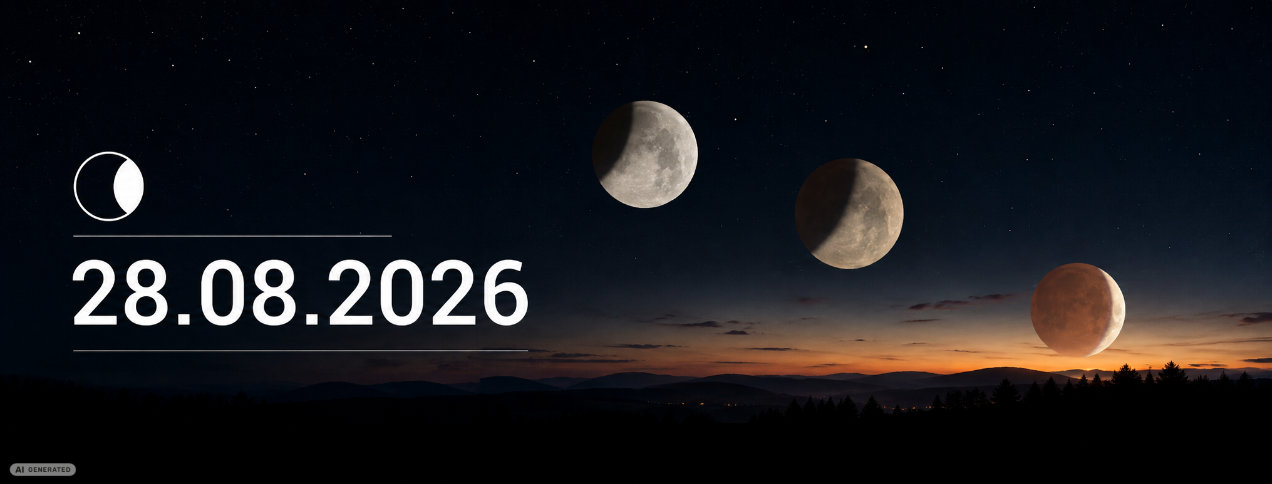
In the early morning hours of August 28, 2026, a partial lunar eclipse will be visible. During this event, part of the Moon will enter Earth’s shadow and become noticeably darker.

In our new magazine article, you will learn what a lunar eclipse is, how it occurs, and how you can photograph it.

Enjoy reading!

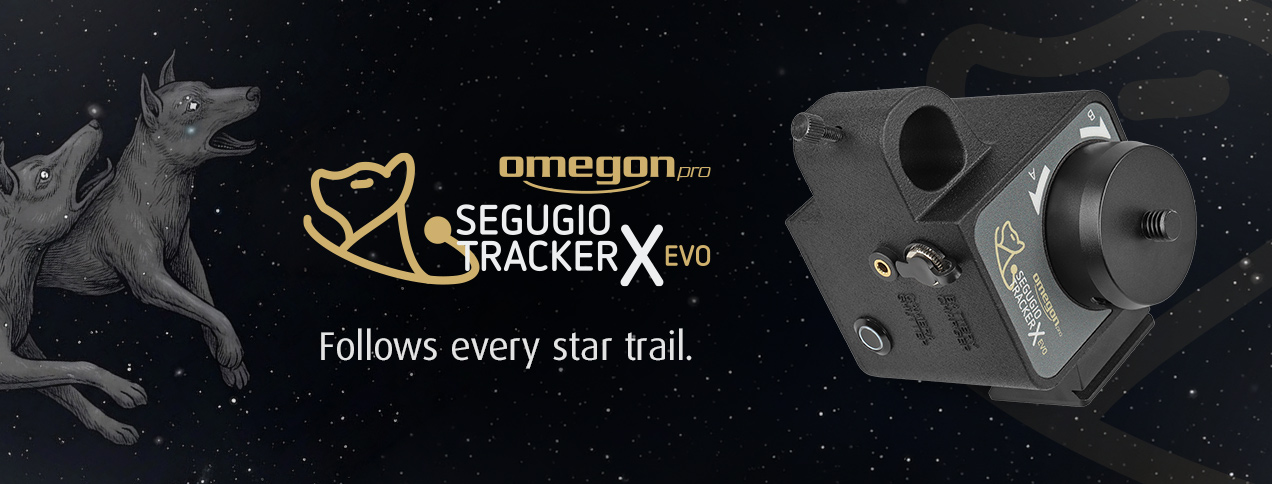
Omegon Segugio Tracker X Evo – follows every star trail

July 31 2026, Isabella Predehl


Your hiking holiday is coming up and you finally want to capture the Milky Way perfectly?

Omegon has the ideal companion for you: the Segugio Tracker X Evo is an ultralight camera mount that effortlessly supports even heavy cameras and lenses.

What makes this smart tracker stand out:

  • Less luggage: The integrated battery and camera shutter release eliminate the need for additional accessories.
  • Day & night: Perfect for astrophotography, panoramas and time-lapse photography.
  • Smart app control: Energy-efficient and intuitive operation via Bluetooth.
  • Ready to go: Handcrafted in Italy and supplied with a practical carrying bag.

Choose the option that suits you: get the tracker on its own or as a fully equipped complete set including a ball head or a polar wedge and polar scope.

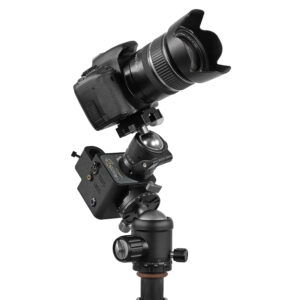
Example of use with a ball head

Bag, charging cable and jack plug adapter included

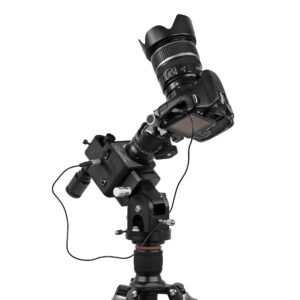
Example of use with a polar wedge, polar scope and shutter release cable

Find out more now!

Latest news on the solar eclipse on 12 August 2026

July 30 2026, Isabella Predehl

On 12 August 2026, Europe will turn its gaze towards the Sun: the eclipse will be total in northern Spain, among other places, and visible as a partial eclipse across large parts of Europe. In the Solar observation section, you will find solar eclipse glasses and much more for safely observing and photographing our home star.

These are the latest additions to our range of solar observation products:

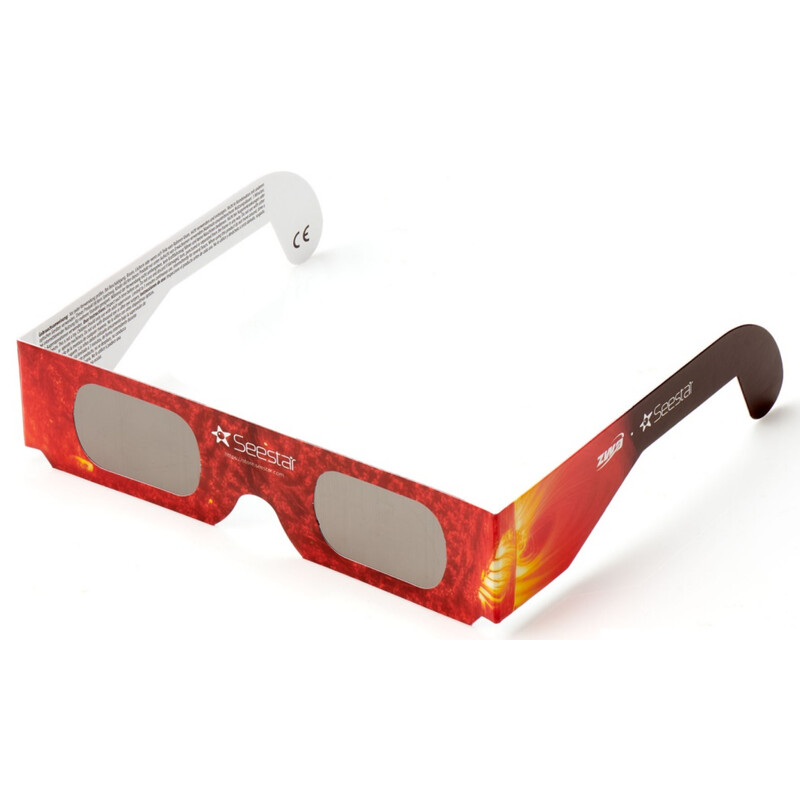
ZWO Seestar Solar Eclipse Glasses

The Seestar solar eclipse glasses from ZWO offer a straightforward solution for looking directly at the Sun without optical magnification. An integrated UV/IR filter and an optical density of 5 protect your eyes, while the Sun appears in a bright yellow colour. Lightweight, ready for immediate use and ideal for solar eclipses, the glasses fit easily into any travel or observing bag. ZWO Seestar Solar Eclipse Glasses

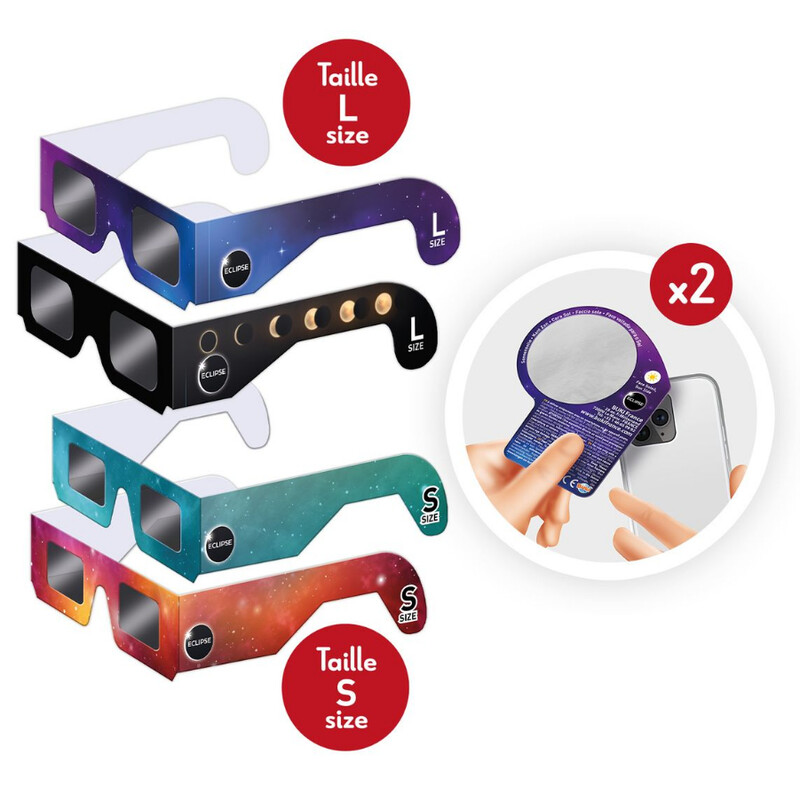
Buki Solar Eclipse Glasses Family Pack

The Buki Family Pack lets adults and children enjoy the Sun together. It contains two pairs of glasses for adults, two models for children and two filters for smartphone cameras. A multilingual accompanying booklet provides additional information about the solar eclipse. The CE-certified glasses comply with EN ISO 12312-2 and are ready for immediate use, making them a practical all-in-one solution for families, schools or small observing groups. Buki Solar Eclipse Glasses Family Pack

Omegon Solar Safe Deluxe Cam Solar Filter

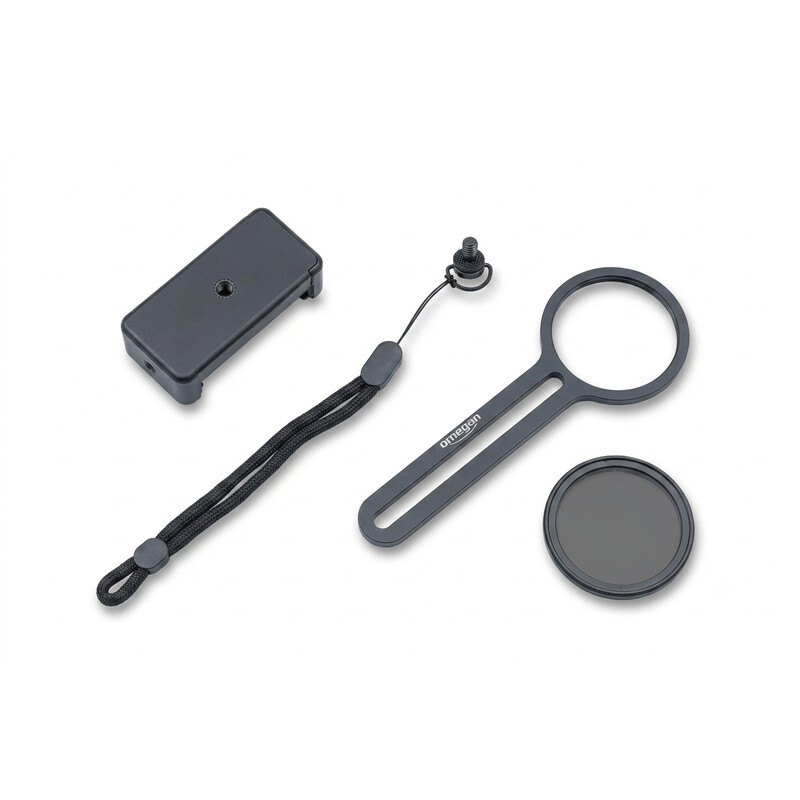
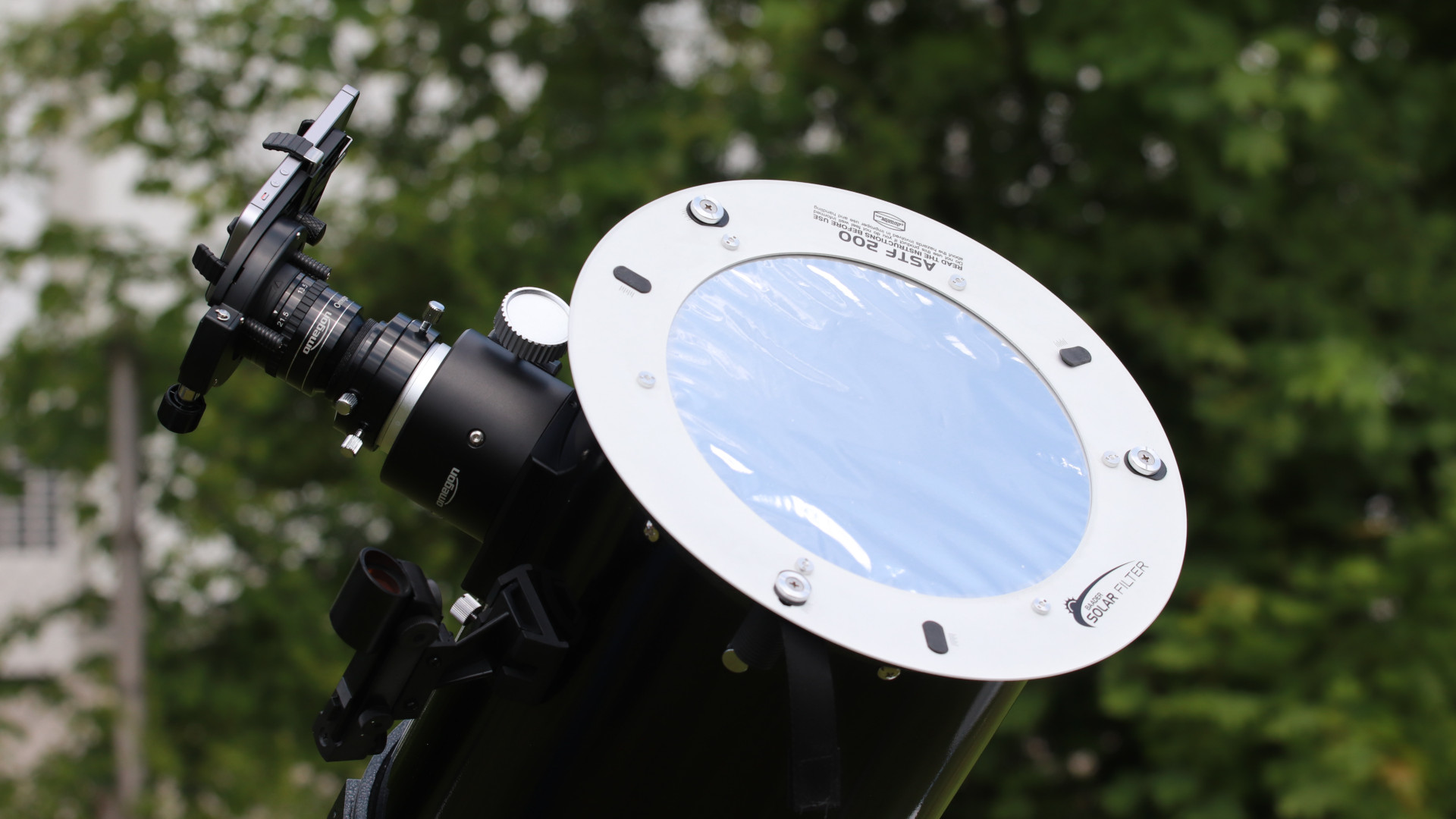
The Omegon Solar Safe Deluxe Cam allows you to take smartphone images of the Sun without improvised adhesive or hook-and-loop fastenings. The modular set includes an M48 solar filter with an optical density of 5, a sturdy filter holder and a smartphone clamp mount for tripods. This keeps both the filter and the phone securely positioned while capturing a yellow-orange image of the Sun. The holder can also be used with other 2-inch filters, making it practical for a variety of photographic applications by day and night. Omegon Solar Safe Deluxe Cam Solar Filter

Lunt Mini Sunocular 6×30 OD5

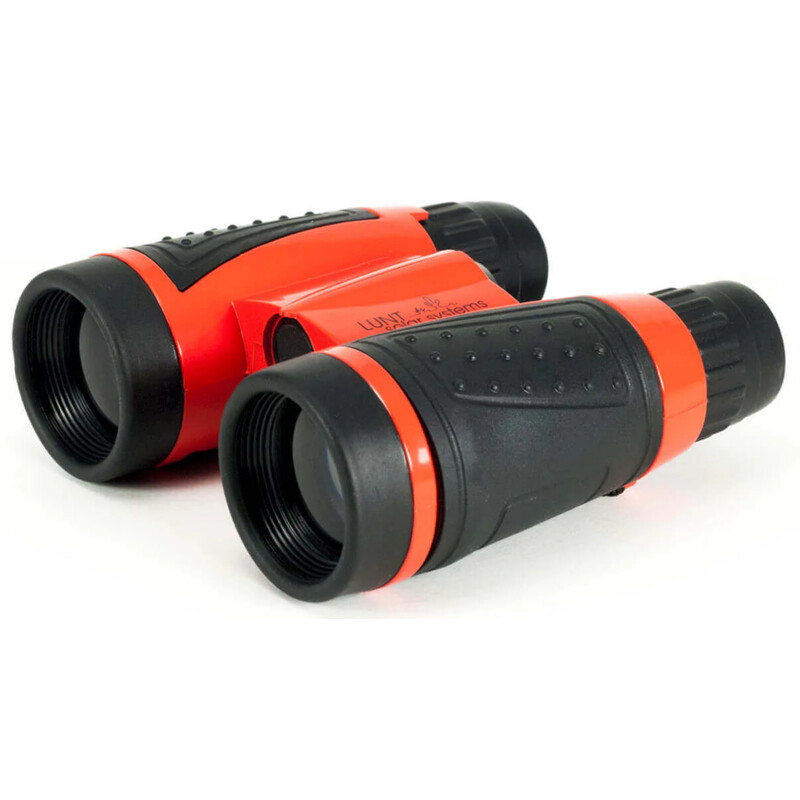
The Lunt Mini Sunocular 6×30 OD5 provides a convenient magnified view of the Sun. Permanently installed white-light glass filters turn these compact binoculars into a specialised instrument for observing sunspots, solar eclipses and transits of Mercury or Venus. Weighing only around 160 grams, they are ideal for travelling and always close at hand. Important: because the solar filters are permanently integrated, the Sunocular is intended exclusively for solar observation. Lunt Solar Systems 6x30 Mini Sunocular OD5 Solar Binoculars

Omegon Horizon AC 70/700 EQ Neo Telescope now with solar filter

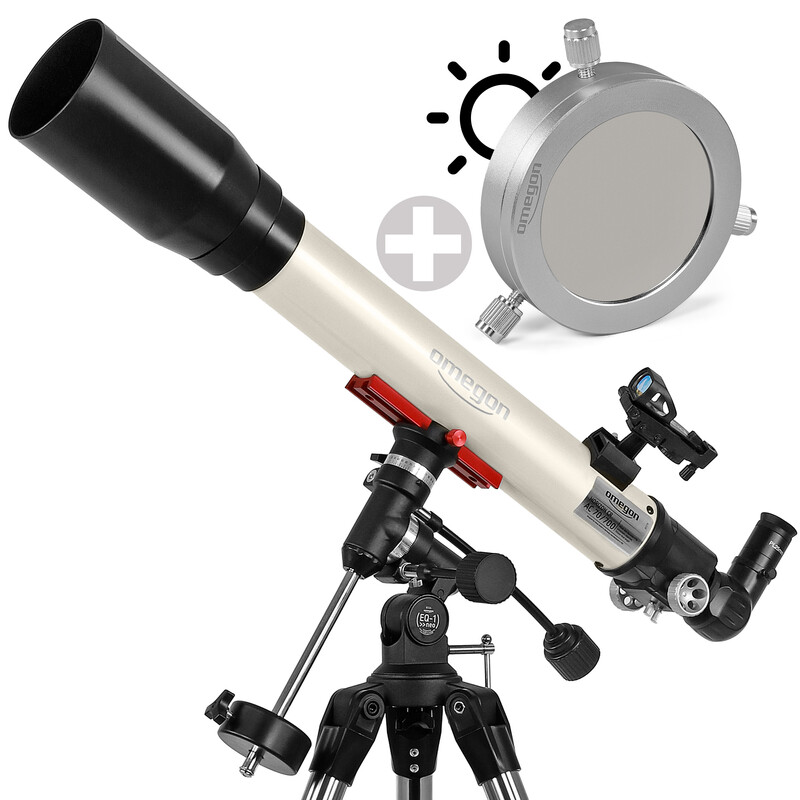
The Omegon Horizon AC 70/700 EQ Neo is a versatile starter set for observing the Moon, planets and bright deep-sky objects. The achromatic refractor delivers high-contrast images, while the Crayford focuser enables precise focusing. With the Amici prism, the telescope provides an upright, correctly oriented image, making it suitable for nature observation as well. An EQ Neo mount, stainless-steel tripod, two eyepieces, Barlow lens, LED finder, smartphone adapter and Bluetooth remote shutter release are all included. With a free solar filter until 15 August 2025! Omegon Horizon AC 70/700 EQ Neo Telescope


New in the magazine: You shouldn’t miss these articles

July 16 2026, Isabella Predehl

There is fresh content in the magazine once again. Particularly worth reading this time are the new articles about the solar eclipse. A fascinating celestial event that will certainly raise many questions. Just take a look and browse through exciting features.

10 Must-Have Items for the 2026 Solar Eclipse
Sun Photography for Beginners
Solar Eclipse in Europe:
Everything You Need to Know About the Total Solar Eclipse on August 12. 2026
Photographing a Solar Eclipse with ZWO Seestar:
How to Take Great Photos with the S30 Pro and S50


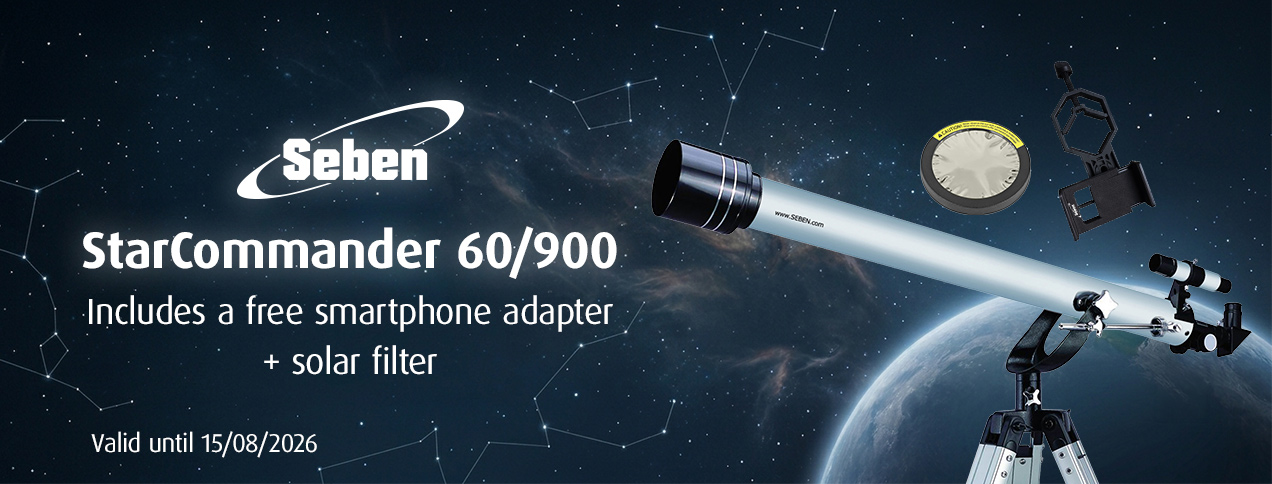
Seben Star Commander 60/900 with 2 free gifts

July 2 2026, Isabella Predehl

Your entry into astronomy!

Buy a Seben Star Commander 60/900 and get a smartphone adapter plus an Omegon Basic solar filter for free. Perfect for your first astrophotos.

Valid only from 01/07 to 15/08/2026.

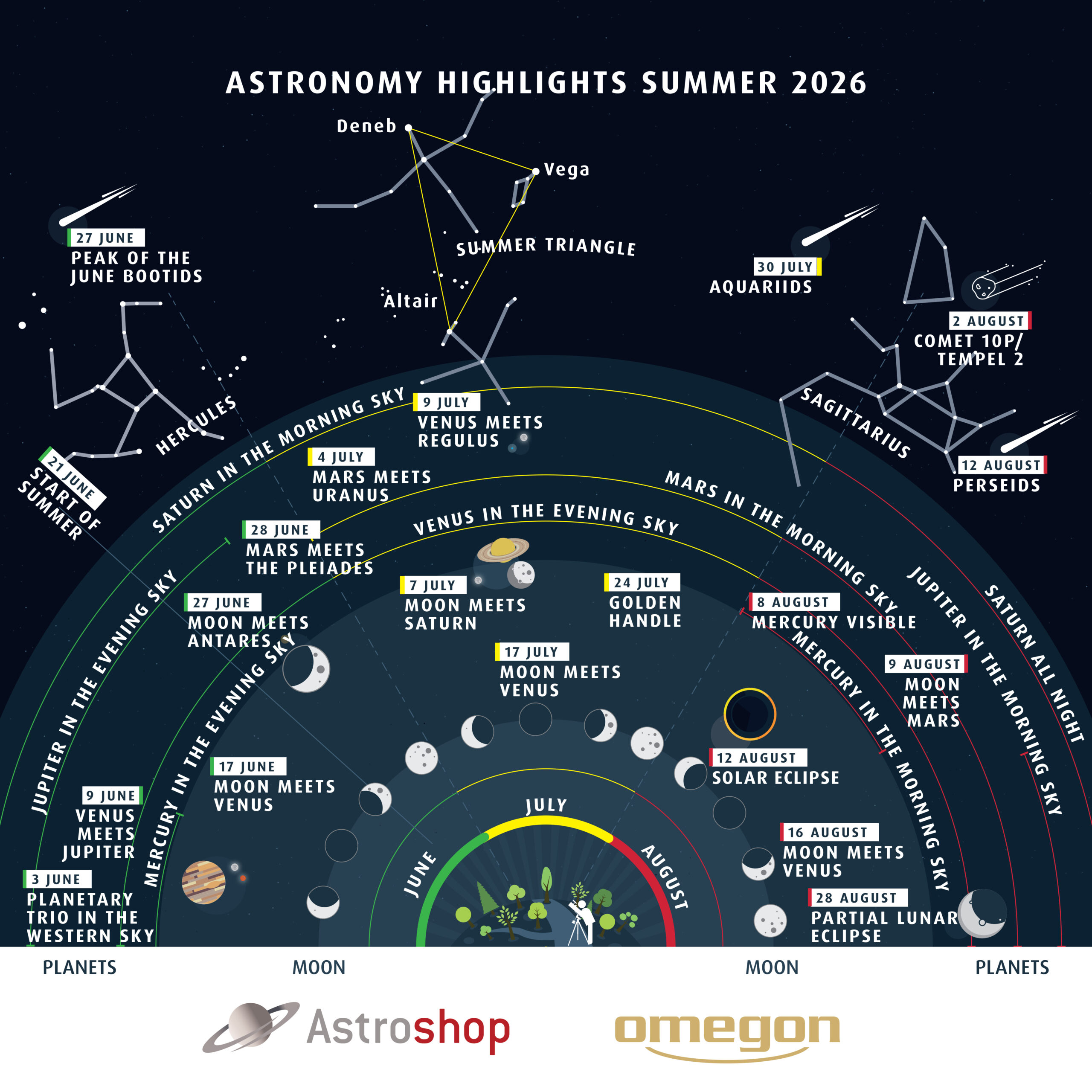
Infographic: Astronomical highlights for summer 2026

June 1 2026, Isabella Predehl

Be inspired by the astronomical highlights of summer 2026. A rare planetary trio, a total solar eclipse, the most beautiful shooting stars of the year, and a comet. This
summer has plenty to offer. So that you don’t miss any of these astronomical events, we have put together an overview.
In this infographic, you will find a quick overview and a selection of particularly interesting celestial phenomena. More information and details with explanations can
be found in the accompanying text. Enjoy observing!

June


03.06.2026 – Planetary trio in the western sky.

At the beginning of June, a planetary trio consisting of Venus, Mercury, and Jupiter appears very low in the western sky, directly above the horizon. All three are located in the constellation Gemini. This is actually one of the winter constellations, but its position far to the west shows that winter has long since ceased to matter. In any case, it is a beautiful sight and perhaps worth a photo.

09.06.2026 – Venus meets Jupiter
Before it gets properly dark, two brilliantly bright planets meet in the western twilight: Venus and Jupiter. They are separated by only 1 degree and 22 arcminutes. Venus reaches a magnitude of -3.8, close to its brightest phase.

17.06.2026 – Moon meets Venus

Shortly after the middle of the month, there is another very beautiful event: the very slender crescent Moon meets Venus. In the evening twilight, when the sky is not yet completely dark, it creates a wonderful sight. One that appeals not only to amateur astronomers, but also to people who normally do not look up at the sky. The Moon is only three days old. Compared with the beginning of the month, Venus has gained a little more brightness. It is now shining at its maximum brilliance.

21.06.2026 – Start of summer


27.06.2026 – Moon meets Antares

The full Moon is approaching. On this evening, the Moon meets red Antares, the main star of the constellation Scorpius. At around 10 p.m., both can be seen toward the south. They cross the meridian and disappear below the horizon at around 3 a.m.

28.06.2026 – Mars meets the Pleiades

Very early in the morning, Mars approaches the Pleiades, the M45 star cluster in the constellation Taurus. Since Taurus is one of the winter constellations, it can only be seen shortly before sunrise, at around 3 a.m. in the northeast together with Mars. Both climb quite a bit higher until twilight begins, but then disappear in the glare of sunlight.


July


04.07.2026 – Mars meets Uranus

In the early morning hours, Mars and Uranus rise above the northeastern horizon. As a duo, they move across the sky until they disappear in the morning twilight. They are separated by only 0.7 degrees. This means that both can be observed together in one eyepiece field of view or photographed in a single image field.

07.07.2026 – Moon meets Saturn

Today and tomorrow morning, the approximately half-illuminated Moon passes above the ringed planet Saturn. Both are currently located in the constellation Pisces. The constellation lies below Andromeda and Pegasus – and is relatively inconspicuous, as there are no bright stars to be found in it.

09.07.2026 – Venus meets Regulus

The last two July events took place in the morning sky. Today, Venus makes things more convenient. It appears in the evening sky. Low in the west, it shines as the brilliant evening star and stands just above Regulus, the main star of the
constellation Leo.

17.07.2026 – Moon meets Venus

As soon as twilight sets in, two beautiful celestial objects emerge on the western horizon: the delicate crescent Moon and the planet Venus. Together with the landscape, this creates a beautiful atmospheric scene.

24.07.2026 – Golden Handle

On 24 July, the Moon shows itself at its most beautiful: the Golden Handle is visible. The low-angle illumination near the lunar terminator creates a fascinating play of light and shadow. For several hours, the peaks of the Montes Jura are illuminated by the Sun, while the small plain of Sinus Iridum still lies in shadow.

30.07.2026 – Aquariids

The July or Delta Aquariids reach their maximum on the 30th. These are shooting stars from the region of the constellation Aquarius. Under good conditions, up to 25 shooting stars per hour are possible! Unfortunately, the bright Moon interferes with observation this year.


August


02.08.2026 – Comet 10P/Tempel 2

Comet 10P/Tempel 2 is currently visible in the sky and reaches a brightness of up to magnitude 8. Today it passes through perihelion; tomorrow it approaches Earth to within 61 million kilometers. From around 11 p.m., it rises above the horizon – clearly visible with binoculars or a telescope. It reaches its highest position at around 2:24 a.m.

08.08.2026 – Mercury visible

Mercury is the innermost planet and accordingly fast-moving. Its apparent distance from the Sun is small. That is why you do not often get to see it. At the moment, however, it appears in the morning sky with pleasant brightness. From 1 August to around 15 August, it can be spotted above the eastern horizon.
09.08.2026 – Moon meets Mars

The waning crescent Moon passes the planet Mars. Both are located in the constellation Taurus. Tomorrow, the Moon moves into the constellation Gemini.

12.08.2026 – Solar eclipse

On 12 August, another total solar eclipse will take place. In most parts of Europe, it will be visible as a partial eclipse. It is the first total solar eclipse in Europe in 27 years, making it a very special event for everyone on the continent. The eclipse takes place in the evening hours shortly before sunset. A good observing location with an unobstructed view to the west is therefore ideal. More information with times and observing locations can be found in our magazine article on the solar eclipse.

12.08.2026 – Perseids

They are the most beautiful shooting stars of the year: the Perseids. And on the same day as the solar eclipse. This day is truly astronomical! In the morning hours of 13 August, the meteor shower reaches its maximum. In theory, up to 100 shooting stars per hour can appear, traveling at an incredible speed of around 216,000 km/h. The maximum occurs between 10:00 p.m. and 4:00 a.m. And because there is also a solar eclipse today, we have a new Moon: the shooting stars can therefore be observed without interference.

16.08.2026 – Moon meets Venus

A beautiful sight in the evening sky: Venus and the very slender, four-day-old crescent Moon meet today.

28.08.2026 – Partial lunar eclipse

On 28 August, a partial lunar eclipse will take place in the second half of the night. Its initial phase is easy to observe. Although the eclipse is partial, it has a very high eclipse magnitude: 93.5% of the Moon enters the umbra. At first, the full Moon can still be seen quite normally; the penumbra is barely noticeable. At 4:34 a.m. CEST, the Moon enters the umbra. Shortly after the maximum, the Moon sets. We will therefore no longer be able to follow its exit.

Rediscover the summer sky – with the Universe2go+ & Solar Safe Deluxe Value Set

May 16 2026, Isabella Predehl

Summer 2026 has some special moments in store for astronomy enthusiasts: numerous fascinating starry nights and, as a highlight, the partial solar eclipse on 12 August 2026.

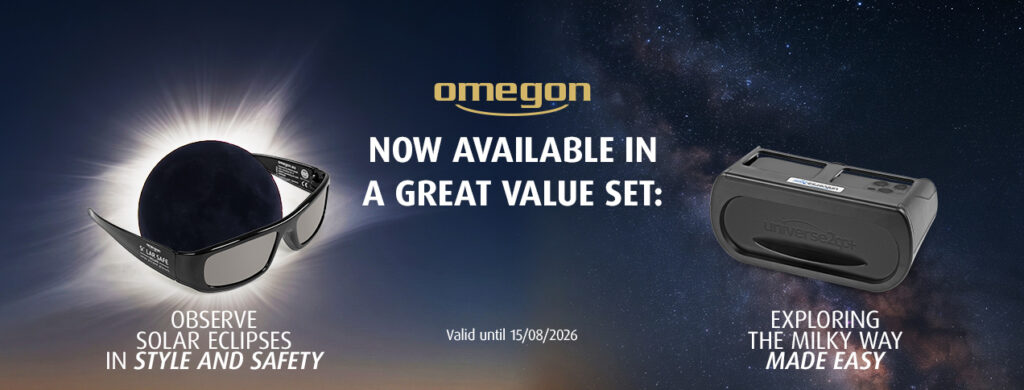
With the Omegon Universe2go+ handheld planetarium, you can explore the night sky in an interactive way. The set is complemented by the Omegon Solar Safe Deluxe solar eclipse glasses, allowing you to observe the solar eclipse in style and safety. You can now get both products together for just €99.

Save now & discover the highlights of the 2026 astronomy summer!

Promotion period: 15 May 2026 to 15 August 2026

Compare 0/4