Your partner for astronomy

Posts Tagged 'omegon'

Blog Archives

30% Discount: Universe2go now only 69.90 Euro

August 31 2017, Marcus Schenk

A must-have in any astronomy household: The Augmented-Reality Planetarium Universe2go has never been so affordable!

The smart AR goggles show you and explains the night sky – all without hours of hovering over star charts and books.  Simply download the Universe2go app, place your smartphone in the goggles and off you go! Universe2go shows you constellations, the Moon, planets, and even nebulae, accompanied by more than 3 hours of audio commentary.  Sky & Telescope magazine was so convinced, that Universe2go received the prestigious award, Hot Product 2017.

Now is your chance to save 30% on the original price of Universe2go.  Buy your Universe2go star viewer for 69.90 Euros instead of 99.00 Euros.  You save more than 29 Euros

Get yours now: Buy Universe2go now for only 69.90 Euros (59.90 £ or 69.90 $) – with FREE shipping worldwide.

Would you like more information about Universe2go? Then read these fascinating blog posts:

5 Reasons, why Universe2go is Totally Different than Other Astronomy Apps

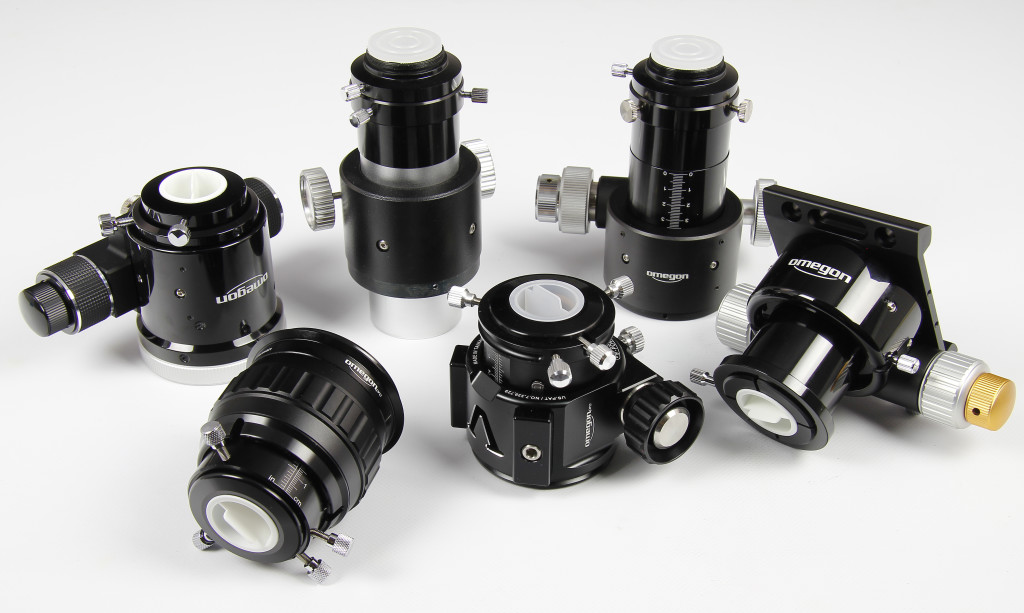
Focusers: This is how you optimise your telescope on the accessories side

June 19 2017, Marcus Schenk

A focuser is most likely the component, that is used most frequently and intensively on a telescope. How often do you plug in eyepieces, adapters and cameras? Yes, a focuser has to cope with quite a lot. But is it of sufficient quality? Many telescopes are designed for a very reasonable price – this can then be noticed on the focuser. Optimising the focuser has a tremendous effect at this point.

Having a good look at your current focuser quickly reveals whether you can achieve even better results with your telescope.

An interesting question: What is the purpose of a high-quality, accurately moving focuser? What should it be able to do?

omegon-focuser-blog-astroshop

Five arguments for a good focuser

A focuser should

… be free of play.
You probably know this? You turn the focuser wheel, but the mechanical system rotates without any effect. And all of a sudden, it starts to move. On the one hand this is annoying, on the other hand it gives you the feeling of working with low-quality material.

…be free of any shifting.
You turn the focuser wheel, but Jupiter performs a rain dance and is jumping about in the eyepiece. Even worse in a camera. The object may even jump out of the field of view. Diagnosis: Shifting. This should be remedied as quickly as possible by using a good focuser.

…not bend when a camera is connected.
Unstable focusers sometimes lead to fatal results for your astro photographs. If the focuser tube bends, a photo may be sharp in one corner, but blurred in the other. Now, who wants such a result after an otherwise successful photo session. Further down, you find a list with a load capacity that specifies the maximum camera load, which should help to avoid such problems.

…have an accurate, fine focus adjustment.
Anyone enthusiastic about astro photography knows: Focusing the camera on an object in the sky is a challenge. This is much easier with a smooth running focuser or a 1:10 dual reduction. This allows you to adjust the focus in the range of tenths of a millimetre. This all to find the exact sharpness.

…not slip when using heavy accessories.
A heavy eyepiece may have a weight of up to 1 kg, camera equipment may even be heavier. In this case, it is an advantage to have a focuser that does not slip under a heavy weight.

Our product range includes some Omegon focusers, with which you can easily optimise your telescope and enhance its performance. For even more fun when star gazing. Especially the Omegon products of the series V-Power, Omegon Pro and the Omegon Hybrid Caryford Dual Speed are dedicated for these five wishes and fulfil them with high precision. The mentioned Omegon Hybrid Caryford Dual Speed has even been designed with a very low construction height. On very fast Newton systems, with e.g. f/5, one can reduce the vignetting and enhance the illumination.

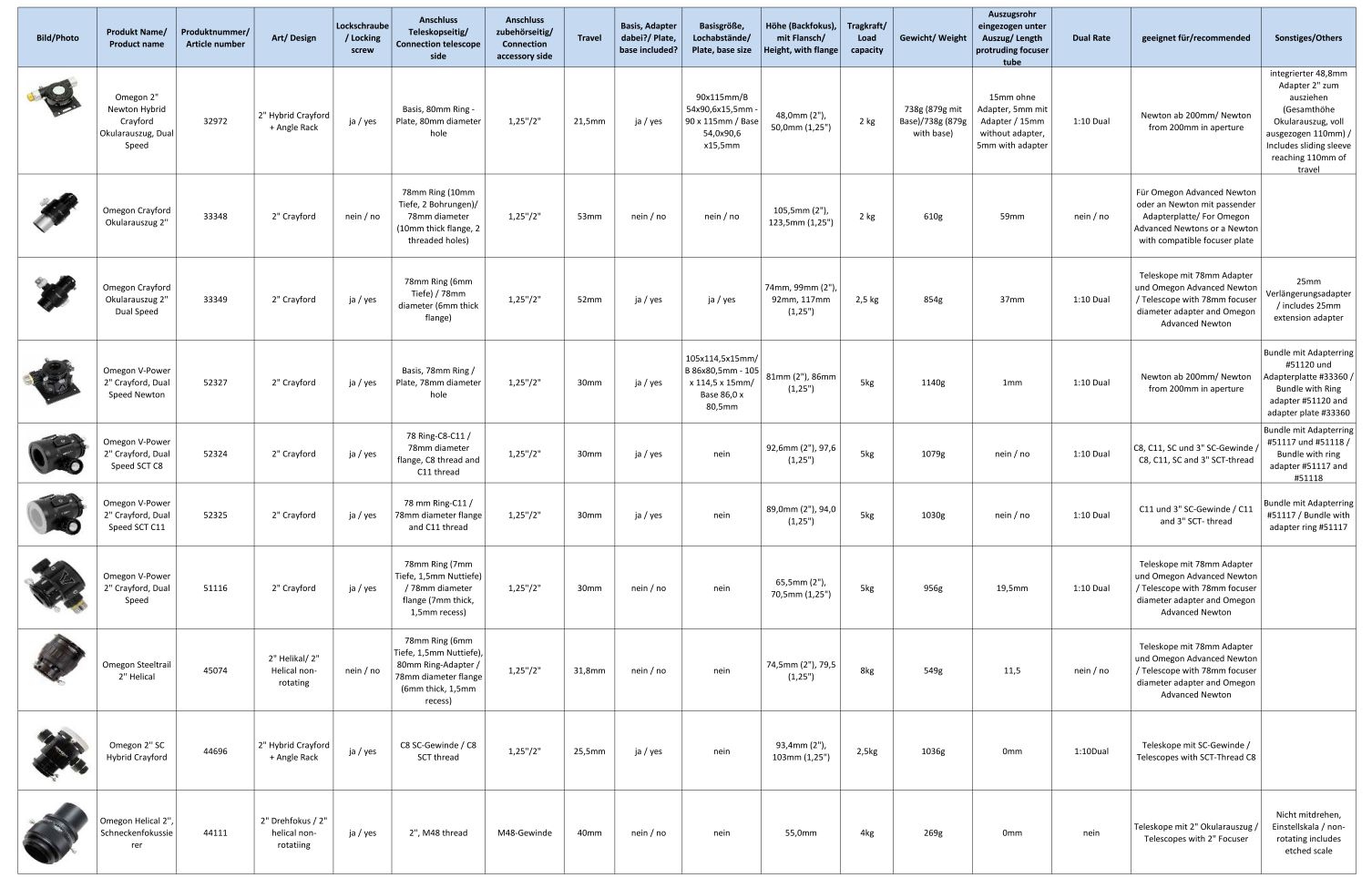
You surely want to know whether the focuser matches your telescope. How high is the backfocus? What are the adapter measurements? How high is the load capacity of the focuser? This new list provides all information at a glance. You can immediately see, which focuser would suit you best.

Omegon_Focuser_Table

New: Omegon Oberon eyepieces with 82° field of view

May 23 2017, Marcus Schenk

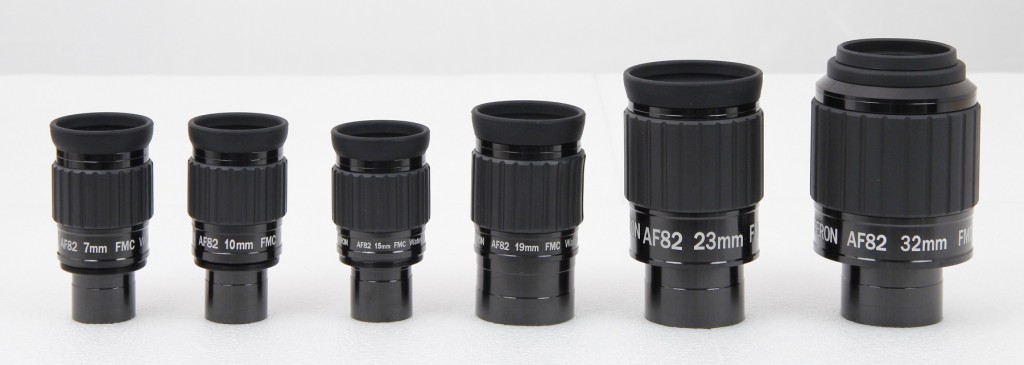
The new Omegon Oberon eyepieces have an 82° field of view and thus provide you with an outstanding free and open view. Apart from this, they are waterproof and filled with nitrogen. At less than 200 Euros they have a remarkably reasonable price tag and are affordable for almost every hobby astronomer.

Die Omegon Oberon Okulare mit 82° Gesichtsfeld

Waterproof and filled with nitrogen

You surely know the situation when eyepieces lose their shine. When dirt, pollen and the grease from your eyelids cover the eye lenses. This is normally the point at which eyepieces should be cleaned. But this is not as simple as it sounds, because lenses need to be cleaned with great care and using optical cleansing agents.  Omegon eyepieces make it incredibly easy.

Simply flush the eyepiece off under running water. And your eyepieces gleam like on the first day.

The benefits of a large field of view

Wide-angle eyepieces are the dream of any stargazer. In contrast to the standard eyepieces with a 45° or 50° field of view, large-field eyepieces give you the impression of floating through outer space. Above 70° the eye does not perceive the outer edge of the eyepiece, and a starry sky appears almost endless. The Oberon eyepieces with 82° fulfil this task even better, because here the eye can even move within the field of view.

The Oberon eyepiece series consists of six eyepieces with focal lengths of 7 mm, 10 mm, 15 mm, 19 mm, 23 mm and 32 mm. The three small focal lengths are available in 1.25″, the three long focal lengths in 2″. Any star gazer knows that sometimes it is quite difficult to find an object. A 32 mm Oberon eyepiece like this makes things a lot easier: A small magnification coupled with an 82° field of view makes the big Oberon a perfect finder eyepiece.

But also a 7 mm eyepiece with 82° has clear advantages: Viewing the surface of the Moon with a high magnification while still seeing large areas of the lunar landscape – it is just amazing.

The advantages of Oberon eyepieces at a glance:

•    Enduring: waterproof and filled with nitrogen – to protect against moisture and for a long service life
•    82° field of view: giant field of view, almost without limitation
•    Goof grip: serrated rubber armouring
•    Upscale design: anodised aluminium housing

Come this way: You can find further details on the product pages for the new Oberon eyepieces.

Lunar photography with a smartphone: the Omegon Easypic smartphone adapter

April 27 2017, Marcus Schenk

In the past, taking a photo of the Moon required quite some effort. Take the pictures, develop the film and hope for sharp images. And then came the disappointment if the Moon appeared blurred. This became considerably easier with digital and mobile phone cameras.

In the meantime, smartphone cameras have reached an outstanding level of quality. Which is a good tool for Moon photos, provided that we can tightly mount the phone to the telescope.

Let’s have a look to see how everyone can take a photo of the Moon through a telescope.

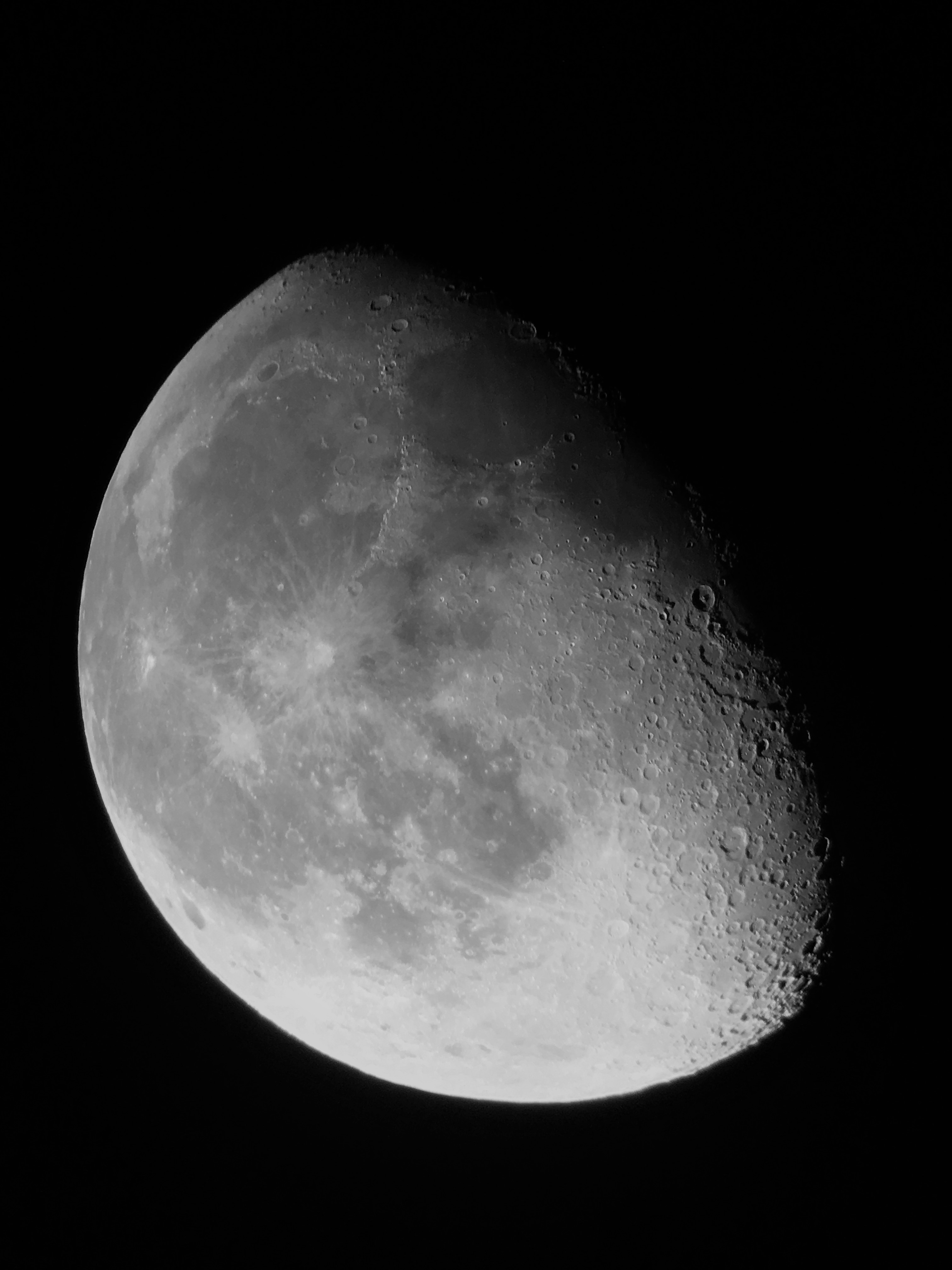
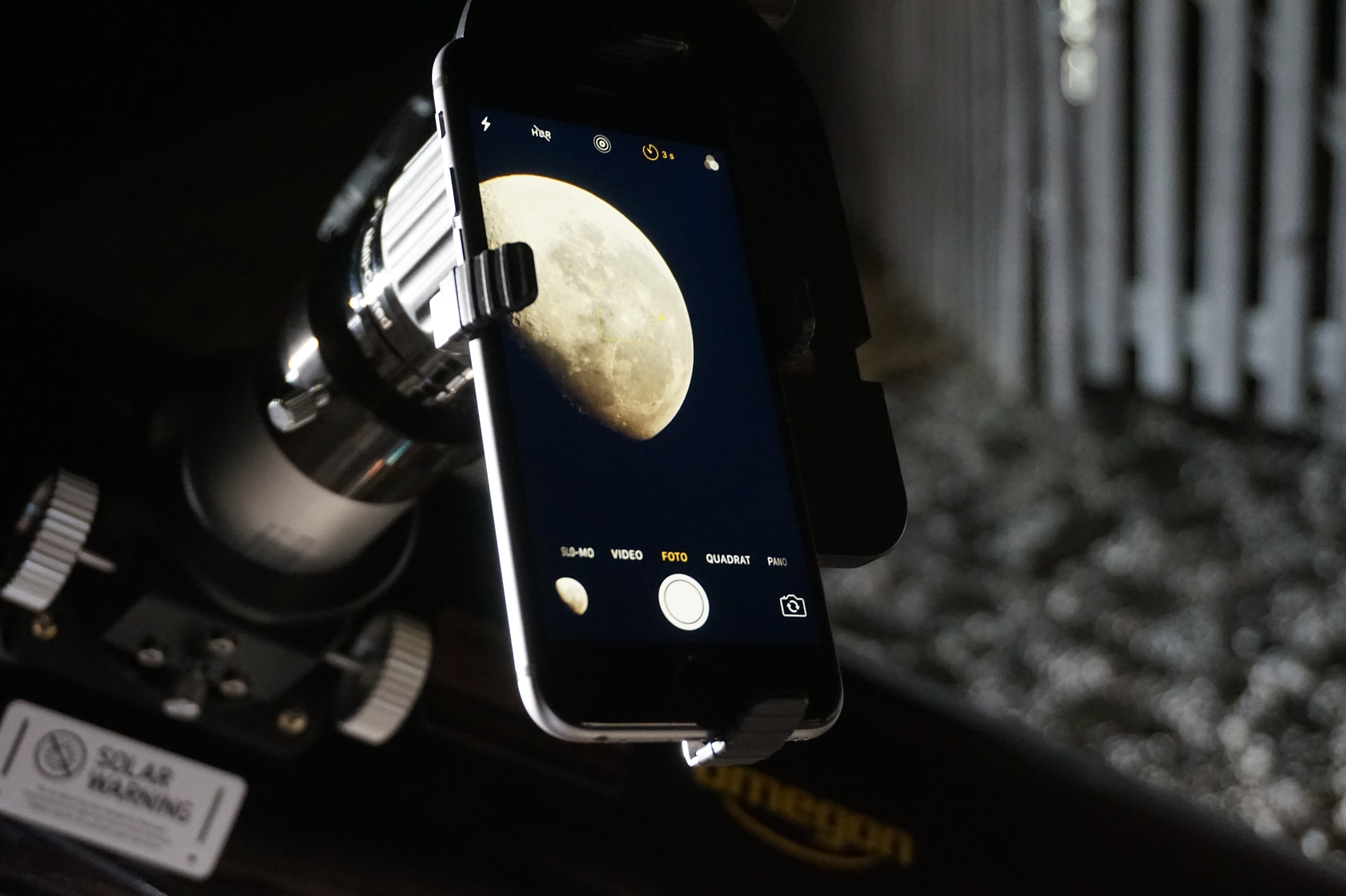
The Moon – shot with an Easypic adapter, an Omegon 8″ Dobson with Redline eyepiece and an iPhone.
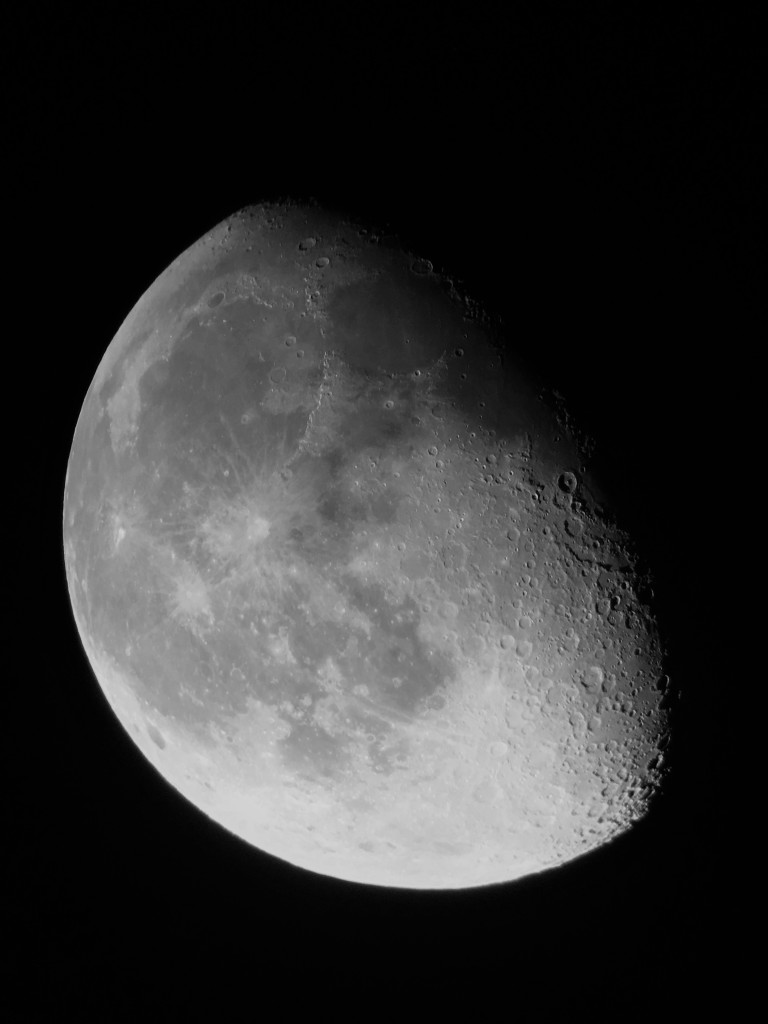
Der Mond - aufgenommen mit einem Easypic Adapter, einem Omegon 8" Dobson und einem iPhone.

The difference to other adapters

The Easypic universal smartphone adapter follows a different route to his competitors. Most adapters have a clip that closes around a 1.25 inch eyepiece. The mobile phone is then separately held by a clamp and needs to be correctly positioned above the eyepiece. In itself this is a quite good system but needs quite a lot of experience on the part of the photographer. And in the end, everything must sit tightly in place.

Now the night is not always the right place for patience. And it is pitch black!

Is there no easier way? Yes, sure there is! With self-centring.

Here is how to prepare the adapter

With the Moon in the sky, you direct your telescope to Earth’s satellite. It is already nicely visible through the eyepiece. Now your smartphone and the Easypic adapter are going to play their role.
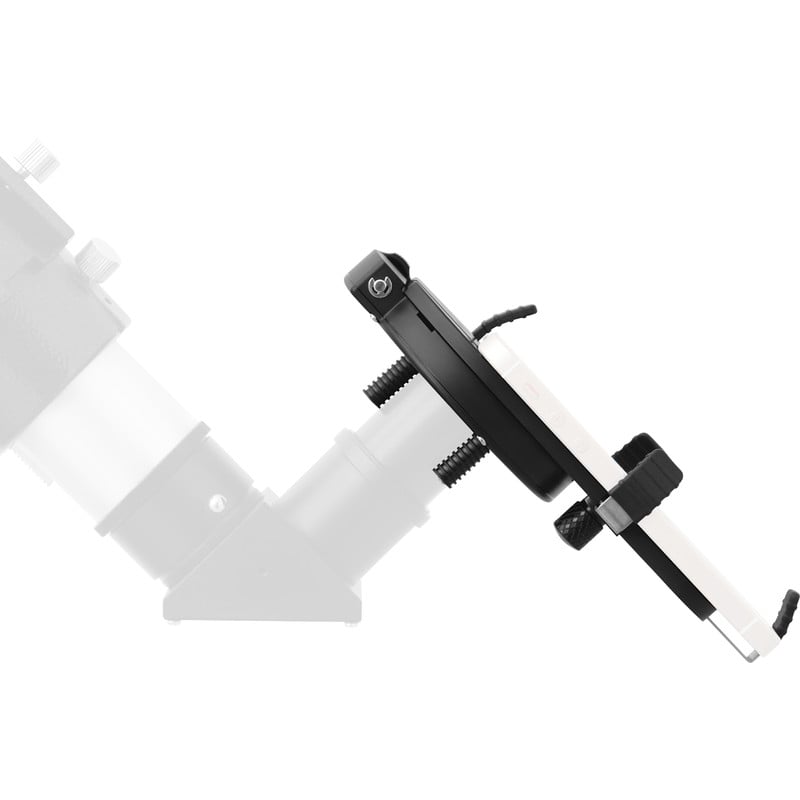
On the back of the adapter, loosen the small screw for the holding clamps. Pull the holding clamps fully to the outside. Then place your mobile phone with its camera lens directly over the central hole. Slide the holding clamps back against your phone and tighten the screw again. Check that the clamps fit tightly so that your mobile will not come loose.

Here is how to connect the adapter to the eyepiece

Now to the easy part! Hold the adapter with the smartphone to the eyepiece, making sure it has direct contact. Then turn the big screw on the side. This allows the movement of three bolts, which accurately clamp around the eyepiece at the same time. This way the adapter centres and fastens automatically around your eyepiece. The camera lens of the smartphone is perfectly aligned with the middle of the eyepiece.

For you this self-centring means: more focus on your object and less worry with technical details.

All done.
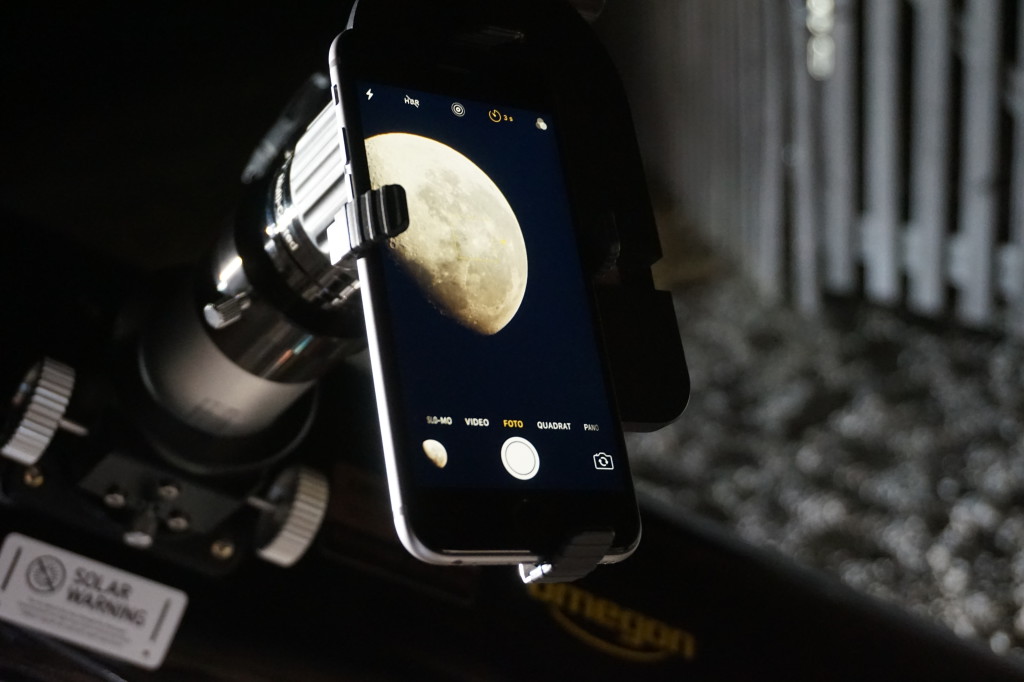
So sieht es aus: Das Smartphone am Teleskop und der Mond im Zentrum.

The photoshoot: The Moon in your smartphone

If your camera app has been switched on, you should now see the Moon in your display. Correct the focus once again and everything is ready for taking the photo.

These steps are necessary:
•    Switch off the flash
•    Activate the timer
•    Adapt the exposure time, if necessary and possible

Now press the trigger as usual and take a photo. This image of the Moon was taken with an Easypic universal smartphone adapter and an Omegon 8 inch Dobson telescope.

Using neutral density filters to reduce brightness

In most cases adjusting the correct exposure time is enough for successful Moon images. However, planets like Venus or Jupiter very often appear too bright in an image. They are over-exposed. The planet discs appear burned out. The solution: neutral density filters and variable polarising filters. This is our trick to be able to show the details of the planets.

Conclusion:

A smartphone in combination with an Easypic universal smartphone adapter allows you to take quick photos of the Moon and planets. You don’t have to be an expert: even connecting to the eyepiece is child’s play. All you need to do is position the adapter correctly. The smartphone takes photos of the Moon with outstanding sharpness. A fact that all of us could only dream about a few years ago.


Now available: Omegon Autoguiding-Set with 15% price advantage

February 6 2017, Marcus Schenk

Simply useful for astrophotography: a guidescope and an autoguider, with which you can control your long exposure photographs and ensure perfect and dot-shaped tracked shots.
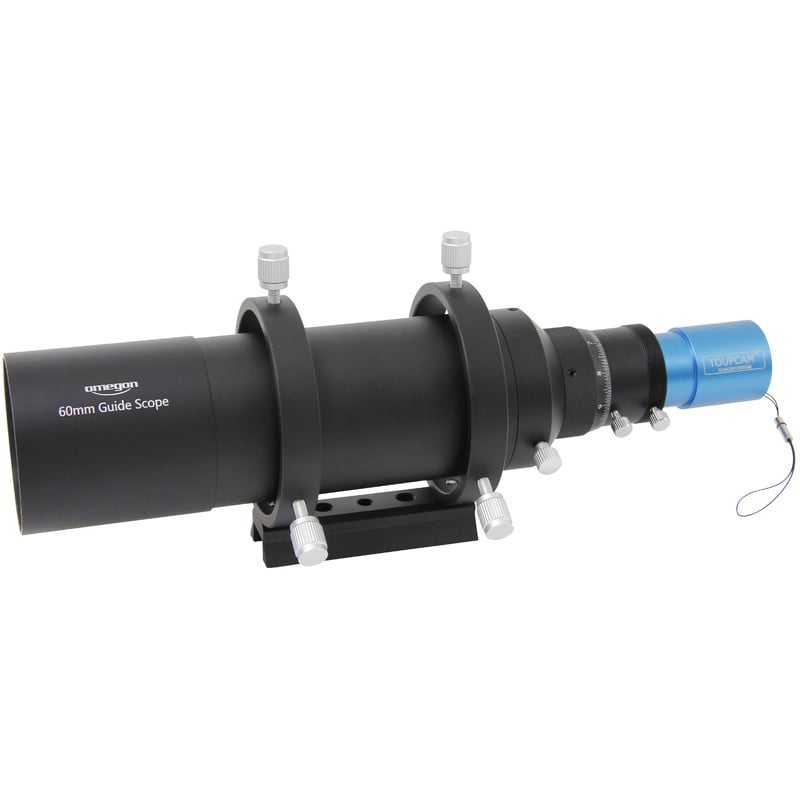
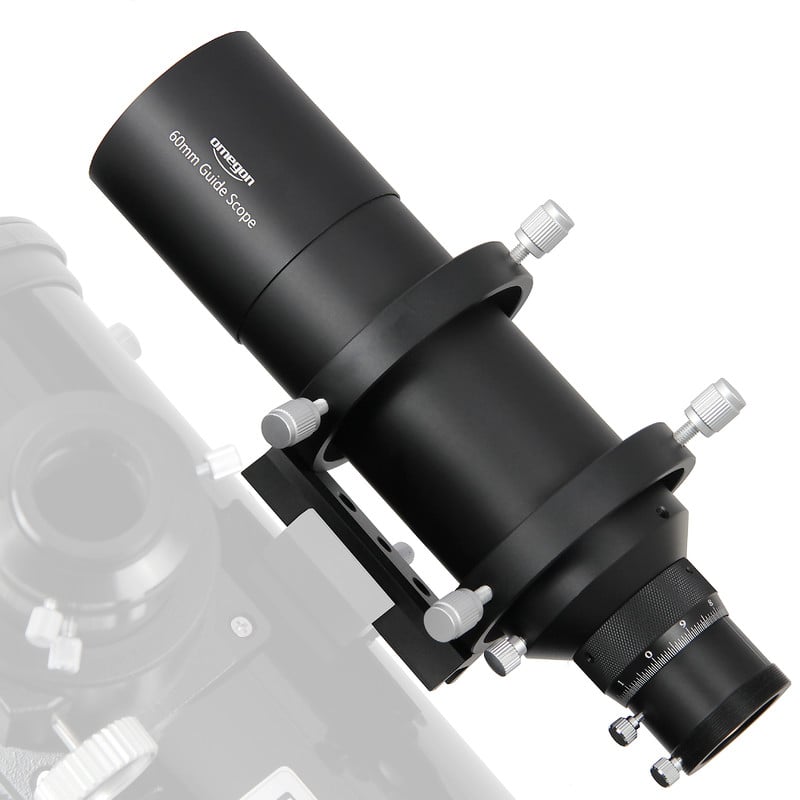
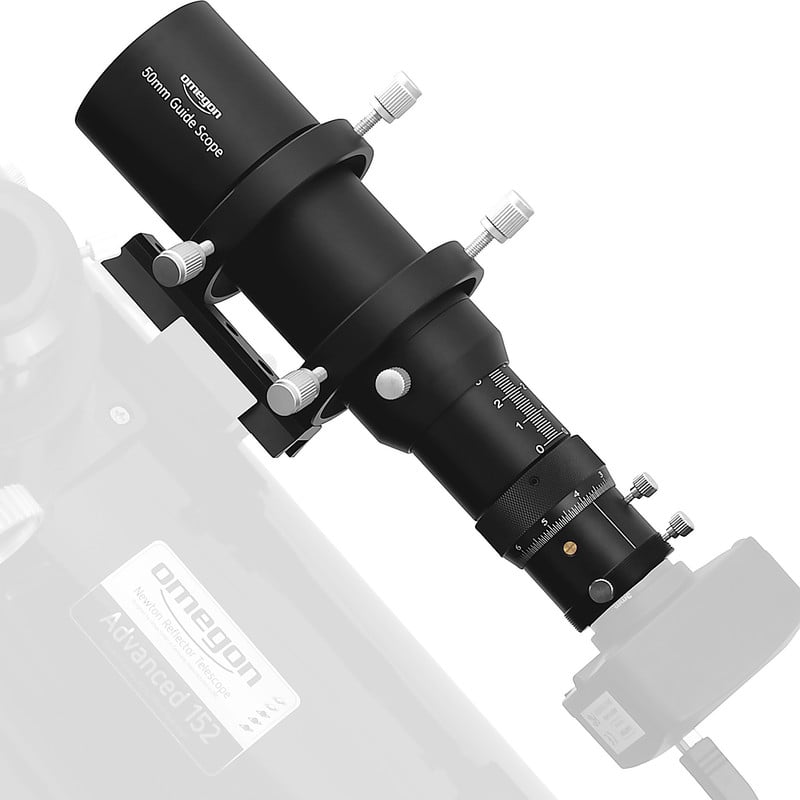
Omegon now offers a mini guidescope with a 50 mm or 60 mm diameter. With the Touptek Autoguider GCMOS01200KMB Mono the whole system becomes an astrophoto control base.


Even more economical in a set

You can also buy the mini guidescope in a set with the Touptek guider.
Your advantage: buying the set you save up 15% compared with the individual products:
1. Omegon camera Easy Autoguiding-Set50
2. Omegon camera Easy Autoguiding-Set60


Why these guidescopes are so convenient

Until recently, photographers used long refractors mounted parallel to the main telescope, which require their own tube clamps, are impractical and, all in all, very heavy. Used on a stationary telescope, there is no problem. But what if you want your telescope to be portable? With the new mini guidescopes, it is as simple never before. Simply mount the guidescope to your existing finderbase, connect the camera – and you are ready to go. Plus, it is not much heavier than a common finderscope. We think this is really convenient! This way you can even use smaller telescopes for taking photos of DeepSky objects.

What are your astronomical plans for 2017? To take your best astrophoto? With our new technology this dream can easily become a reality.

Omegon APO 104/650 ED: these astrophotos show the beauty of space

January 30 2017, Marcus Schenk

We frequently receive beautiful photos of celestial objects from our customers. They are eager to show us, what they were able to achieve with their equipment. Very often we are over the moon, when we recognise the love of detail and the energy these astrophotographers have invested in these pictures.
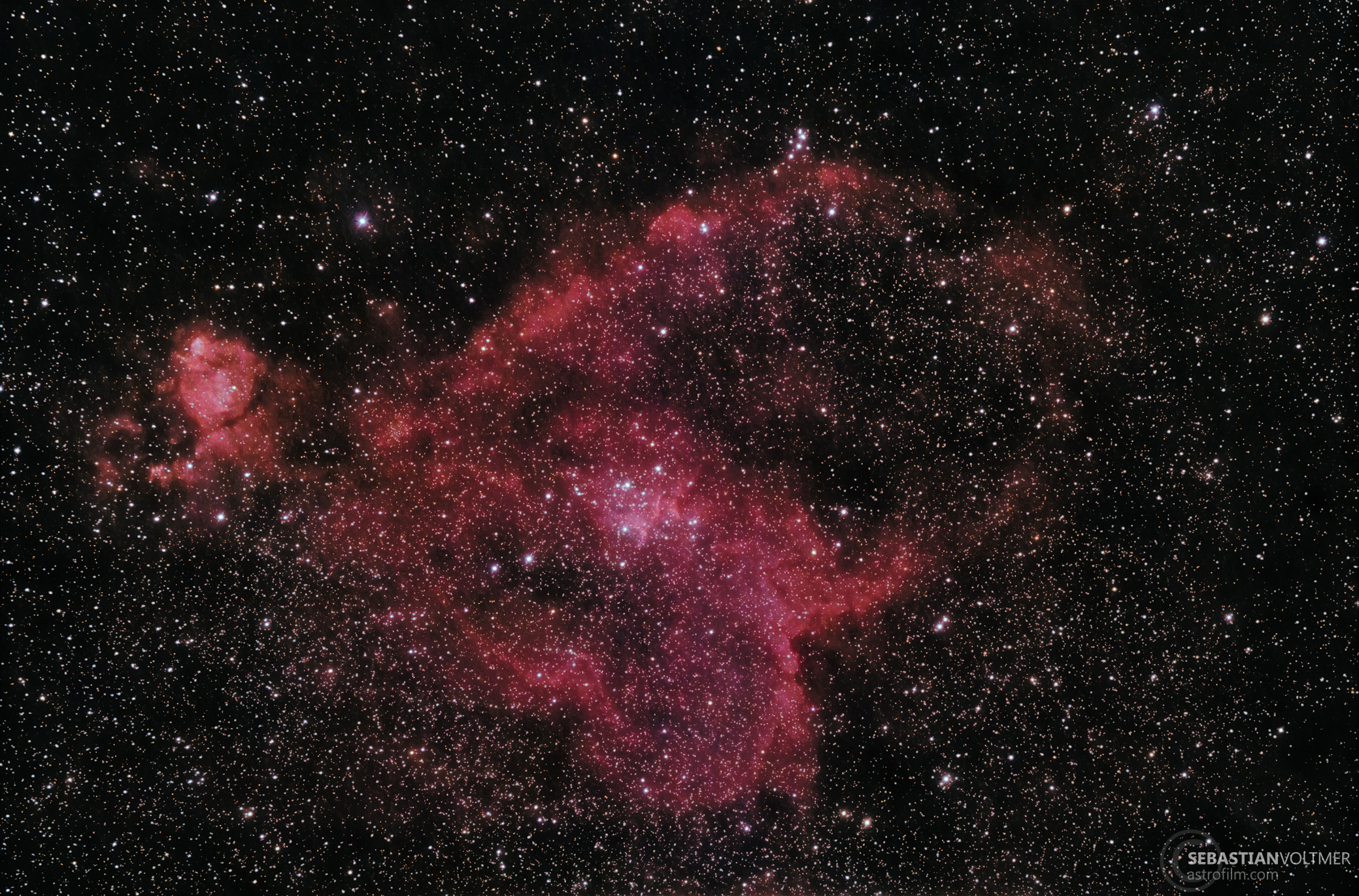
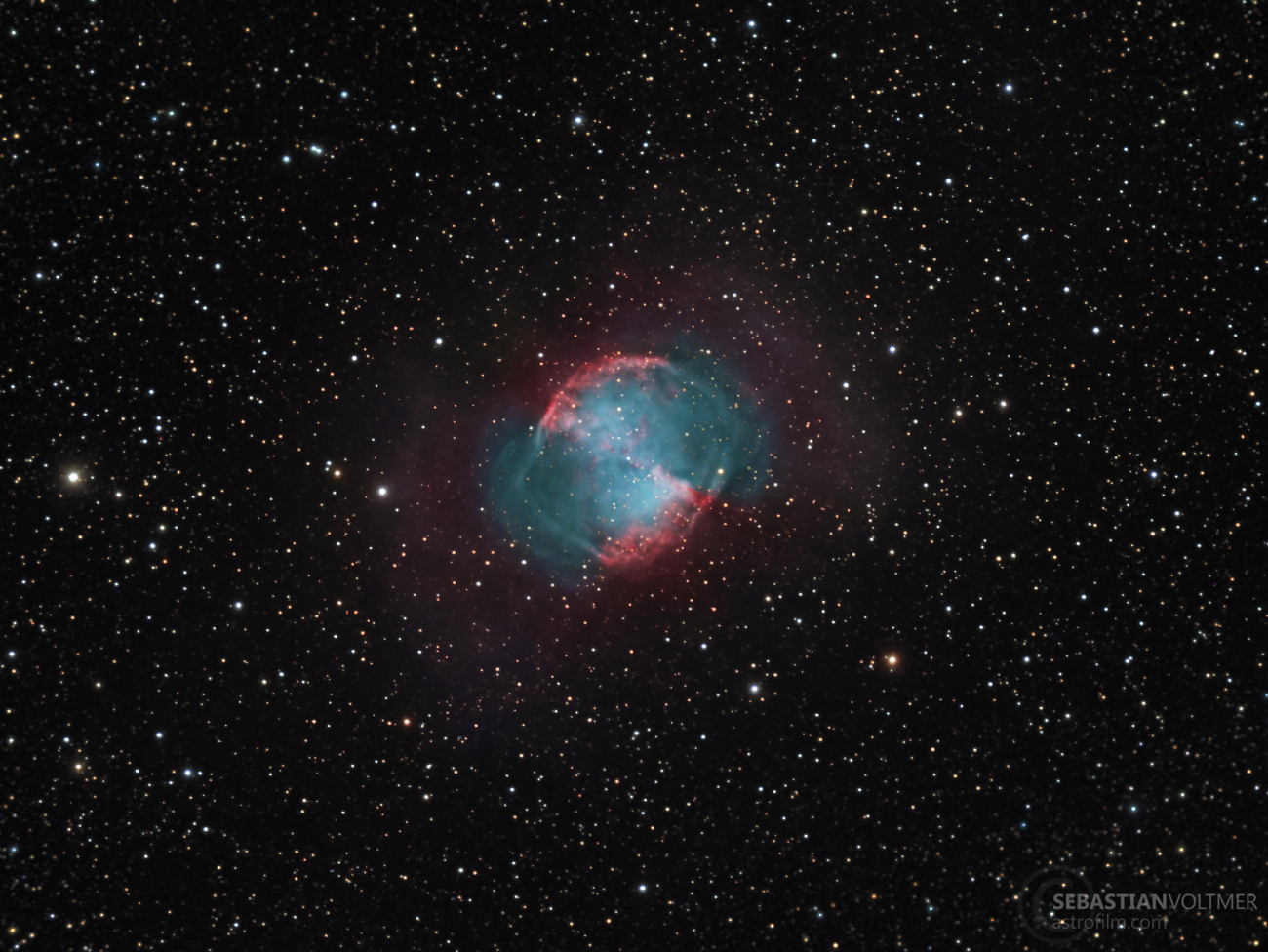
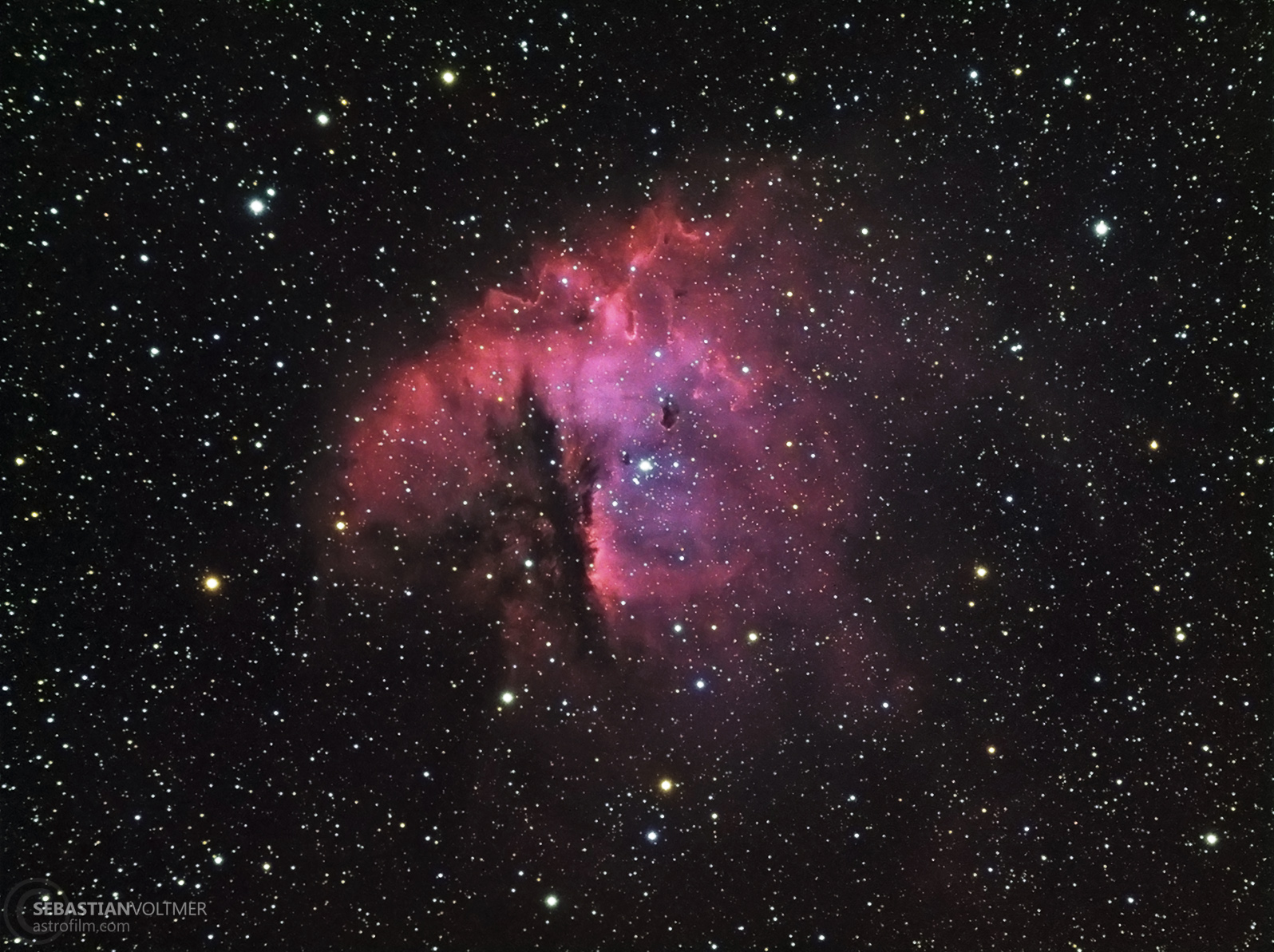
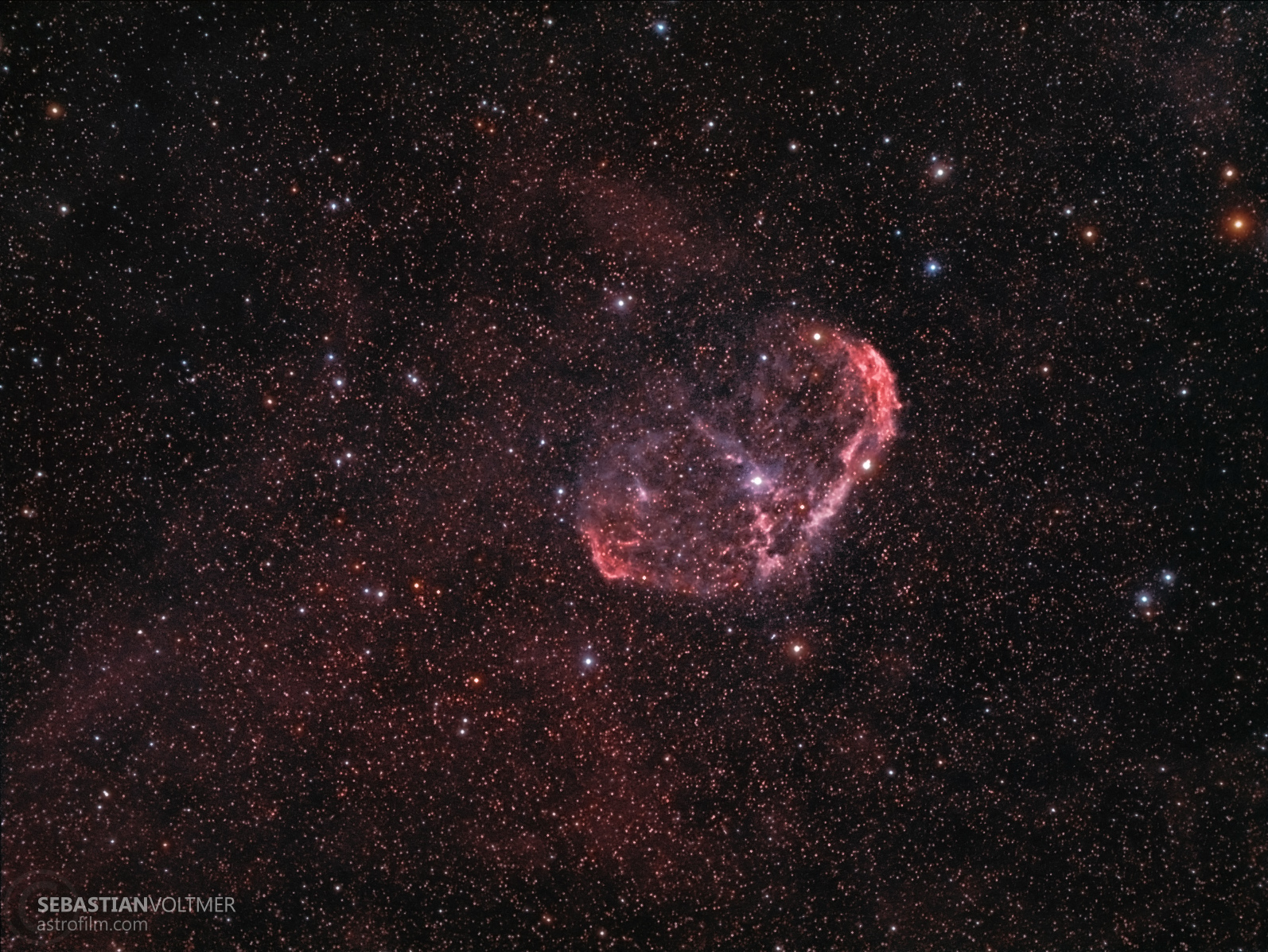
Today we would like to present some very delightful astrophotos. The astrophotographer and filmmaker Sebastian Voltmer shows us beautiful impressions of space. These were taken, amongst others, with a Sony a7s and an ST-2000XM camera. The telescope used was a premium telescope: the Omegon apochromat 104/650 ED with field flattener.

Der 104/650 ED-Apo von Omegon
The Heart Nebula IC1805

The name of this nebula refers to its special shape: a red heart in the night sky. You find this nebula between the constellations Cassiopeia, Perseus and Giraffe. The heart is located approx. 4° east of the star ε Cas. An open star cluster, which illuminates the nebula, is embedded in the middle of the emission nebula.

ic1805_omegonapo

The Dumbbell Nebula M27

The Dumbbell Nebula M27 in the Vulpecula constellation is the second brightest planetary nebula and thus a beacon in the starry sky. The originator of this nebula at a distance of approx. 1400 light years is a white dwarf, a star that has reached the end of its life.

M27

Pacman Nebula NGC 281

The names of some nebulae clearly demonstrate that astronomers have a vivid imagination. NGC 281 is also known under the name Pacman Nebula. If you still can remember the time of the Commodore 64 etc., you will surely also remember the computer game. And this nebula with its dark clouds starkly resembles Pac-Man. The nebula is 9500 light years away from us and contains the twin star Barnhard 1. With a strong telescope, we can discover its four companions.

ngc281_omegonapo

Crescent Nebula NGC 6888

Crescent: a half-moon in the form of a nebula. NGC 6888 is also known under the name Sickle Nebula. It is located right in the middle of the Swan constellation, at a distance of approx. 2.5° from the central Swan star, Sadr. Despite its prominent position in summer, the Crescent Nebula is not easy to see because of its small size of 18×13’ and its brightness of 10 mag. Scientists assume that the nebula has been ejected by a Wolf-Rayet star in the later stages of its life. For successful observation you need a crystal clear sky and an OIII-Filter.

ngc6888_omegonapo
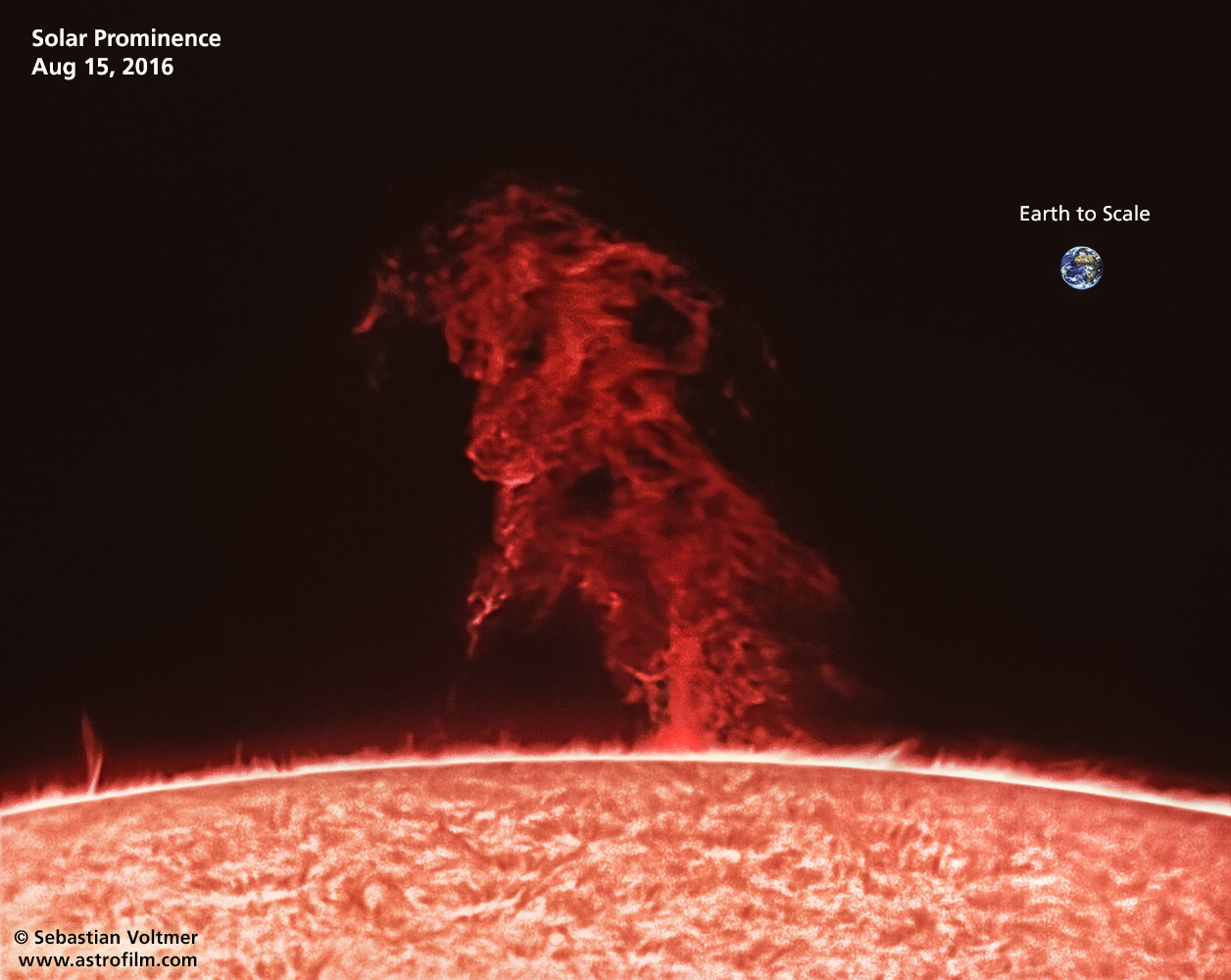
Solar flare

The picture gives you an impression of the size of a solar flare in comparison to Earth. This solar flare that appeared on the 15th of August 2016 had a length of approximately 13 Earths lined up.

prominence_2016-08-15_earth

Omegon Mini-Guidescope: Small Guidescopes for better astro photos

January 23 2017, Marcus Schenk

Times are changing: Everything is getting smaller. Also in photography! In the past one solely had to handle large and long Guidescopes in astro photography. The assembly of such equipment often was very inconvenient. With the new Omegon Mini Guidescopes tracking is considerably easier.

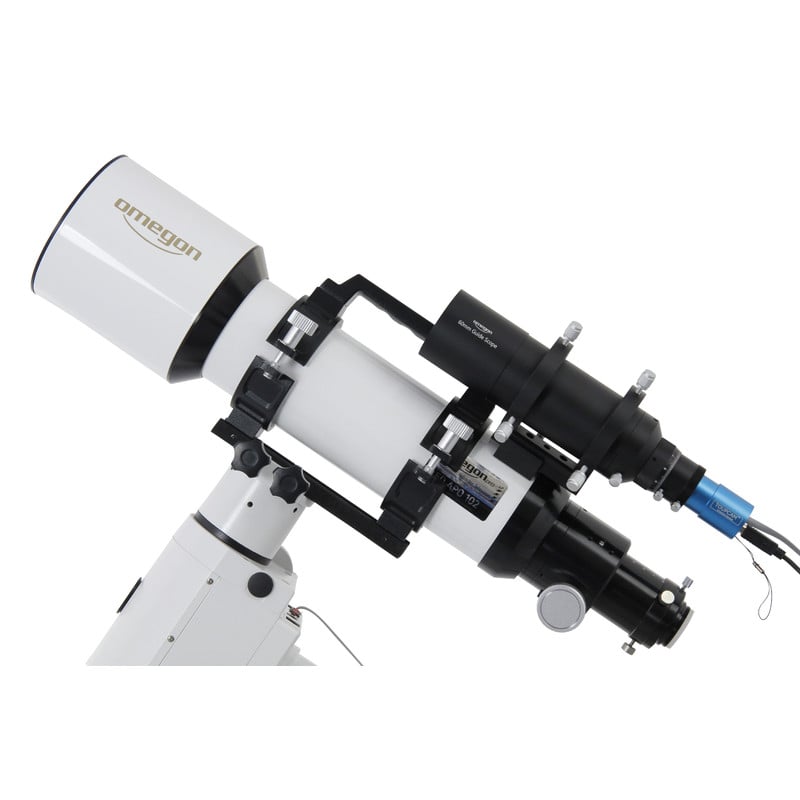
Finder and Guidescope: The 60 mm Omegon Microspeed Guidescope mounted on a telescope.

“A Guidescope is a telescope, which is mounted parallel on the main instrument. While the camera is mounted to the main telescope, the Guidescope is responsible for accurate tracking.”

Presentation: Guidescope types 50 and 60 from Omegon.

The Omegon Mini-Guidescopes are available with 50 mm and 60 mm diameter. They are only 200 mm and 260 mm long and with 600 and 900 gram they are almost as light as a 2″ eyepiece. What are the benefits when compared with “conventional” Guidescopes?

  • Lighter: Your telescope will not be overloaded. Even smaller telescopes will be suitable for astro photography.
    Simpler: Simply plug the Guidescope into the finder shoe. It is also simple to remove.
    Better focussing: Sensitive focussing with the helical focuser.

For further details please refer to the product pages for the 50 mm and 60 mm Mini-Guidescopes.

Autoguider and Guidescope: Are they an effective team?

This question can be answered with a clear: “Yes”. The Guidescope works optimally with an Autoguider. Why? Most modern Autoguiders have small pixels. This comes with a clear advantage: A shorter focal length of the Guidescope. Touptek Autoguiders, for instance, have such small pixels. Main feature: Due to the new sensor design these cameras are highly sensitive. This enables you to find,the right guide star for any object.

“With the Guidescope and my camera I always find a guide start in the field of view” says Bodo Fischer, astro photographer and user of the Guidescope.

The Guidescope with a Touptek camera

Which camera is suitable for Microspeed Guidescopes? Our recommendation: Touptek “GCMOS01200KPA” cameras. Highly suitable due to the high image rate of 30 images per second, a ST-4 Autoguider port for your mount and an image processing software.

The best combinations:

  1. Microspeed Guidescope 50 mm + ToupTek GCMOS01200KPA Mono Guider
  2. Microspeed Guidescope 60 mm + ToupTek GCMOS01200KPA Mono Guider

Tip: With the camera use a Omegon UV-IR-filter or the Baader Semi APO filter. For even more brilliant stars and even more success in Autoguiding.

Omegon binocular mount: How to surf the sky with binoculars

January 2 2017, Marcus Schenk

It is simply fantastic: viewing the sky with binoculars. Hiking through the constellations of the milky way. Just take a detour to the next nebula. And then back to the Andromeda galaxy.
Exploring the sky with large binoculars is a lot fun. If their wasn’t the problem with the weight.

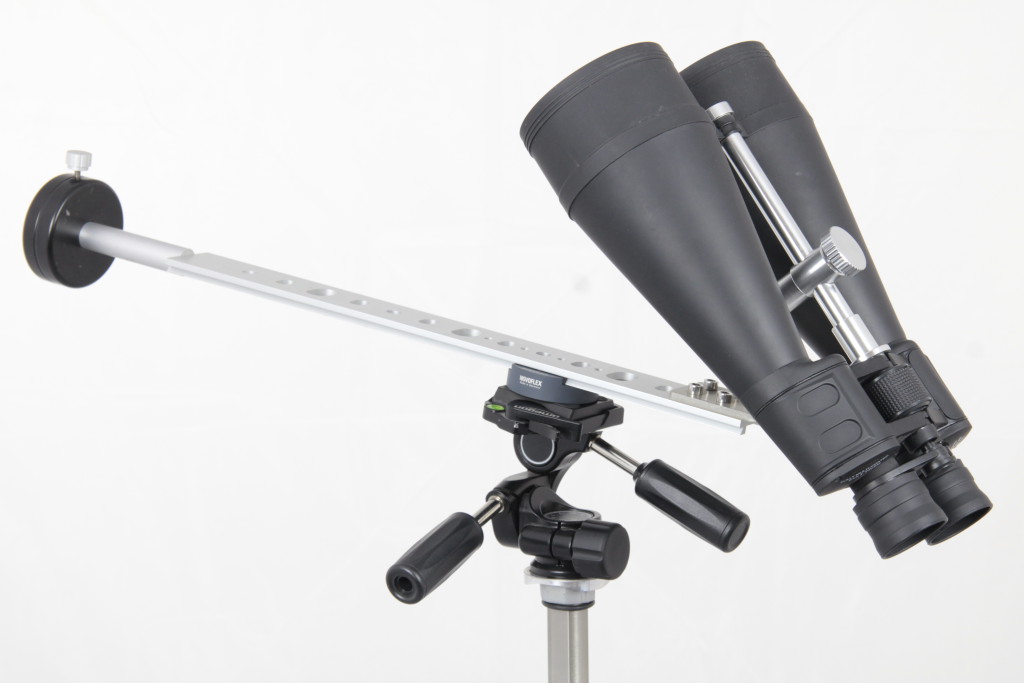
Das perfekt austarierte Nightstar 20x80 Fernglas

A tripod is a must, otherwise your arms will get heavy, even after just a few minutes. But most large binoculars have a weight of several kilograms and most tripod heads are thus overloaded. In practice: At an inclination of more than 45° most heads will start to slip, because friction becomes too high.

But now there is a solution: The Omegon binocular mount.

It consists of a 580 mm long rail (acc. to Aka-Swiss-Rail standard) and a 1 kg counterweight. Fasten your large binoculars on the opposite side. The mount the whole assembly on your tripod head. And all problems are gone.

Perfect balancing of your binoculars relieves the tripod head and allows any movement.

The forces are balanced
You simply float across the sky by slightly increasing the friction of your tripod head. Simply move the binoculars from one object to the next. And don’t bother with extremely tightened mount clamps. It gives you the impression as if your binoculars would surf the sky on the waves of light.

Some product recommendations for the Omegon binocular fixture:

Binoculars:
Omegon Nightstar 15×70
Omegon Nightstar 20×80
Omegon Argus 11×70
Omegon Argus 20×80

Tripods and tripod heads:
Omegon aluminium tripod Titania 800 + 3D panorama head 500 + Novoflex Swiss-Rail profile
Manfrotto aluminium tripod 475 B Pro Digital
Cullmann tripod panorama head CONCEPT ONE OH4.5V
Manfrotto video pan head MVH500AH Fluid + Novoflex Swiss-Rail profile

Omegon V-Power: toughened focusers for better astro photos

November 28 2016, Marcus Schenk

Taking astro photos means facing many challenges. One of these are sharp astro photos. It is not easy to focus on weakly glowing stars and nebulae during the night. A perfectly tracked astro photo, but blurred? Inconceivable!

However, the perfect solution for this is now available: the new Omegon V-Power focusers. Making sure that your astro photo does not end up in drama, but as a story with a happy end.

Nur echt mit dem V: Der V-Power High-End-Okularauszug

What makes the V-Power focusers so distinct?

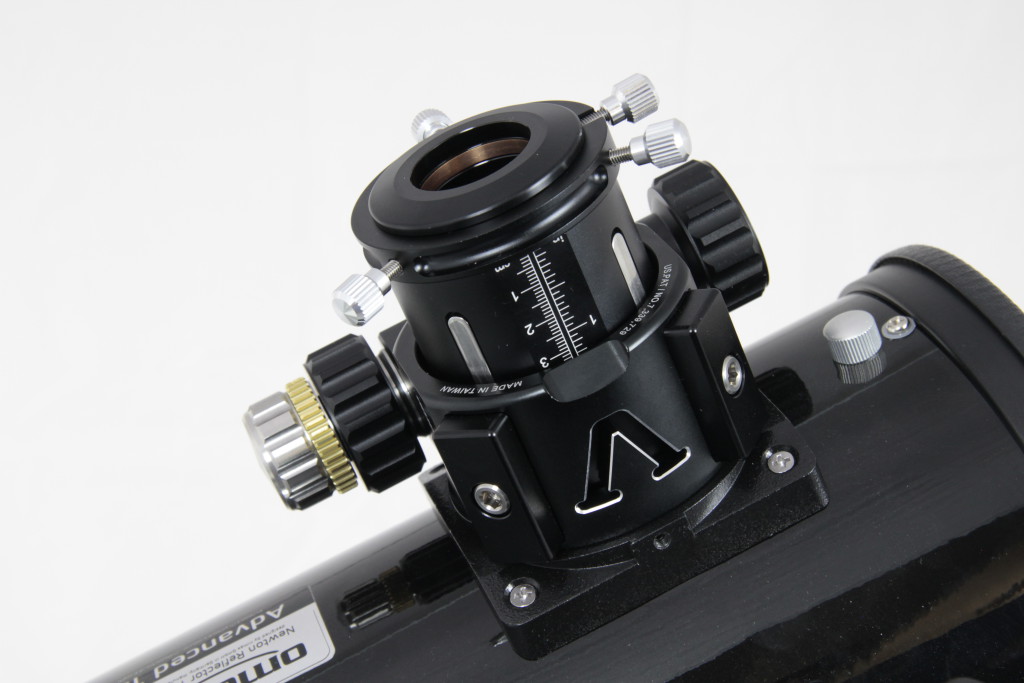
Important parts of the V-Power focuser are made of stainless steel instead of soft aluminium. Robust V2A ball bearings and stainless steel rings ensure high precision focusing. A dual speed 1:10 reduction provides the basis for a sensitively focusedastro photo, and the laser engraving allows you to return to previous settings very quickly. And if you have planned the future use of a motorized control, this is also possible.

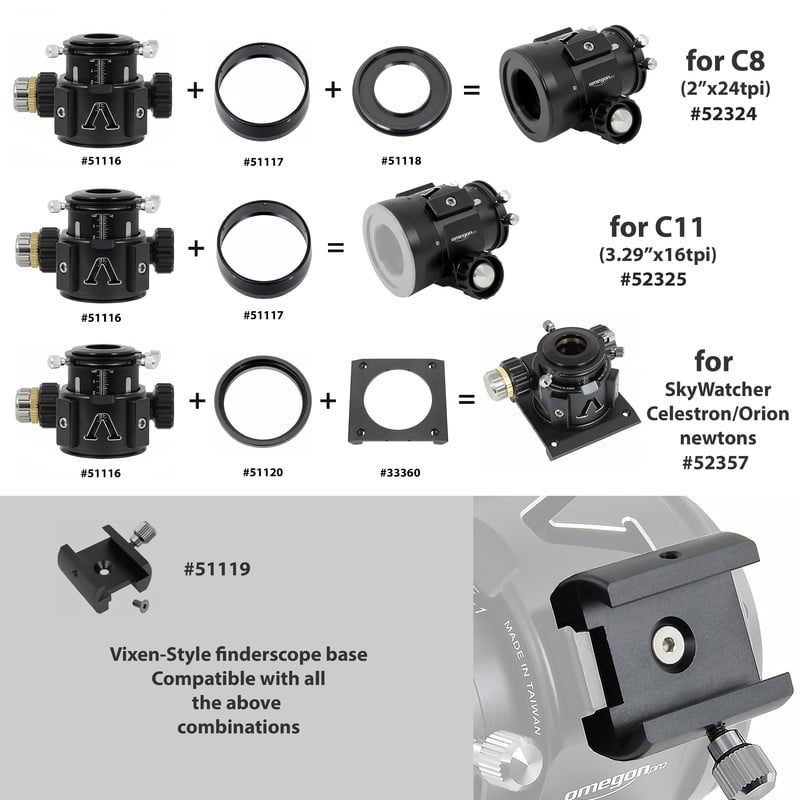
With the V-Power finder base you can now also connect your finder scope. Simply attach the base to the focuser – and you are ready to go!

With these sets you can simply connect the focuser to your telescope

The V-Power series is available in different versions: for Newton and Schmidt-Cassegrain telescopes. A plug & play solution is available in a set with matching adapters. Easy focusing in just a few steps.

You want to learn more? Follow this link to the focuser for better astro photos.

Omegon apochromatic telescope 102 mm and 127 mm Triplet: The “People’s Apo” has been improved

October 10 2016, Marcus Schenk

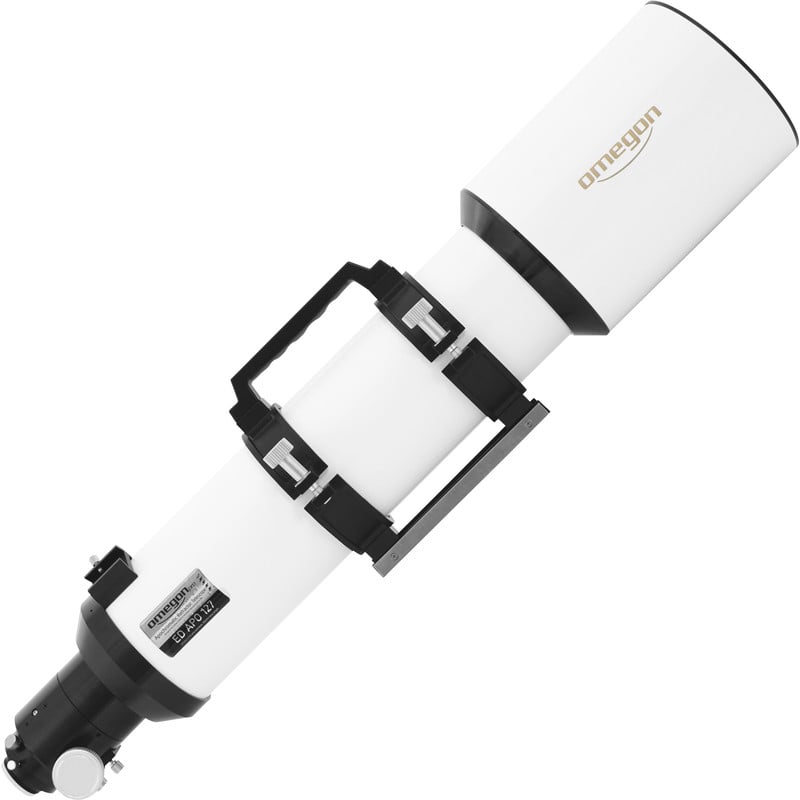
Whoever looks through an apo for the first time is usually thrilled. Twin stars, star clusters or planets: for these objects, an apo – without any doubt – takes the pole position. The two best-sellers from Omegon are the 102 mm and the 127mm Triplet apos – part of our product range since 2010! Now they have been revised and considerably improved. And best of all: The price has not been changed.

Just learn what has been changed to make this equipment more impressive than ever for amateur astronomers:

1. Adjustable lens cell

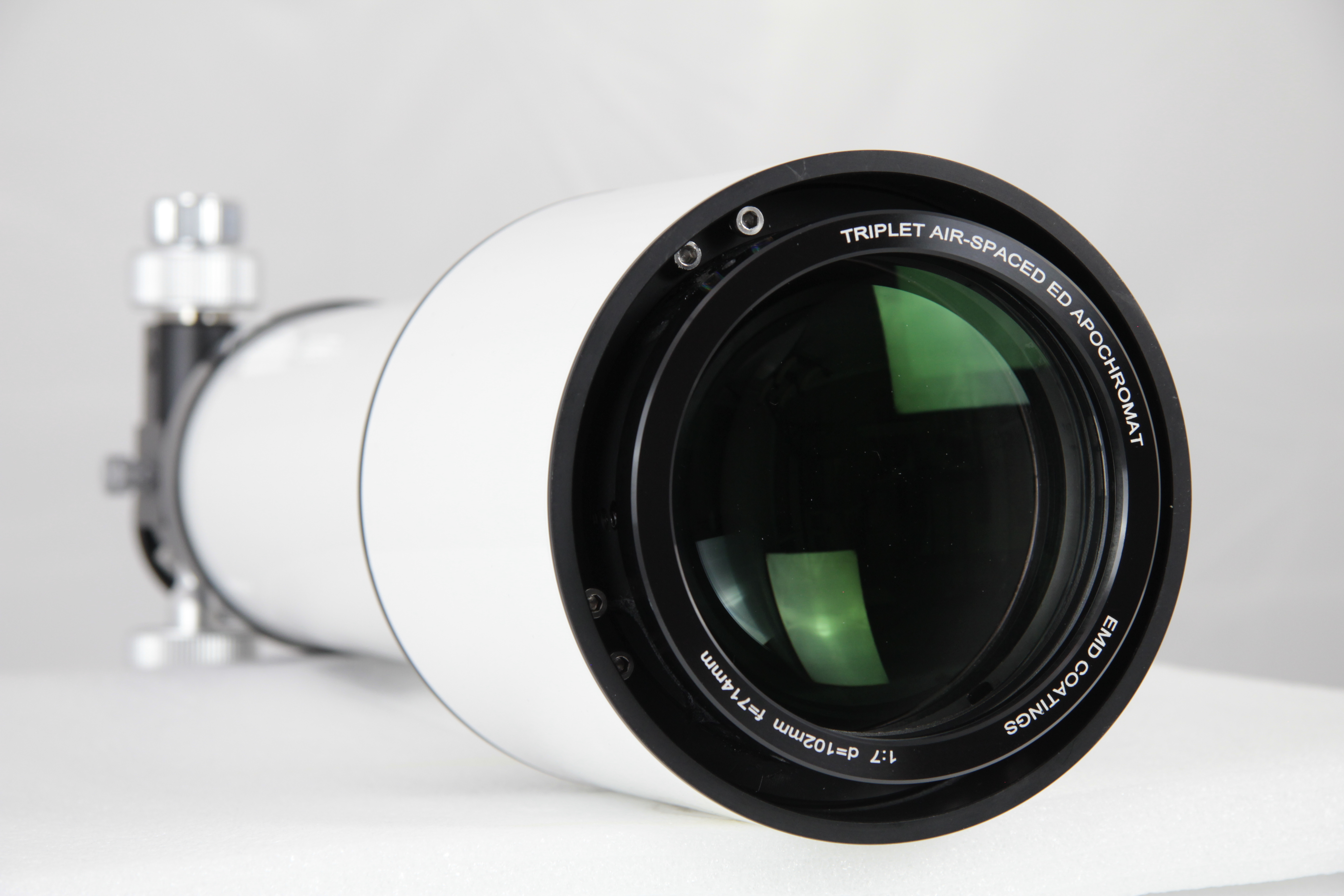
In the past telescopes were obviously adjusted, but any re-adjustment was very difficult. At least, you really needed to know what you were doing. This has now changed! We have developed a completely new and temperature compensating lens cell, which makes adjusting as simple as riding a bike – okay, maybe almost as simple. Four adjustment and fixing screws help you to adjust the eyepiece. This is easily done with an open end spanner, using the North Star as a reference.

triplet-blog

2. Finder base

The finder base with double-T profile was swapped for a standard Vixen-style base. You can now mount almost any finderscope or LED finder. This gives you more freedom of choice, because in the past only a few models fitted correctly.

3. Suitable for binocular attachments

Not everybody uses them, even though they really elicit a WOW-effect during observation. Binoculars allow you to watch with two eyes and give you plastic impressions. They are particularly fantastic for watching the Moon and planets. For problem-free use of a binocular the tube has been slightly shortened to provide more focusing space for the connection. Now you can use a binocular with diagonal mirror.

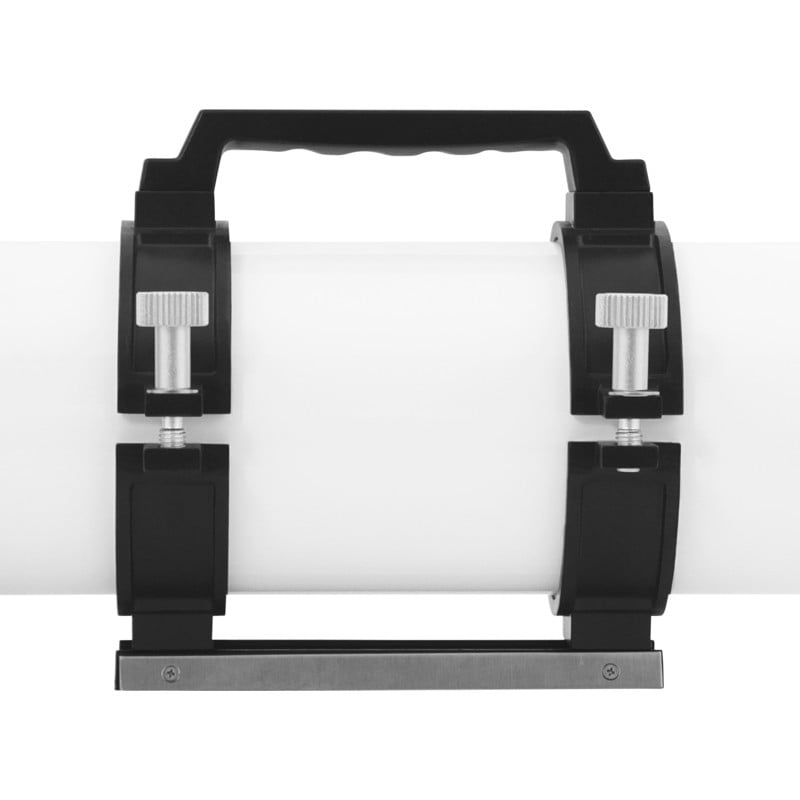
4. Reinforced prism rail

During the constant assembly and disassembly of a telescope, the prism rail suffers a lot. The screws of the mount repeatedly dig into the soft aluminium and leave scratches and sometimes even deep notches. We have now reinforced the prism rail of your apo with a stainless steel plate, so that it can still be used for many years to come. Scratches and deep notches are a thing of the past.

5. Retractable dew-shield

The dew-shield is now extendable and retractable and no longer attached.

By the way: Each apo now comes with a measurement protocol as a standard. Furthermore, we check the adjustment of each telescope and include a test image of the adjustment. But did you know, that, on request, we will also check your telescope on our optical bench? From the star test in autocollimation up to the interferometric test.


Compare 0/4