

Why Do I Only See a Blurry Mess? 5 Reasons for Blurry Planets
You've bought a new telescope, are looking forward to your first observations, and choose Jupiter as your target. But unfortunately, all you see is a white disk with no details.
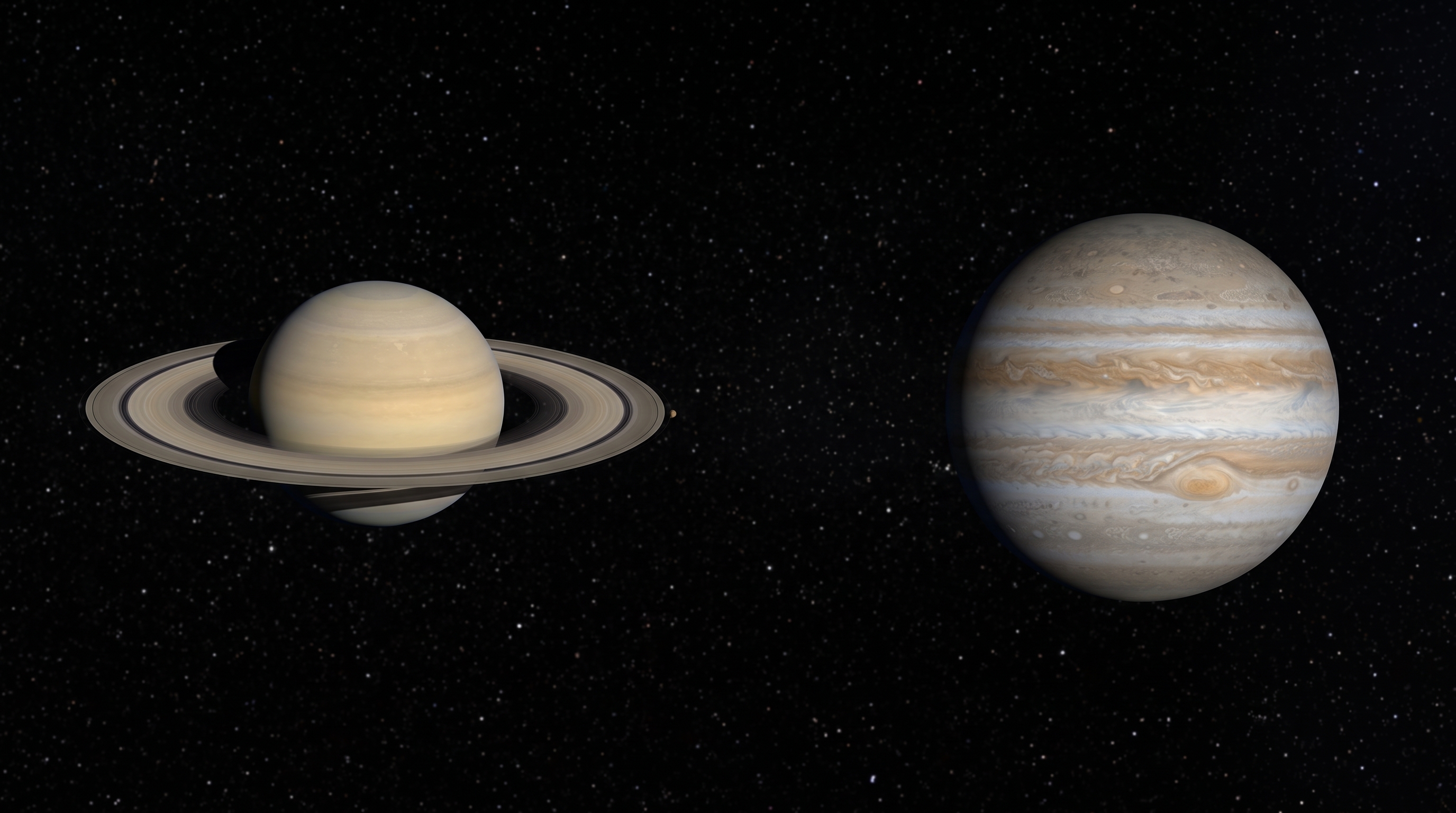
You keep fiddling with the telescope for a while, but the image doesn't get any better. Does this scenario sound familiar? If so, this magazine article will explain the reasons behind and offer solutions for blurry planetary images in your telescope.
Reason 1: Incorrect Focus
It’s quite obvious, yet often underestimated: Every telescope, when used with a particular eyepiece, has a slightly different focus position. Especially when using Barlow lenses, the focus shifts further outward. In addition, the depth of field is extremely small at high magnifications! Even a 1/20 turn of the focus knob can make the difference between a sharp and a blurry image. So take your time and concentrate when focusing. Another major obstacle here is atmospheric turbulence, which makes focusing more difficult—more on that in the next point.
Reason 2: Poor seeing (atmospheric turbulence) & tube seeing
Seeing (in German: atmospheric turbulence) is one of the biggest problems in planetary observation and photography. Everyone is familiar with the flickering of a hot road in the summer or the shimmering air above a barbecue. The situation is very similar when observing the planets. Seeing is often influenced by the jet stream. As an observer on the Earth’s surface, you have little ability to improve seeing—unless you go to higher elevations where the atmosphere is thinner. However, there are different types of seeing, two of which you can actually influence!
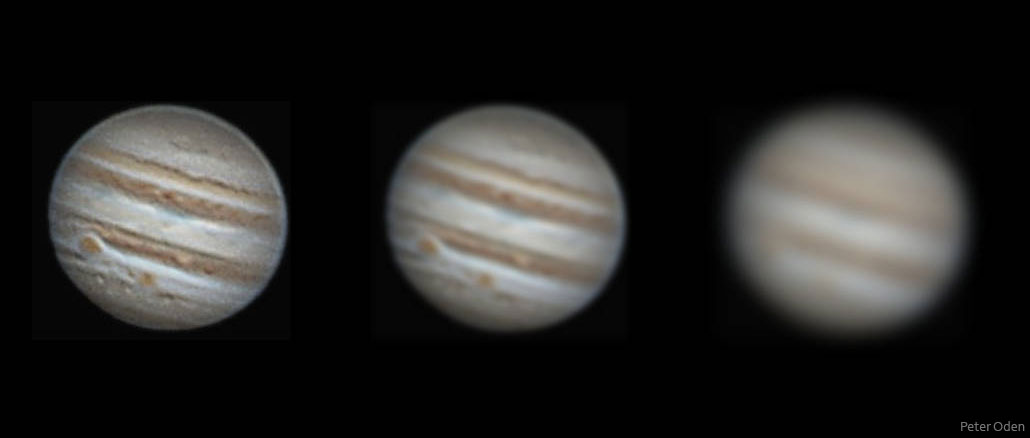 Left: good seeing; right: very poor seeing
Tube seeing is a common cause of blurry images: Your telescope needs time to cool down. When you take it outside from a warm car or your home, warm air is still trapped inside the tube. This results in severe air turbulence inside and in front of the telescope, leading to extremely blurry images of planets. Therefore, it’s best to let the telescope cool down for about an hour before observing, with the covers removed.
The immediate surroundings can also cause blurring—one might refer to this as “environmental seeing.” Although the telescope stands stable on a heated asphalt road, the ground continues to radiate heat for a very long time in the summer. This, too, leads to blurry images of planets. Another example is observing from a meadow or field: At night—especially in late summer—moisture often builds up quickly and heavily, which significantly impairs the quality of the observation. Which brings us to the next point:
Reason 3: Condensation on the lens
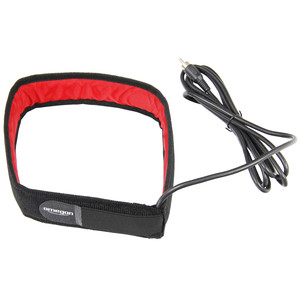
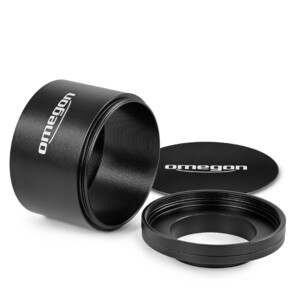
Dew is a very common problem in Europe, since humidity is usually very high at night. After a short time, water droplets can form on the telescope’s lens or mirror—similar to fogged-up car windows in the morning. As soon as that happens, the optics are practically unusable. If it’s also very cold, the optics can even freeze! While this isn’t harmful to the telescope, it does ruin your evening of stargazing. Dew caps or heating bands mounted in front of the optics can help prevent this. Feel free to contact us if you’d like to know what type of dew protection you need for your telescope.


Reason 4: The planets are in an unfavorable alignment
Let’s say you’ve done everything right so far, yet the planets still appear small and lack detail. The reason: The planets’ positions are unfavorable. Jupiter, Saturn, Venus, and Mars are essentially the only candidates worth observing—all other planets are simply too far away. But even these four appear at different heights and distances in the sky depending on the season! Yes, even the distance from Earth changes noticeably over the years. The best time to observe the planets is when they reach their highest point in the sky and are closest to us in their orbits. You can quickly and easily find out when that is online.
To illustrate this, here’s an example of Mars and how much its size varies throughout the year.
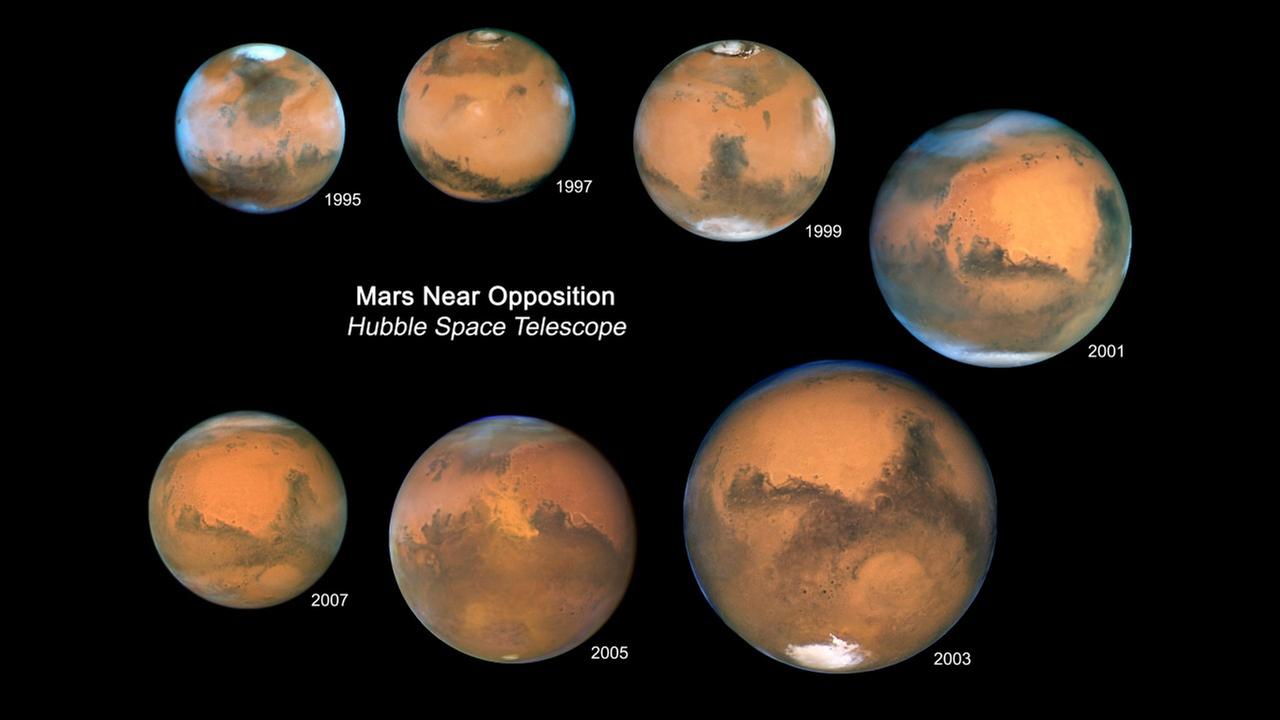
Here is an overview for the coming years:
Year 2026
• Jupiter (Peak: January 10, 2026)
• Saturn (Peak: October 4, 2026)
• Venus (Peak: November / December 2026)
• Mars: No opposition in 2026. Pretty bad!
Year 2027
• Mars (Peak: February 19, 2027)
• Jupiter (Peak: February 11, 2027)
• Saturn (Peak: October 17, 2027)
• Venus (Peak: January 3, 2027)
Year 2028
• Jupiter (Peak: March 13, 2028)
• Saturn (Peak: October 30, 2028)
• Venus (Peak: March & April 2028)
• Mars: No opposition in 2028 (next one in spring 2029).
Reason 5: Misaligned telescope
Last but not least, the telescope’s appearance itself may simply be the cause. Even though this is usually not the main reason, reflector telescopes in particular can become misaligned. Certain types of telescopes must be realigned, especially after a long transport or after cleaning the mirror surface. This can be done using simple alignment tools or by visual observation of the night sky. We've already shown you exactly how to properly align a telescope in another magazine article. However, you can quickly and easily determine whether your telescope is misaligned:
- Let your telescope cool down completely.
- Aim at a medium-bright star.
- Use an eyepiece with a moderate focal length (approx. 8–15 mm).
- Deliberately bring the star out of focus. With reflector telescopes, a circular disk with a dark center will now appear—often referred to as a “donut” in technical jargon.
The following image shows what a defocused star should look like—and what it shouldn't.
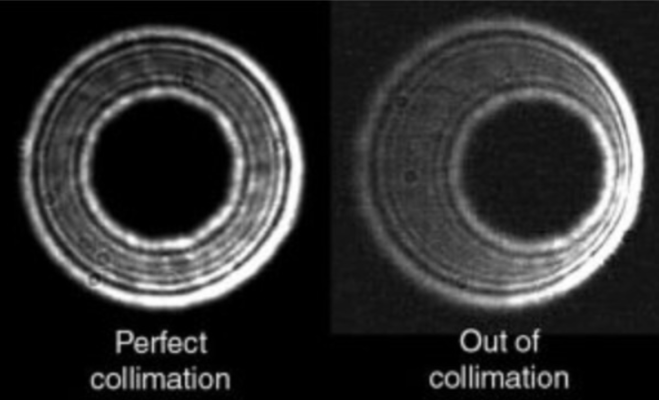 Perfectly aligned on the left, misaligned on the right
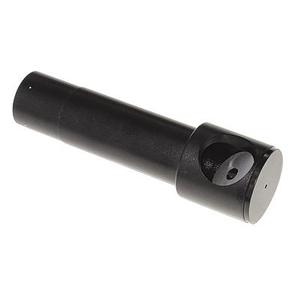
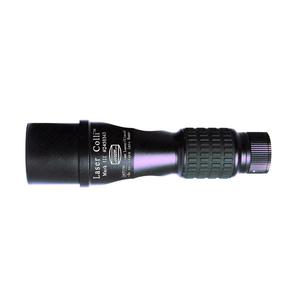
I hope this post has helped you so that you can finally observe sharp planets. If you continue to have difficulties, please feel free to contact our service and support team. Otherwise, you can also find the right adjustment tools for most reflecting telescopes



Author: Marc-Antonio Fischer

Marc-Antonio, also known online as astronomical_horizon, is a passionate astrophotographer who specialises in fast reflector telescopes. His speciality: small planetary nebulae. When he’s not gazing at the stars, his heart lies with botany. He knows the local flora like the back of his hand. If he has any time left over, he picks up his electric guitar.