

How to Align the Viewfinder
Would you like to find objects? You can only do that with a precisely aligned viewfinder. In our photo story, we'll show you how.
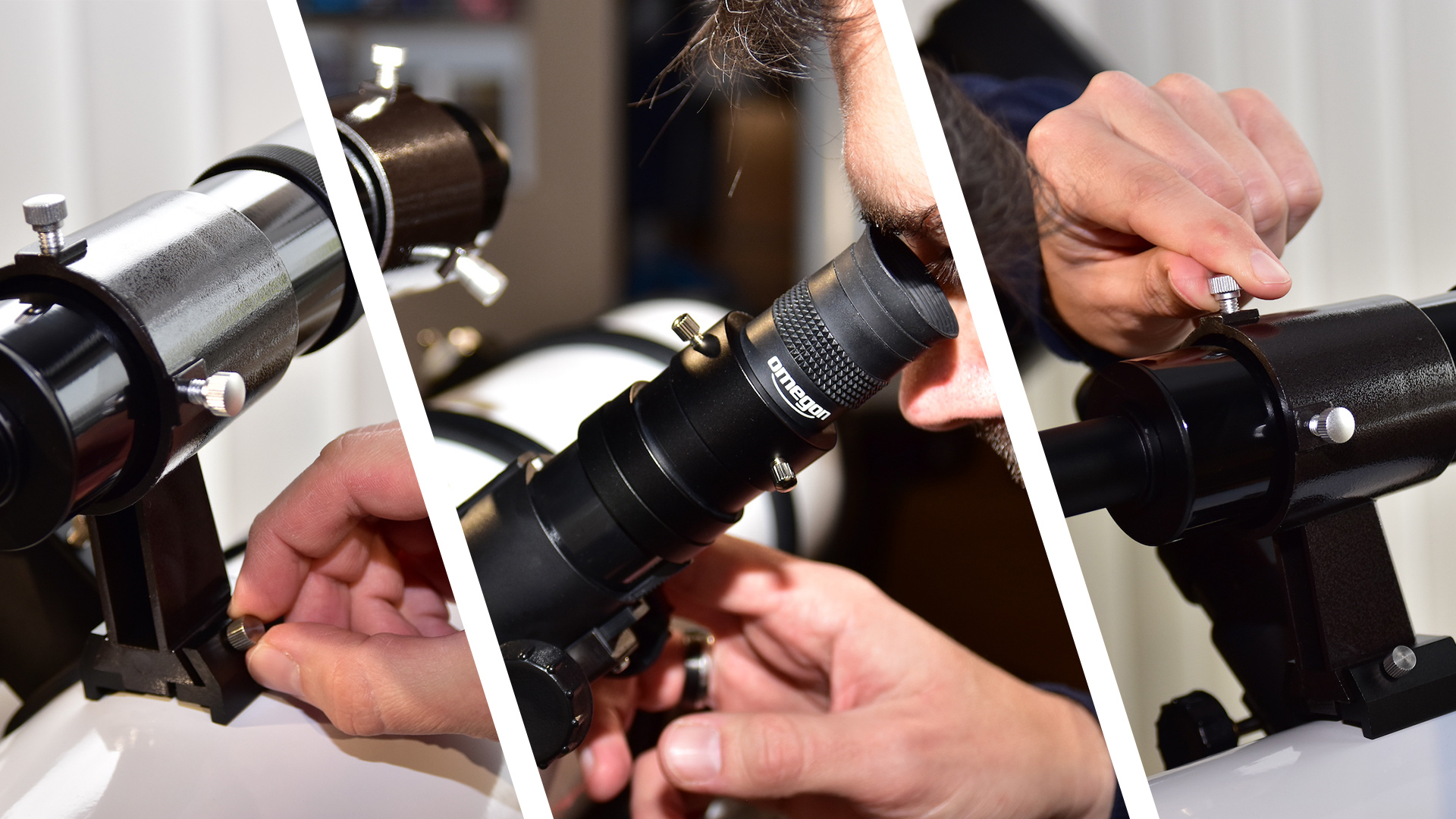
Don't put off until tomorrow what you can do the day after tomorrow. This quote from Mark Twain is funny. But when it comes to viewfinder telescopes, you'd be better off not following this advice. After all, you can only locate a celestial object once the viewfinder is properly aligned. But how exactly does that work? First things first: it's very simple.
What types of viewfinders are there?
There are projection finders and finder scopes. No matter which type you use, they all need to be aligned with the telescope.
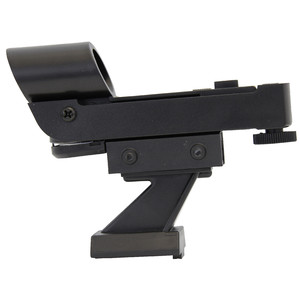
The simple LED finder: This is usually included in the basic accessories that come with entry-level telescopes. It is made of plastic and has a transparent projection screen onto which a red LED dot is projected. Although its design is simple, it often serves its purpose.
The Deluxe LED Viewfinder: It works similarly to the basic LED viewfinder, but is made of metal and, in addition to the red dot, allows you to project a cross or a circle onto the screen.
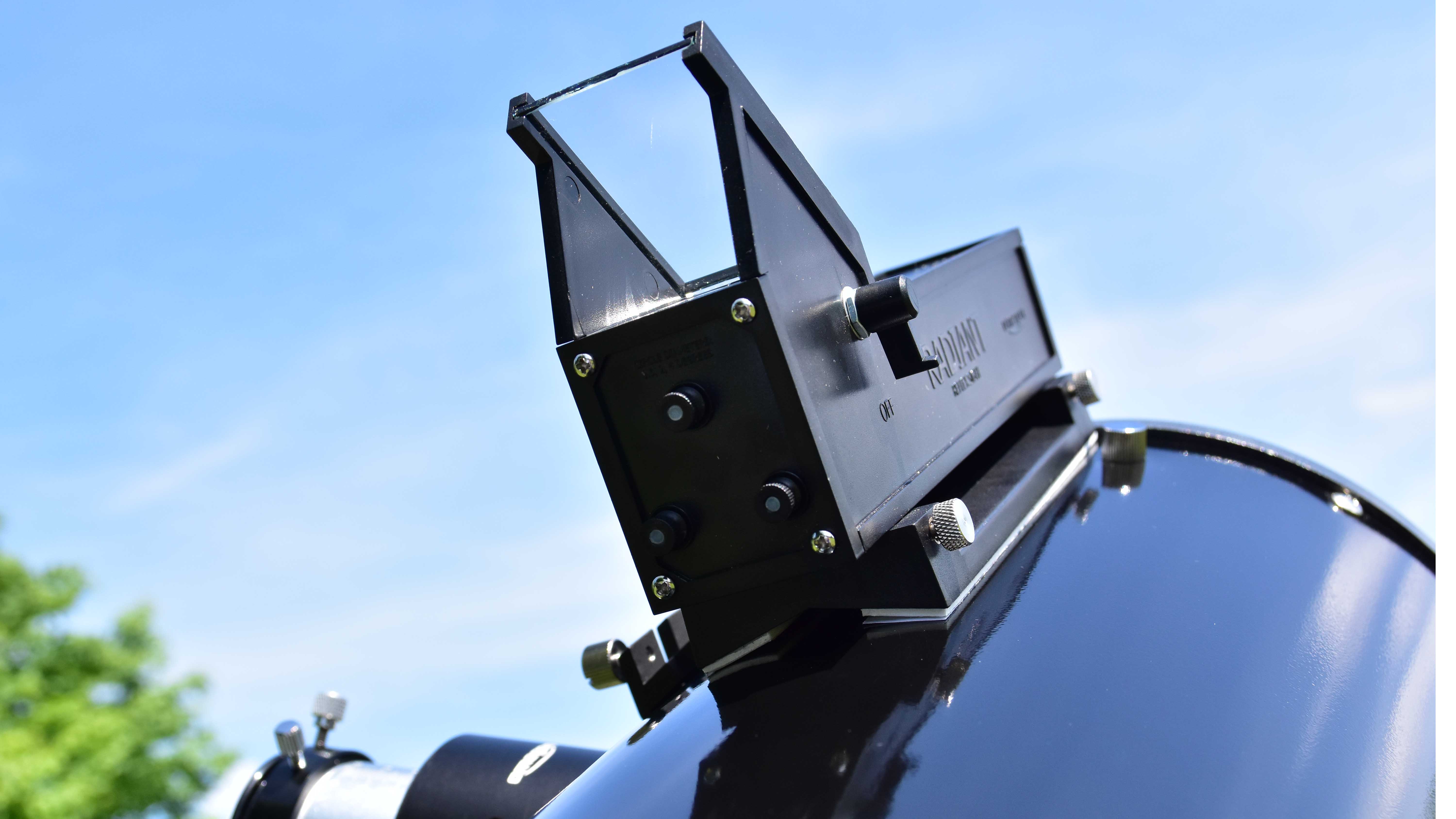
The Telrad or Radiant finder: A special LED finder that visual observers love. Users of Dobsonian telescopes, in particular, swear by it. Instead of a single dot, it projects three red circles measuring 0.5, 1.0, and 2.0 degrees into the sky. This allows you to better estimate distances in the sky, which makes starhopping much easier.
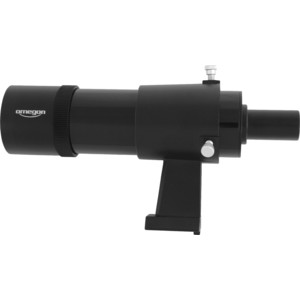
The optical viewfinder: Instead of using LEDs, this viewfinder uses optics. A lens collects light and directs it to the eyepiece. It is essentially a miniature refractor. When you look through this viewfinder, you see the image magnified 6–9 times and usually upside down. A crosshair allows you to precisely center the object. You can choose from models with a 30-mm objective lens or high-light-gathering versions with 50- and 60-mm objective lenses.
Advantages of projection viewfinders:
- Well-suited for beginners
- The red dot appears as if it were floating freely in the sky
- Your sense of direction won't be affected, so you'll be able to use it even without any training
Advantages of optical viewfinders:
- You can already see brighter deep-sky objects through the viewfinder
- A clear overview even at low magnification
- Works even without batteries
How do you align your viewfinder with the telescope?
To find an object, the finder must see exactly what your telescope sees. To do this, adjust the finder using the screws provided. Now simply follow the photo guide, which explains the alignment process in just a few steps.
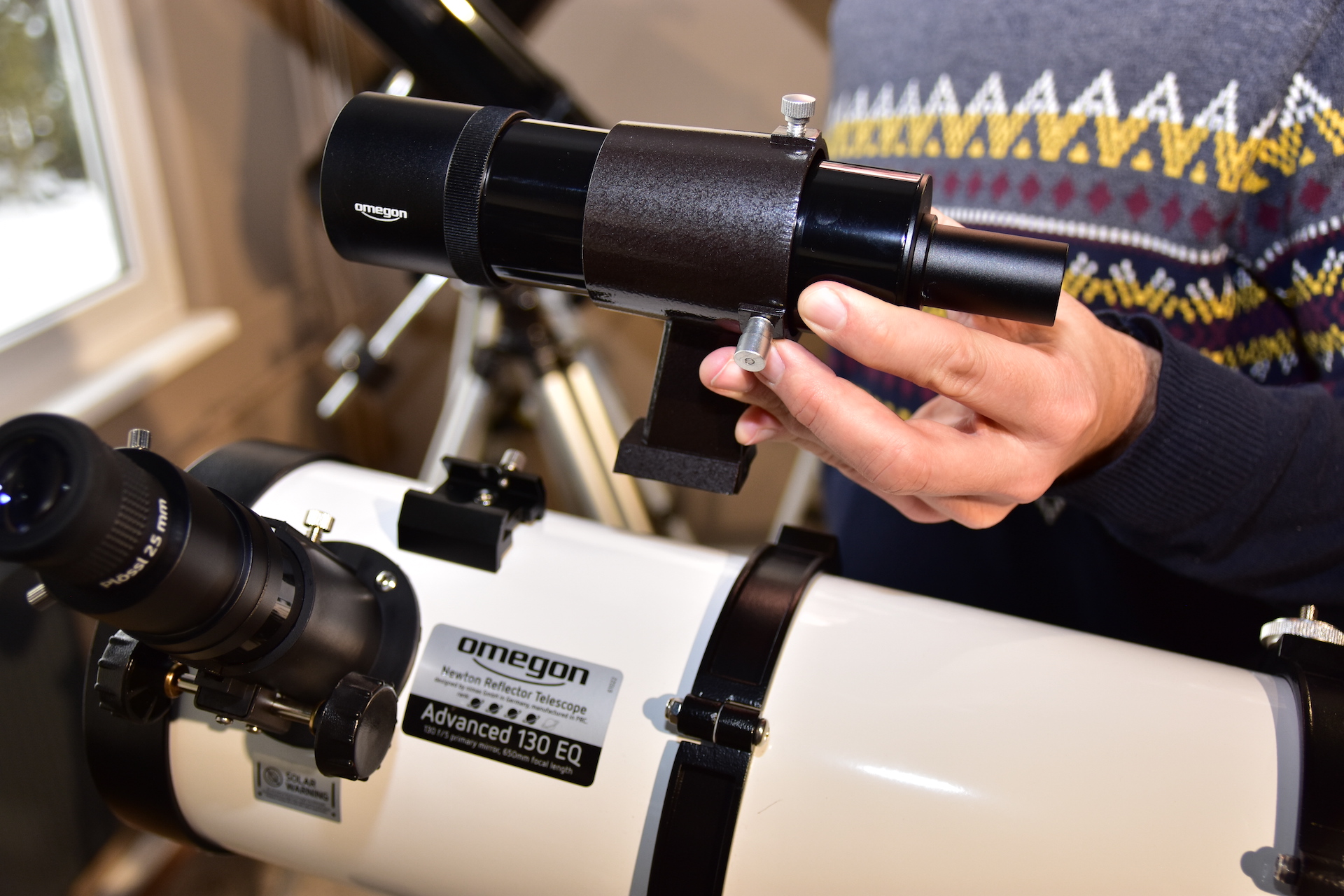
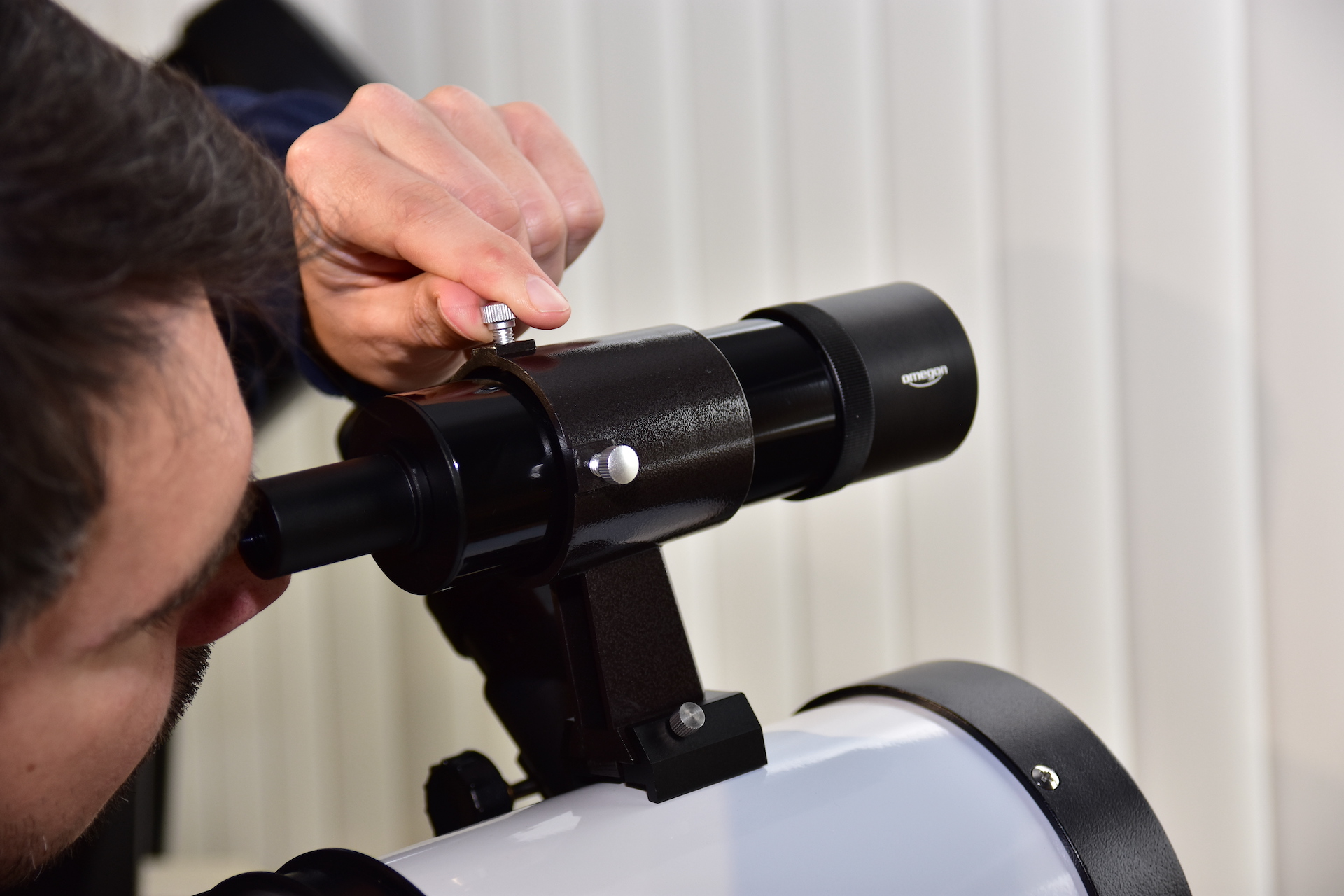
Next to the focuser, you will find a mounted viewfinder shoe with a clamping screw. Loosen the screw and slide your viewfinder into the shoe from the bottom. Then secure the viewfinder with the clamping screw, as shown in the picture.
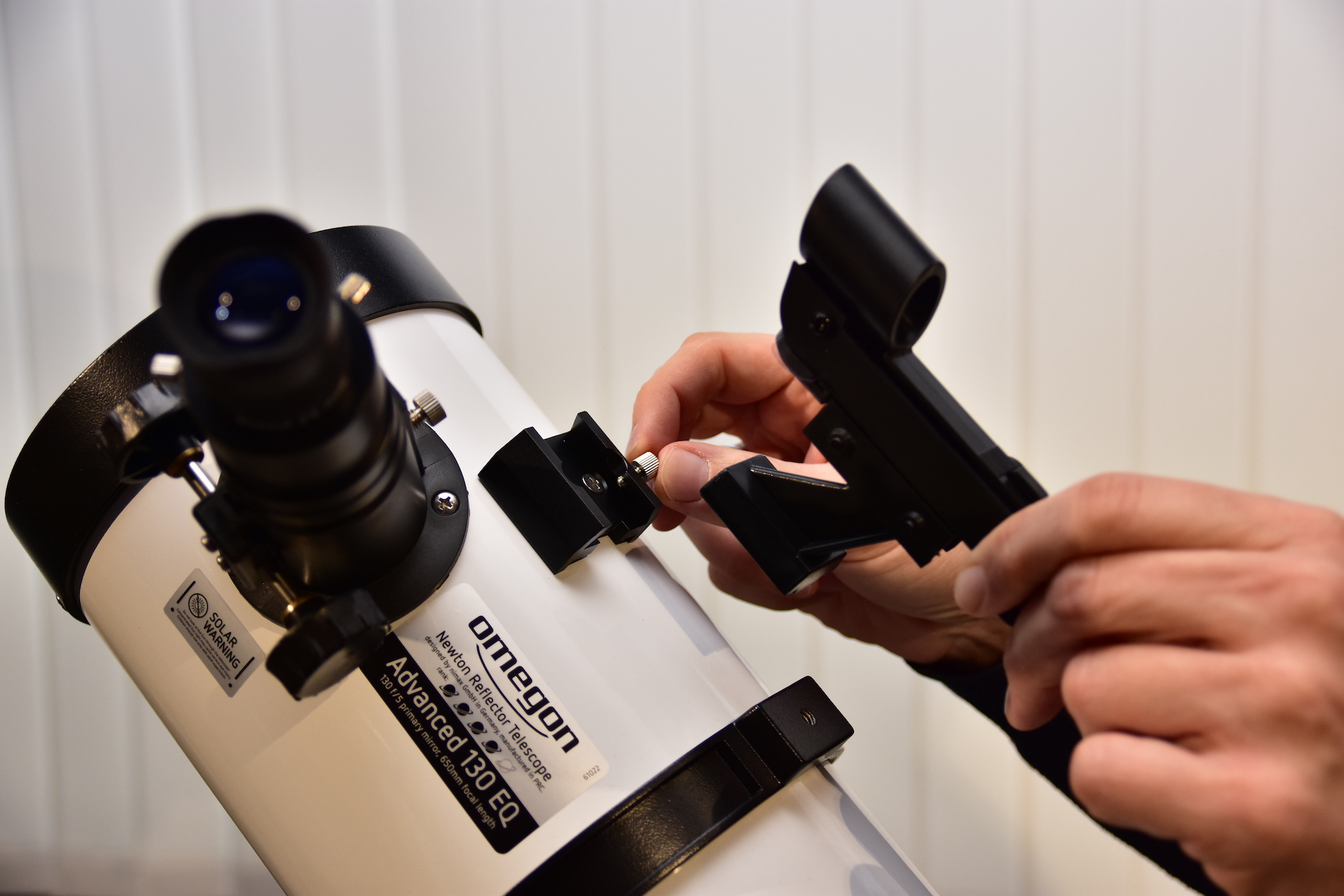
Attaching an optical viewfinder works in exactly the same way; the mount has the same format. Please note: there are versions with a 2-hole mount, which we do not cover here.
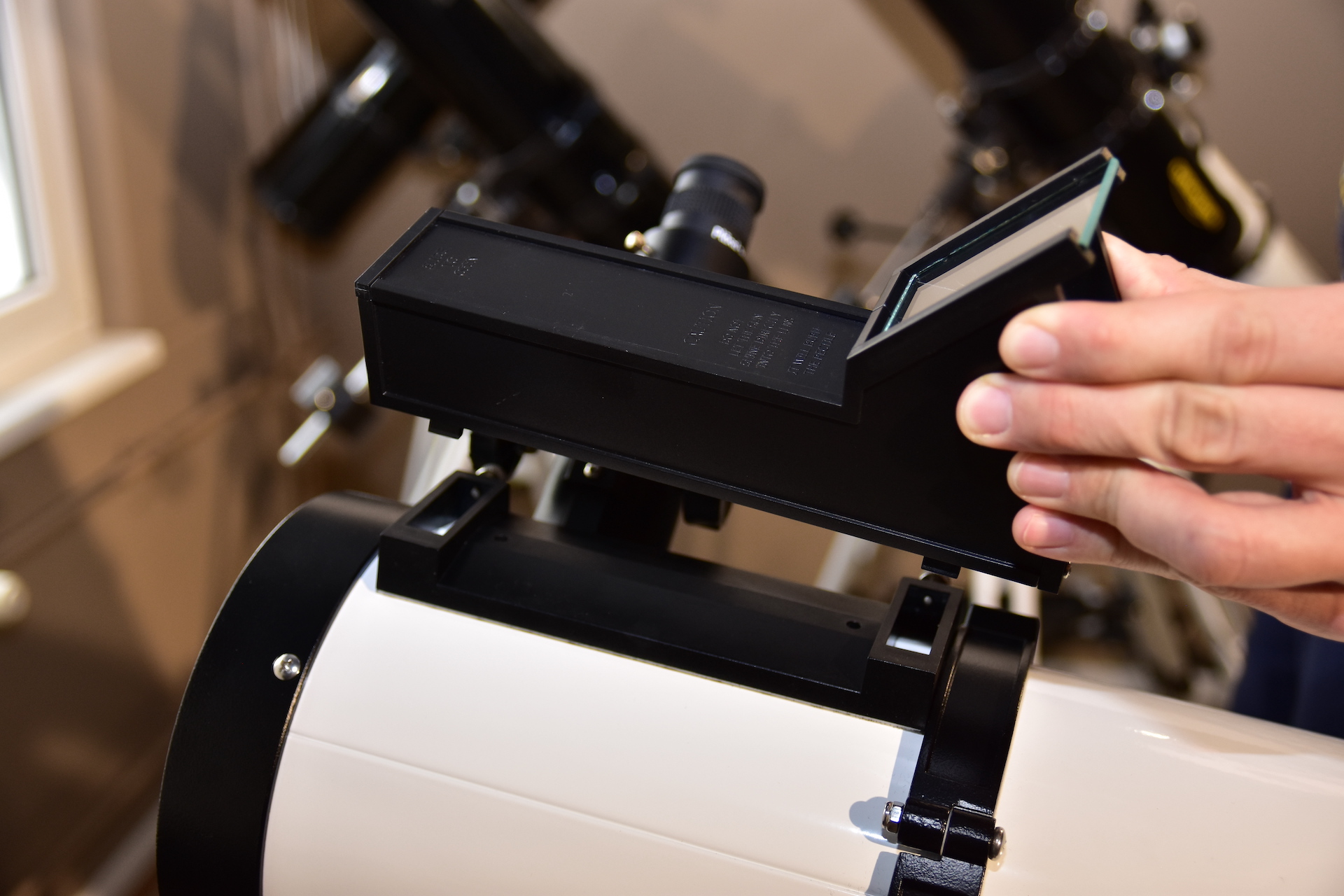
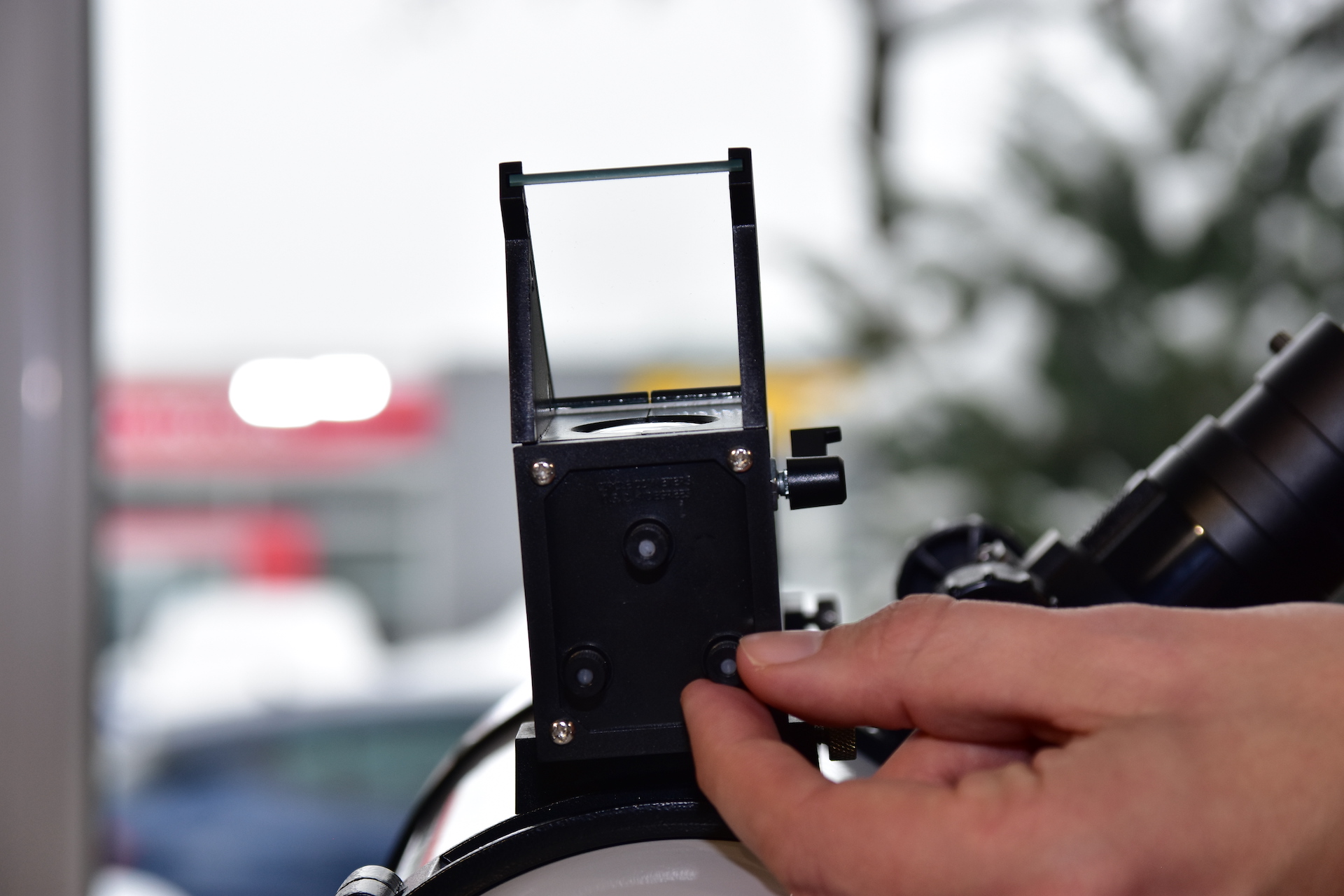
To mount the Telrad or Radiant finder, you'll need an open space on the tube. Glue the base to the tube and insert the Telrad. Then tighten the clamping screws.
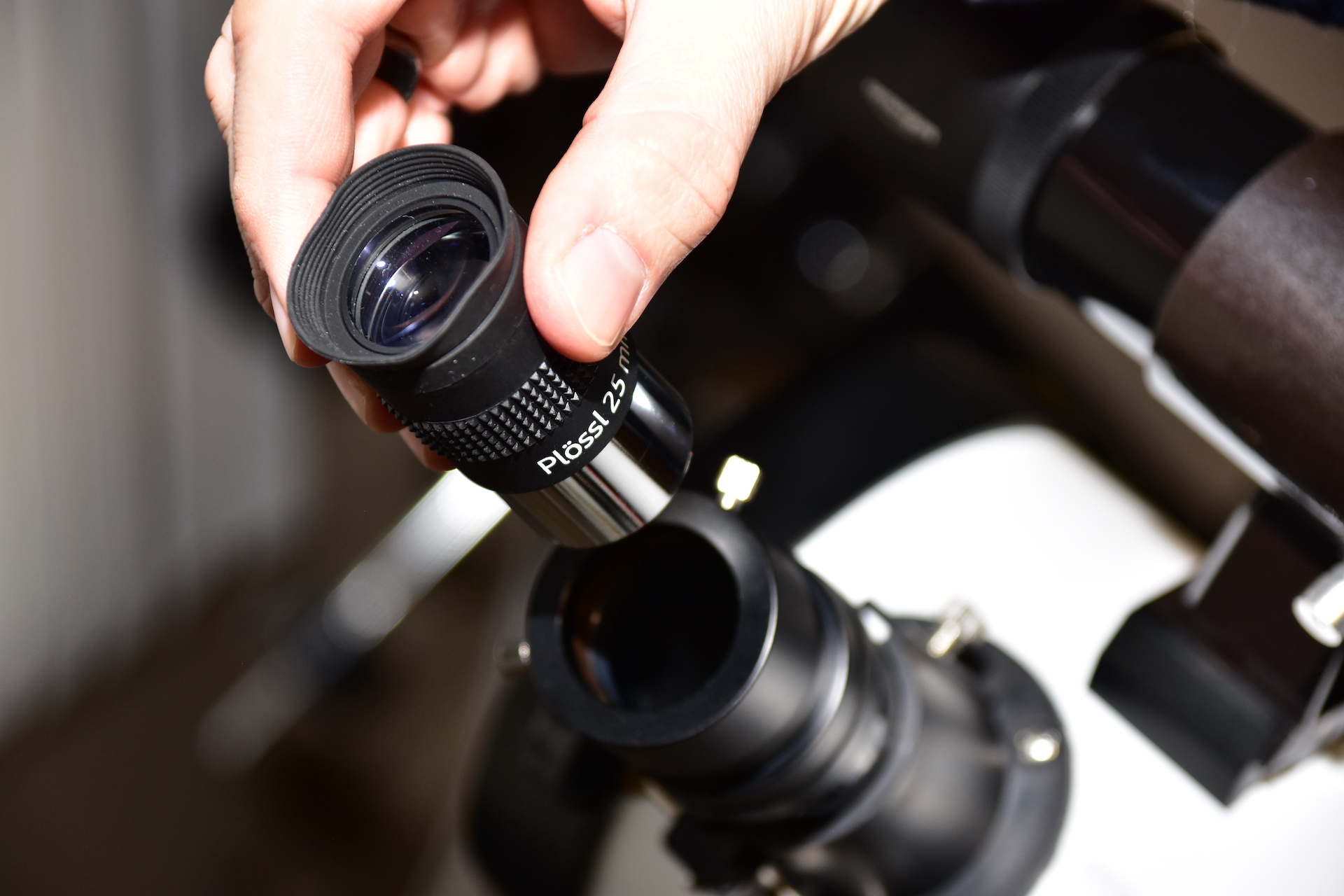
Fit an eyepiece with a low magnification. This will ensure you have the necessary field of view to centre the object in the eyepiece and your viewfinder.
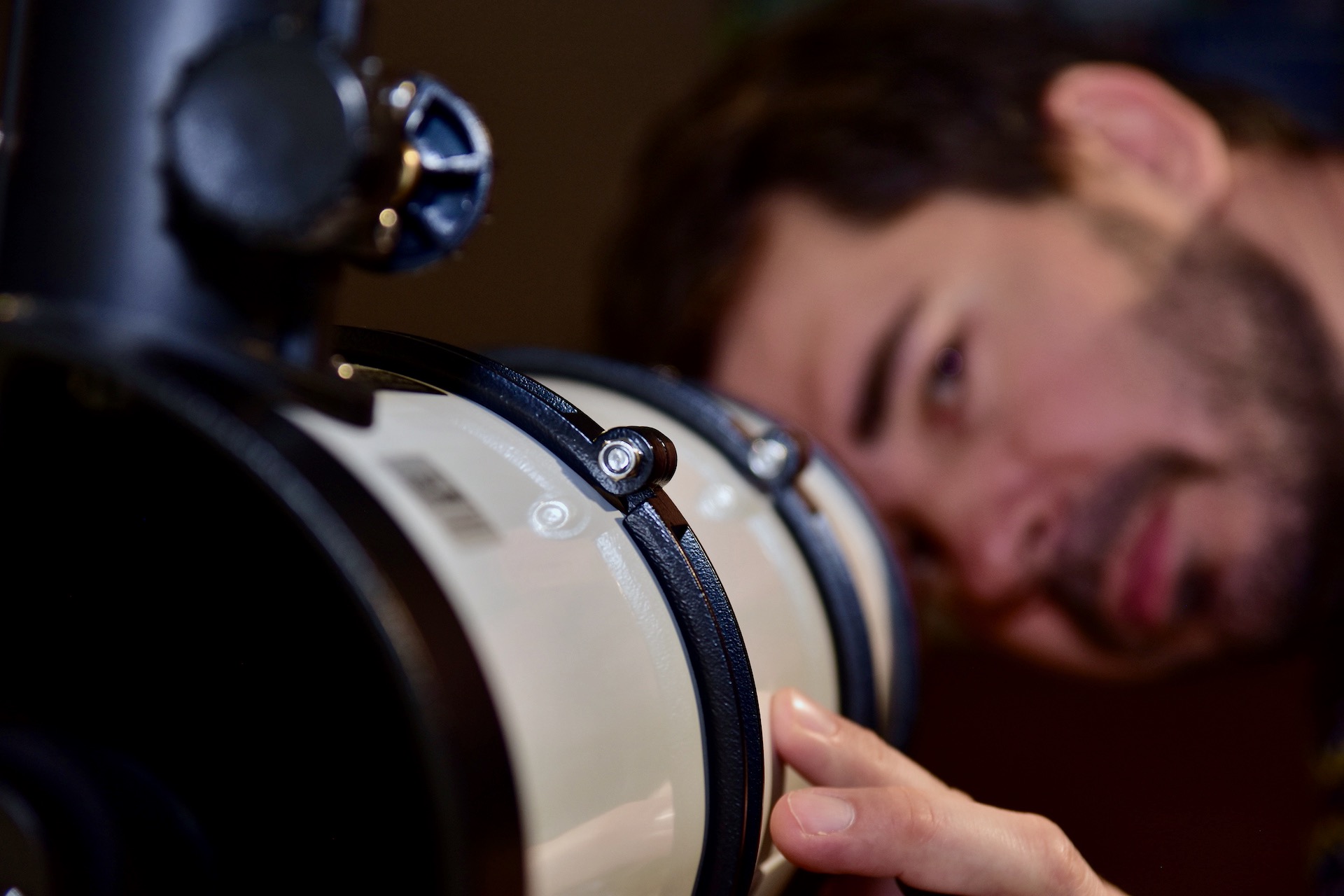
Set up your telescope during the day and choose a terrestrial target some distance away. This could be a church tower, an aerial or the top of a tree. Aim at the target through the tube and check whether the object appears in the field of view of your eyepiece. If not, repeat the process until you have ‘captured’ the object. Centre the object as precisely as possible in the centre of the field of view in the eyepiece.
Look through the optical or LED viewfinder. Adjust the field of view and the LED illumination so that the object is centred in the viewfinder. It’s very simple: just turn the adjustment screws and monitor the alignment until you’re satisfied. All clear? The object is now centred in the viewfinder and the eyepiece.
Visiting at night
Do you now have to keep adjusting your viewfinder like this? Not at all! Because your viewfinder is now aligned with the telescope. Occasionally, a minor readjustment may be needed, but you can do that at night under the starry sky.
To locate an object, look through your finder, centre the object and insert an eyepiece with low magnification. You will now find the star, planet or nebula in the centre of your field of view.
You might also be interested in these articles:
Recommended Products
Author: Marcus Schenk
Marcus is a stargazer, content creator and book author. He has been helping people to find the right telescope since 2006, nowadays through his writing and his videos. His book "Mein Weg zu den Sternen für dummies Junior" advises young people, and those who are still young at heart, what they can discover in the sky.
As a coffee junkie, he would love to have his high-end espresso machine by his side under the starry sky.